
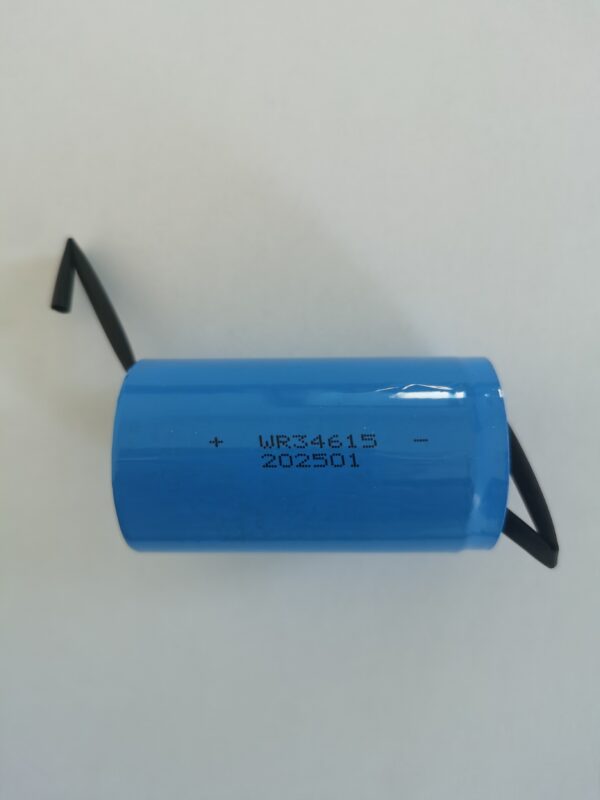
Li-SOCl₂ Battery for IoT Project Rollouts | China Manufacturer
Powering the Next Generation of Connected Devices
The Internet of Things (IoT) market continues its robust expansion, with enterprise IoT reaching $324 billion in 2025 and projected to grow 14% in 2026. As deployment scales accelerate globally, selecting the right power solution becomes critical for project success. Lithium Thionyl Chloride (Li-SOCl₂) batteries have emerged as the preferred choice for long-life IoT applications, offering unmatched energy density and reliability for remote deployments.
Technical Advantages for IoT Applications
Li-SOCl₂ batteries deliver the highest specific energy among practical battery systems, reaching up to 590 Wh/kg and 1100 Wh/L. This exceptional energy density makes them ideal for IoT devices requiring 10-15 year operational lifespans without maintenance. The chemistry supports capacity ranges from 400mAh cylindrical cells to 10000Ah方形 configurations, accommodating diverse project requirements from smart metering to asset tracking.
For LPWAN deployments including NB-IoT, LoRaWAN, and SigFox networks, Li-SOCl₂ batteries excel in low-drain applications with periodic high-current pulses. The nominal 3.6V output aligns perfectly with most IoT module requirements, eliminating the need for voltage regulation circuitry that drains additional power.
Real-World Deployment Cases
Smart Utility Metering: A European water meter manufacturer deployed 500,000 Li-SOCl₂ powered devices across rural regions. The batteries maintained consistent performance across -40°C to +85°C temperature ranges, with zero field failures over 8 years. Average current draw of 15μA with monthly 500mA transmission pulses demonstrated the chemistry’s pulse capability.
Industrial Asset Tracking: Oil and gas pipeline monitoring stations in remote locations utilized Li-SOCl₂ batteries for GPS trackers and sensor nodes. The 10-year warranty matched infrastructure maintenance cycles, reducing total cost of ownership by 40% compared to annual battery replacement schedules.
Agricultural IoT: Soil moisture sensors across 2000 hectares of farmland operated continuously on single Li-SOCl₂ cells. Seasonal temperature variations and humidity exposure presented no degradation issues, validating the hermetic sealing technology.
Compliance and Transportation Requirements
International shipping demands strict adherence to UN38.3 certification standards. This United Nations regulation requires eight mandatory tests including altitude simulation, thermal cycling (-40°C to +72°C), vibration, shock, external short circuit, impact, overcharge, and forced discharge. All Li-SOCl₂ batteries intended for air or sea freight must pass these assessments with documented test reports.
For 2026 shipments, note that GB 4824-2025 standards take effect March 1st, aligning with CISPR 11:2024 for electromagnetic compatibility. Manufacturers must ensure battery assemblies meet updated RF emission limits across 0Hz-400GHz frequency ranges. Proper Class 9 dangerous goods labeling and packaging documentation prevent customs delays at destination ports.
Procurement Considerations for B2B Buyers
Voltage Delay Mitigation: Li-SOCl₂ cells may exhibit voltage lag after high-temperature storage followed by low-temperature operation. Request manufacturer data on passivation layer characteristics and consider pre-conditioning protocols for critical applications.
Pulse Current Capability: Verify the battery’s ability to support your device’s peak current requirements. Bobbin-type cells suit continuous low-drain applications, while spiral-wound constructions handle higher pulse currents up to 100mA.
Quality Certifications: Beyond UN38.3, demand ISO 9001 manufacturing certification, IEC 60086-4 safety compliance, and RoHS/REACH environmental documentation. Third-party test reports from accredited laboratories provide additional assurance.
Supply Chain Stability: Evaluate manufacturer production capacity, lead times, and inventory buffers. IoT project rollouts often require 100,000+ units with consistent quality across batches. Request sample testing before committing to volume orders.
Customization Options: Leading Chinese manufacturers offer terminal configurations, label printing, and pack assembly services. Wire harnesses, connectors, and protective circuits can be integrated based on your device design requirements.
Partner Selection Criteria
When evaluating China-based Li-SOCl₂ battery suppliers, prioritize manufacturers with proven IoT project experience. Request reference cases from similar deployments in your target markets. Technical support responsiveness during the qualification phase indicates post-sales service quality.
Manufacturing facility audits verify production controls and quality management systems. Clean room environments, automated assembly lines, and comprehensive testing equipment demonstrate commitment to consistency. Traceability systems tracking materials from raw components to finished goods enable rapid issue resolution.
For detailed product specifications and technical consultation, visit https://cnsbattery.com/primary-battery/ to explore available Li-SOCl₂ cell configurations optimized for IoT applications.
Conclusion
Li-SOCl₂ batteries represent the optimal power solution for scalable IoT deployments requiring long service life, wide temperature operation, and minimal maintenance. Understanding technical specifications, compliance requirements, and supplier evaluation criteria enables informed procurement decisions that protect project timelines and budgets.
Partner with experienced manufacturers who understand IoT power demands and can support global deployment logistics. The right battery choice eliminates power-related failures that compromise device reliability and brand reputation.
For procurement inquiries and project-specific quotations, contact our team at https://cnsbattery.com/primary-battery-contact-us/ for responsive technical support and competitive pricing on volume orders.
This article provides general guidance for IoT project planners. Specific application requirements should be validated through prototype testing and manufacturer consultation before final deployment decisions.
