
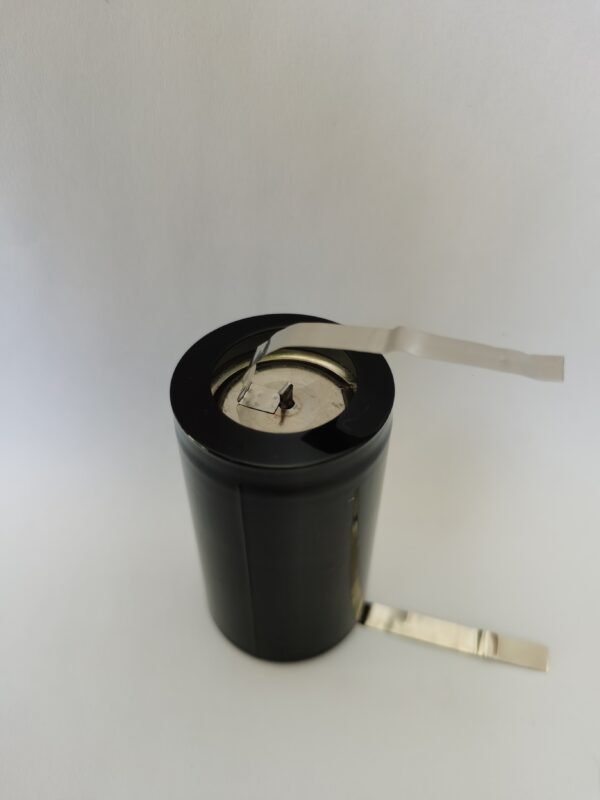
Powering the Future of Industrial IoT: The Critical Role of Li-SOCl₂ Batteries in Pump Health Monitoring
In the rapidly evolving landscape of Industrial Internet of Things (IIoT), the transition from manual checks to automated, wireless monitoring systems is no longer a luxury but a necessity. Among the myriad of industrial assets requiring constant vigilance, pumps represent a critical infrastructure component. Their failure can lead to catastrophic production downtime, safety hazards, and significant financial losses.
For OEMs and system integrators designing Wireless Pump Health Monitoring Sensors, the choice of power source is arguably the most crucial design decision. These sensors are often deployed in harsh, inaccessible environments—buried underground, submerged in sumps, or located in high-vibration zones—where battery replacement is either prohibitively expensive or physically impossible.
This is where Lithium Thionyl Chloride (Li-SOCl₂) batteries emerge as the definitive energy solution. As a primary lithium battery specialist, CNS Battery understands that these chemistries are not just power sources; they are the enablers of “Fit and Forget” industrial telemetry.
Why Li-SOCl₂ is the Gold Standard for Remote Pump Sensors
When designing for the industrial sector, engineers must balance energy density, voltage stability, and operational lifespan. Standard lithium-ion (rechargeable) cells often fall short due to their limited cycle life and higher self-discharge rates. Conversely, Primary Lithium Batteries, specifically the Li-SOCl₂ chemistry, offer unique advantages perfectly aligned with the duty cycles of pump monitoring systems.
1. Unmatched Energy Density and Longevity
Pump health sensors typically operate in a “sleep mode” 99% of the time, waking up periodically (e.g., every 15 minutes or hourly) to transmit vibration, temperature, or pressure data. This low-duty-cycle operation is the sweet spot for Li-SOCl₂ chemistry.
- Theoretical Capacity: These cells boast one of the highest specific energies among commercial batteries (up to 650 Wh/kg).
- Low Self-Discharge: With an annual self-discharge rate of less than 1%, a high-quality Li-SOCl₂ battery can reliably power a sensor for 15 to 20 years without maintenance. This matches the typical lifecycle of the industrial pump itself, eliminating the need for mid-life battery swaps.
2. Extreme Temperature Resilience
Industrial pumps are not confined to climate-controlled rooms. They operate in deserts, arctic conditions, and chemical plants.
- Wide Operating Range: Li-SOCl₂ batteries can function reliably from -55°C to +85°C. This resilience is vital for sensors attached to pumps that may experience extreme ambient temperatures or high heat radiation from the motor.
3. High Pulse Power Capability
While Li-SOCl₂ cells have a nominal voltage of 3.6V, a common challenge is their ability to deliver the high current pulses required for wireless data transmission (e.g., LoRaWAN, NB-IoT, or 4G LTE-M).
- The Voltage Depression Challenge: Pure Li-SOCl₂ cells have high internal impedance, which can cause voltage to drop significantly under load.
- The Hybrid Solution: To solve this, advanced industrial designs often utilize a Hybrid Layer Capacitor (HLC) in conjunction with the Li-SOCl₂ cell. The HLC acts as a reservoir, storing energy during sleep mode and releasing it instantly during the RF transmission burst, preventing the battery voltage from collapsing.
Technical Deep Dive: Selecting the Right Cell Format
Not all Primary Lithium Batteries are created equal. For pump monitoring applications, the physical form factor and internal construction must withstand continuous vibration and mechanical shock.
Cylindrical vs. Prismatic Construction
While cylindrical cells are common, Prismatic Primary Battery Cells are gaining traction in industrial sensor design.
- Space Efficiency: Prismatic cells utilize the rectangular geometry of sensor housings more efficiently than cylindrical cells, allowing for higher capacity within the same footprint.
- Structural Rigidity: The flat, stacked design of Prismatic Battery Cells offers better resistance to physical deformation under pressure, a critical factor when sensors are mounted directly onto vibrating pump casings.
The “Bobbin” vs. “Spiral” Wound Debate
For Cylindrical Battery Cells used in this sector, the internal construction dictates performance:
- Spiral Wound: Standard construction, good for general use.
- Bobbin Type: This construction offers lower self-discharge and higher resistance to shock, making it the preferred choice for long-life industrial applications.
Addressing the Passivation Effect in Industrial Applications
One technical nuance that OEMs must understand when using Li-SOCl₂ chemistry is the Passivation Effect.
What is it?
During storage, a lithium chloride (LiCl) film forms on the lithium anode surface. This is a natural protective layer that prevents the cell from self-discharging to zero.
The Engineering Challenge:
When the sensor wakes up and demands current, this film must be “broken” electrically. If the sensor’s wake-up circuit requires a specific minimum voltage to initialize, the temporary voltage drop caused by breaking the passivation layer can cause the microcontroller to reset or fail to start.
The Solution:
Engineers must design their firmware or hardware to account for this “voltage delay.” Alternatively, selecting Primary Lithium Batteries with controlled passivation characteristics or utilizing pre-aging processes during manufacturing can mitigate this risk.
CNS Battery: Engineering Power for Industrial Reliability
At CNS Battery, we recognize that industrial pump monitoring is not a consumer-grade application. A failed sensor battery is not just a dead device; it is a blind spot in critical infrastructure.
We specialize in providing customized Primary Battery solutions tailored to the specific RF protocols and environmental conditions of your pump telemetry network.
Our Core Offerings for Industrial IoT:
- High-Capacity Li-SOCl₂ Cylindrical Cells: Ideal for compact, high-reliability wireless nodes.
- Custom Prismatic Primary Battery Cells: Designed to fit the specific mechanical constraints of industrial enclosures.
- Battery Management Systems (BMS) for Primary Cells: While primary cells don’t require traditional “charging” BMS, our monitoring modules can track cell impedance and state-of-health, providing predictive alerts before the end of life.
- Battery Modules with HLC Integration: Complete “drop-in” power modules that combine the long life of Li-SOCl₂ with the pulse power of capacitors.
Case Study: Remote Oil & Gas Pump Monitoring
A recent client required sensors for offshore oil rig pumps where access for maintenance was restricted to annual shutdowns. Standard batteries lasted only 3 years.
- Solution: We engineered a custom Prismatic Primary Battery Cell with a high-pulse hybrid design.
- Result: The new power system achieved a projected lifespan of 18 years, aligning perfectly with the rig’s overhaul schedule and eliminating the risk of unplanned downtime due to dead sensors.
Partner with a Specialist for Your Next-Gen Sensor Design
Choosing the right power source is the first step in building a reliable industrial monitoring system. Don’t let a generic battery compromise the integrity of your Pump Health Monitoring Sensors.
As a manufacturer with deep expertise in Primary Lithium Batteries, CNS Battery is equipped to handle the complexities of high-temperature, high-vibration, and long-duration discharge profiles.
Whether you are looking for standard Cylindrical Battery Cells or require a fully customized Battery System Development solution, our team of engineers is ready to assist.
Ready to power your industrial revolution?
Explore our range of Primary Battery solutions designed for the harshest environments, or contact our technical sales team to discuss a custom design for your specific telemetry needs.
- Explore our Product Range: Primary Battery Product Catalog
- Contact Our Experts: Get in Touch with CNS Battery
