
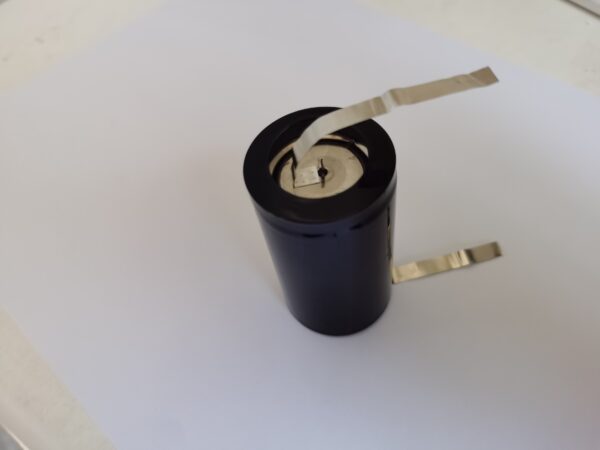
Li-SOCl₂ vs Li-MnO₂ Battery: Which Is Better for IoT?
In the rapidly expanding Internet of Things (IoT) landscape, selecting the optimal primary lithium battery is a critical engineering decision that directly impacts device longevity, reliability, and total cost of ownership. As we advance into 2026, the debate between Lithium Thionyl Chloride (Li-SOCl₂) and Lithium Manganese Dioxide (Li-MnO₂) chemistries remains central to power design for remote sensors, smart metering, and asset tracking. This analysis provides a technical deep-dive to guide engineers and procurement specialists in making informed choices aligned with global compliance standards.
Electrochemical Fundamentals and Operational Mechanisms
Understanding the core chemistry is essential for application matching. Li-SOCl₂ batteries utilize liquid thionyl chloride as both the cathode active material and the electrolyte solvent, paired with a lithium metal anode. This unique configuration enables an exceptionally high energy density, typically ranging from 590 to 750 Wh/kg. The formation of a passivation layer (LiCl) on the anode surface minimizes self-discharge to less than 1% per year, facilitating shelf lives exceeding 15 years.
Conversely, Li-MnO₂ batteries employ solid manganese dioxide as the cathode. While they offer a lower energy density compared to Li-SOCl₂, they provide a distinct advantage in pulse current capability and reduced voltage delay. The open-circuit voltage for both chemistries is nominally 3.0V to 3.6V, but their discharge profiles differ significantly under load. Li-MnO₂ maintains a more stable voltage during moderate continuous drains, whereas Li-SOCl₂ excels in ultra-low current applications but may exhibit voltage lag after prolonged storage or high-temperature exposure.
Parameter Advantages: IoT Scenario Matching
For IoT deployments, the choice hinges on specific power profiles and environmental conditions.
1. Energy Density and Longevity:
Li-SOCl₂ is the undisputed leader for devices requiring decade-long operation without maintenance. Applications such as NB-IoT water meters, gas meters, and remote environmental monitors benefit from its superior capacity. In contrast, Li-MnO₂ is better suited for devices with higher average current draws or shorter lifecycle expectations (5-8 years), such as smart locks or certain medical telemetry devices.
2. Temperature Performance:
Industrial IoT often demands operation in extreme environments. Li-SOCl₂ batteries demonstrate robust performance across a wide temperature range of -55°C to +85°C, retaining over 80% of capacity even at -40°C. Li-MnO₂ performs well but may experience capacity attenuation below -20°C. For oil & gas exploration or cold-chain logistics, Li-SOCl₂ is the preferred technical solution.
3. Pulse Current Capability:
Modern IoT devices frequently transmit data in bursts. Standard bobbin-type Li-SOCl₂ cells may struggle with high pulse currents (e.g., >100mA) without voltage drop. Hybrid designs or Li-MnO₂ chemistries are often recommended for GSM/LTE modules requiring significant peak power. However, advanced spiral-wound Li-SOCl₂ configurations now bridge this gap, offering enhanced pulse performance while retaining high energy density.
Testing Methodologies and Validation Standards
Rigorous validation is non-negotiable for mission-critical IoT infrastructure. Engineers should prioritize suppliers who adhere to international testing protocols.
- IEC 60086 Series: Compliance with IEC 60086-1 (General) and IEC 60086-4 (Safety of primary lithium batteries) is mandatory for market access in Europe and many Asian regions. Testing should verify capacity, discharge characteristics, and safety under abuse conditions.
- UL 1642 & UL 2054: For North American deployments, UL certification ensures safety regarding fire and explosion risks. Specific attention should be paid to forced discharge and crush tests.
- UN 38.3: Essential for logistics, this standard validates safety during transportation, covering altitude simulation, thermal cycling, and vibration.
- Custom Pulse Testing: Beyond standard compliance, IoT integrators should request pulse discharge profiles mimicking actual device transmission cycles (e.g., 100mA for 2 seconds every hour) to validate voltage recovery and capacity utilization.
Regional Compliance and CNS Technical Barriers
Navigating the regulatory landscape is as crucial as technical performance. In 2026, global supply chains face evolving compliance requirements. The European Union’s Battery Regulation emphasizes sustainability and carbon footprint disclosure, while the United States maintains strict safety standards under UL and DOT frameworks.
Recent policy optimizations, particularly in manufacturing hubs, have streamlined export processes for low-risk lithium primary batteries. For instance, regulatory updates in early 2026 have reduced administrative burdens for Li-SOCl₂ batteries with limited thionyl chloride content, enhancing supply chain efficiency for global buyers. However, technical barriers remain high regarding consistency and safety certification.
CNS Battery leverages advanced manufacturing processes to overcome these barriers, ensuring seamless adaptability to regional standards. Our primary lithium battery lineup is engineered to meet rigorous EU and US technical specifications, providing reliable power solutions for diverse IoT applications. We prioritize compliance with IEC and UL standards, ensuring that every cell shipped meets the highest safety and performance benchmarks required by Western markets.
For engineers seeking validated power solutions that align with 2026 compliance standards, exploring our certified portfolio is the next logical step. Our products are designed to minimize voltage lag and maximize energy utilization, addressing the specific pain points of long-term IoT deployments.
To discuss technical specifications or request samples for your upcoming projects, please visit our primary battery product page. Our engineering team is ready to assist with custom power solutions tailored to your regional regulatory requirements. For direct inquiries regarding compliance documentation or partnership opportunities, please contact us here.
Conclusion
The choice between Li-SOCl₂ and Li-MnO₂ is not binary but contextual. Li-SOCl₂ remains the gold standard for ultra-long-life, low-power IoT applications in extreme environments, while Li-MnO₂ offers a balanced solution for moderate drain devices. As IoT networks mature, the demand for batteries that combine high energy density with robust safety certifications will intensify. By partnering with suppliers who prioritize global compliance and technical innovation, engineers can ensure their devices remain connected and reliable for years to come.
