
Li-SOCl₂ Battery for Smart Waste Bin Fill Level Sensors: Technical Deep Dive for IoT Deployment
Smart waste management systems are transforming urban infrastructure across North America, Europe, and Asia-Pacific regions. At the heart of these IoT-enabled solutions lies a critical component often overlooked: the primary battery powering fill level sensors. Lithium Thionyl Chloride (Li-SOCl₂) technology has emerged as the industry standard for this application, delivering unmatched energy density and operational longevity. This technical analysis examines why Li-SOCl₂ batteries are the optimal choice for smart waste bin sensors and what engineering teams must consider for compliant deployment.
Why Li-SOCl₂ Chemistry Dominates IoT Sensor Applications
Li-SOCl₂ batteries offer the highest specific energy among practical primary battery systems, reaching up to 590 Wh/kg and 1100 Wh/L. For smart waste bin fill level sensors operating on LPWAN networks (LoRaWAN, NB-IoT, Sigfox), this translates to 5-10 years of field operation without battery replacement. The chemistry’s ultra-low self-discharge rate (less than 1% per year at ambient temperature) ensures minimal capacity loss during storage and deployment.
The bobbin-type cell structure, preferred for low-drain IoT applications, provides stable voltage output throughout most of the discharge cycle. This characteristic is crucial for ultrasonic or infrared fill level sensors that require consistent power for accurate measurements. Unlike alkaline or lithium-manganese dioxide alternatives, Li-SOCl₂ maintains voltage above 3.3V until approximately 90% depth of discharge, preventing premature sensor communication failures.
Critical Performance Parameters for Waste Management IoT
Operating Temperature Range: Smart waste bins face extreme environmental conditions. Quality Li-SOCl₂ cells operate reliably from -55°C to +85°C, essential for deployments in Scandinavian winters or Middle Eastern summers. Engineers must verify low-temperature performance, as voltage delay can occur after prolonged cold storage.
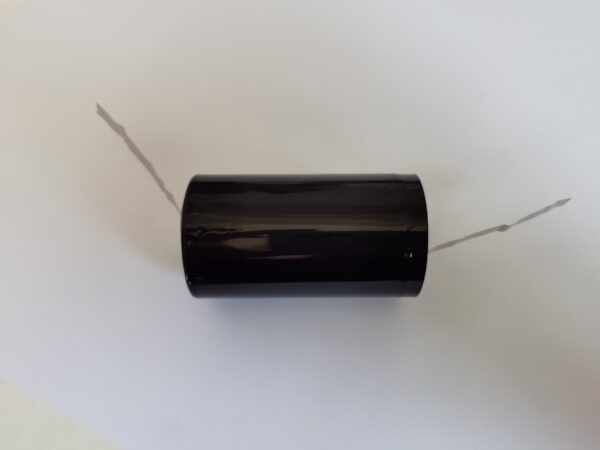
Pulse Current Capability: Modern fill level sensors transmit data periodically via cellular or sub-GHz networks, creating high-current pulses (up to 2A for 200ms). Hybrid Li-SOCl₂ designs with integrated supercapacitors or spiral-wound constructions handle these pulses without voltage sag that could trigger brownout resets.
Capacity Selection: For typical waste bin sensors transmitting 4-6 times daily, ER14505 (2.7Ah) or ER18505 (4.0Ah) cells provide adequate capacity. High-traffic commercial installations may require ER26500 (8.5Ah) configurations. Always calculate based on worst-case transmission intervals and temperature derating.
Validation Testing Protocols for Engineering Teams
Procurement specialists and design engineers should mandate comprehensive testing before deployment:
Discharge Characterization: Conduct constant current and pulse discharge tests at 20°C, 40°C, and -20°C to map voltage profiles. Verify end-of-life voltage matches sensor minimum operating requirements (typically 2.7-3.0V).
Self-Discharge Verification: Measure open-circuit voltage decay over 6-12 months at elevated temperatures (40-60°C) to extrapolate 10-year shelf life. Reputable manufacturers provide acceleration factors based on Arrhenius modeling.
Safety Compliance Testing: Ensure cells pass UN38.3 transportation requirements including altitude simulation, thermal cycling, vibration, shock, external short circuit, impact, overcharge, and forced discharge tests. For EU deployments, verify IEC 62620 compliance for industrial applications.
Regional Compliance: Navigating EU and US Regulatory Landscapes
European Union Requirements: The EU Battery Regulation entered substantive enforcement in 2026, introducing Battery Passport requirements for industrial batteries. While small primary cells may have exemptions, documentation of chemical composition, carbon footprint, and recycling pathways is increasingly mandatory. CE marking requires compliance with RoHS (hazardous substances) and REACH (chemical registration). UN38.3 certification remains mandatory for transportation across all European markets.
United States Standards: UL 1642 covers lithium cell safety, while UL 2054 addresses battery pack requirements for household and commercial use. For IoT sensor integrators, UL certification facilitates acceptance by municipal procurement departments and insurance providers. California’s Proposition 65 requires chemical exposure warnings, affecting labeling requirements.
Asia-Pacific Considerations: Japan’s PSE marking and China’s GB/T standards may apply for regional deployments. Always verify local transportation regulations, as lithium battery shipping restrictions vary by carrier and destination.
CNS Battery: Technical Barriers and Geographic Adaptability
CNS Battery has established significant technical barriers in primary lithium battery manufacturing, particularly for IoT sensor applications requiring multi-regional compliance. Their Li-SOCl₂ product line demonstrates consistent performance across temperature extremes, validated through third-party testing laboratories in both European and North American markets.
For engineering teams evaluating suppliers, CNS Battery’s manufacturing processes incorporate automated welding and hermetic sealing technologies that minimize leakage risks—a critical failure mode in outdoor waste management installations. Their cells achieve capacity tolerances within ±3%, exceeding industry standards of ±5%, ensuring predictable deployment planning.
The company’s compliance documentation supports streamlined market entry across jurisdictions. Products carry UN38.3 certification, IEC 62620 test reports, and UL component recognition where applicable. This multi-standard approach reduces qualification timelines for OEMs deploying smart waste solutions across multiple geographic regions simultaneously.
For technical specifications and regional compliance documentation, visit https://cnsbattery.com/primary-battery/ to access detailed product datasheets and certification records. Engineering teams requiring application-specific consultation can reach the technical support team at https://cnsbattery.com/primary-battery-contact-us/ for deployment guidance.
Deployment Best Practices for Maximum Service Life
Install batteries at ambient temperature when possible, allowing cells to stabilize before sensor activation. Configure sensor firmware to minimize transmission frequency during low-fill periods, extending operational life. Implement remote battery voltage monitoring to schedule proactive replacements before communication failures occur.
For municipal contracts spanning 5-7 years, negotiate battery warranty terms covering capacity retention guarantees. Document baseline voltage readings during installation to establish performance benchmarks for warranty claims.
Conclusion
Li-SOCl₂ batteries remain the optimal power solution for smart waste bin fill level sensors, balancing energy density, longevity, and environmental resilience. As regulatory requirements tighten globally, particularly in EU markets with Battery Passport mandates, selecting suppliers with comprehensive compliance documentation becomes increasingly critical. Engineering teams should prioritize vendors demonstrating multi-regional certification, consistent quality control, and application-specific technical support.
The transition toward smart city infrastructure demands reliable, maintenance-free power solutions. Li-SOCl₂ technology, when properly specified and validated, delivers the operational certainty required for large-scale IoT deployments across diverse geographic and environmental conditions.
