
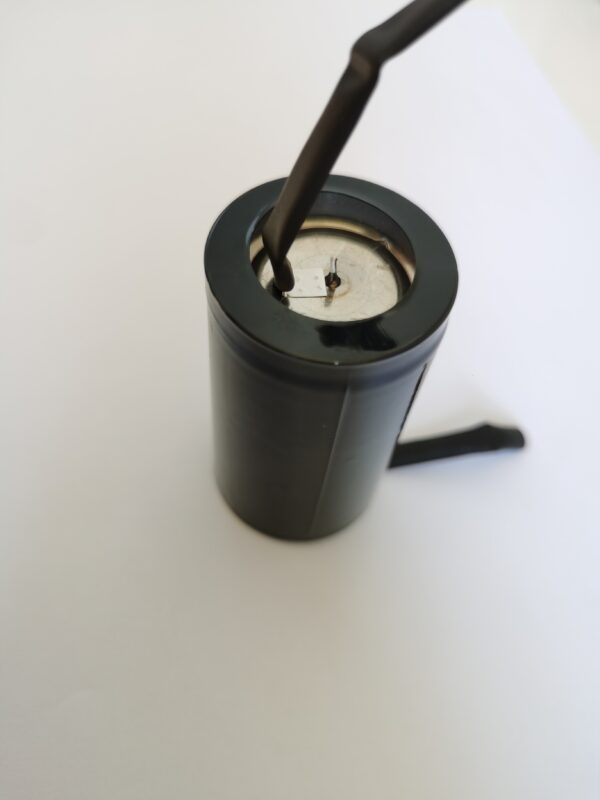
Li-SOCl₂ Battery for IoT Sensors | 10+ Year Lifespan
Introduction
The rapid expansion of Internet of Things (IoT) deployments across industries has created unprecedented demand for reliable, long-lasting power solutions. Among all available options, Lithium Thionyl Chloride (Li-SOCl₂) batteries have emerged as the gold standard for IoT sensor applications requiring 10+ year operational lifespans. This article examines the technical foundations, practical applications, and procurement considerations for B2B buyers evaluating Li-SOCl₂ technology.
Technical Foundation: Why Li-SOCl₂?
Li-SOCl₂ batteries utilize lithium as the anode and thionyl chloride as both cathode and electrolyte solvent. This chemistry delivers exceptional energy density (up to 500 Wh/kg) and ultra-low self-discharge rates (approximately 1% per year at room temperature). These characteristics enable single-battery deployments lasting over a decade without maintenance.
The nominal voltage of 3.6V provides stable power output throughout most of the discharge cycle, with a characteristic voltage plateau that simplifies device power management design. Operating temperature ranges typically span -55°C to +85°C, making these batteries suitable for extreme environmental conditions common in industrial IoT, agricultural monitoring, and infrastructure applications.
Real-World IoT Applications
Smart Metering: Utility companies across Europe and North America have deployed Li-SOCl₂-powered water and gas meters with 15-year replacement cycles, dramatically reducing maintenance costs and service interruptions.
Asset Tracking: Shipping containers equipped with Li-SOCl₂ batteries maintain GPS and cellular connectivity throughout multi-year international logistics operations without battery replacement.
Environmental Monitoring: Remote weather stations and agricultural sensors in Australia’s outback operate continuously for 12+ years on single Li-SOCl₂ cells, transmitting data via LPWAN networks.
Building Automation: Wireless HVAC sensors in commercial buildings leverage the 10+ year lifespan to align with building renovation cycles, eliminating mid-cycle battery replacement projects.
Compliance and Certification Requirements
B2B purchasers must verify compliance with relevant international standards:
- UN 38.3: Mandatory for lithium battery transportation across all modes
- IEC 60086-4: Primary lithium battery safety specifications
- RoHS/REACH: Essential for European market access
- UL 1642: Recognized safety certification for North American deployments
Manufacturers should provide complete documentation packages including test reports, MSDS sheets, and certificates of conformity. Missing documentation can cause customs delays and liability exposure.
Procurement Best Practices
Capacity Matching: Calculate total energy requirements including peak current demands, sleep mode consumption, and transmission bursts. Add 20% safety margin for temperature variations and aging effects.
Pulse Current Capability: Standard Li-SOCl₂ cells have limited pulse current capacity. For IoT devices with periodic high-current transmissions (cellular, LoRaWAN), specify hybrid layer designs or add supercapacitors for pulse support.
Storage Conditions: Maintain inventory at 10-25°C with relative humidity below 65%. Proper storage preserves the 10+ year shelf life claim.
Supplier Qualification: Evaluate manufacturers on production capacity, quality management systems (ISO 9001), and track record in IoT applications. Request reference customers in similar deployment scenarios.
Total Cost of Ownership: While unit prices exceed alkaline alternatives, calculate 10-year TCO including replacement labor, service visits, and downtime costs. Li-SOCl₂ typically delivers 40-60% lower TCO for inaccessible installations.
Technical Considerations for Integration
Voltage Delay: Li-SOCl₂ batteries may exhibit temporary voltage depression after extended storage. Design power management circuits with 30-second warm-up periods before critical operations.
Passivation Layer: The natural lithium chloride passivation layer protects against self-discharge but requires initial current to break through. Specify break-in procedures for long-stored inventory.
End-of-Life Detection: Implement voltage monitoring at 2.0V threshold to provide 3-6 month advance warning before complete depletion, enabling planned replacement scheduling.
Conclusion
Li-SOCl₂ battery technology represents the optimal power solution for IoT sensor deployments requiring decade-long operational lifespans. Success depends on proper technical specification, compliance verification, and supplier partnership. B2B buyers should prioritize manufacturers with proven IoT track records and comprehensive documentation support.
For detailed product specifications and technical consultation, explore our primary battery portfolio or contact our engineering team for application-specific recommendations. Investing in quality Li-SOCl₂ solutions today ensures reliable IoT operations throughout the next decade.
