
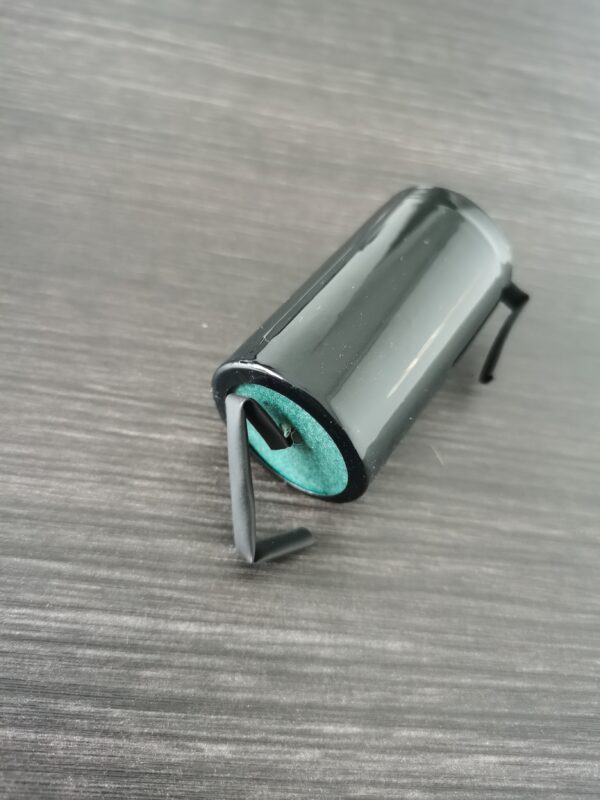
The Ultimate Power Solution for Industrial Compressor Health Monitoring Sensors
In the high-stakes world of industrial manufacturing and energy production, an unexpected compressor failure can bring operations to a grinding halt, resulting in millions of dollars in lost revenue. While modern Industrial Internet of Things (IIoT) sensors provide the data needed to predict these failures, their effectiveness relies entirely on a power source that matches their mission-critical nature.
For engineers and facility managers in the United States, Canada, and Europe, the Lithium Thionyl Chloride (Li-SOCl₂) battery has emerged as the undisputed champion for powering Wireless Compressor Health Monitoring Sensors. Unlike standard alkaline or lithium-ion batteries, Li-SOCl₂ technology is engineered for the extreme environments and long-term reliability required in heavy industry.
This article explores why this specific chemistry is the only viable option for your predictive maintenance strategy and how partnering with a specialized manufacturer like CNS Battery ensures your sensors never fail when you need them most.
Why Standard Batteries Fail in Compressor Monitoring
Before diving into the solution, it is crucial to understand why conventional power sources are inadequate for this specific industrial application.
The Challenge of “Deep Sleep” Current Drain
Many industrial sensors spend 99% of their time in a “sleep” mode, waiting for a vibration anomaly or temperature spike. Standard batteries suffer from high self-discharge rates. Over 5–10 years, this internal chemical reaction depletes the charge, leaving the sensor dead despite never being used. For a compressor in a remote oil field, replacing a dead battery is not just inconvenient; it is a logistical nightmare.
The Danger of Thermal Runaway
Compressors generate significant heat. Standard lithium-ion batteries are volatile under high thermal stress. If a sensor battery overheats near a piece of heavy machinery, it poses a safety hazard. Industrial environments require a chemistry that is chemically stable, even at extreme temperatures.
The Reality of Remote Locations
Compressor stations are often located in harsh, hard-to-reach areas—from the freezing tundra of Canada to the scorching deserts of the American Southwest. A battery that works in a warehouse will fail in these conditions.
The Technical Superiority of Li-SOCl₂ Chemistry
To solve these problems, engineers must turn to primary lithium batteries, specifically the Lithium Thionyl Chloryl (Li-SOCl₂) chemistry. Here is a technical breakdown of why this chemistry is the gold standard.
1. Unmatched Energy Density
Li-SOCl₂ batteries possess the highest energy density of any commercially available primary battery chemistry. This is not just a number on a spec sheet; it translates to real-world application.
- The Math: With a specific energy often exceeding 650 Wh/kg, these batteries can power high-frequency RF transmissions (required to send data from the compressor pit to a central hub) for years without needing replacement.
2. Extreme Temperature Resilience
The electrolyte in a Li-SOCl₂ battery is a liquid salt dissolved in thionyl chloride. This unique composition allows it to operate in a temperature range of -55°C to +85°C (with some variants reaching +125°C).
- Real-World Impact: Whether your compressor is running in an Alaskan pipeline or a Texas refinery, the battery will function without thermal throttling or failure.
3. Negligible Self-Discharge
The electrochemical reaction in a Li-SOCl₂ cell is incredibly stable. These batteries exhibit a self-discharge rate of less than 1% per year.
- The Result: A sensor installed today can reliably report data for 15–20 years. This longevity is essential for “fit-and-forget” industrial IoT deployments.
Technical Note: A common challenge with Li-SOCl₂ is voltage delay (the time it takes for the voltage to stabilize after a high-current pulse). Advanced battery manufacturers mitigate this with patented passivation layer controls, ensuring immediate responsiveness for critical sensor wake-ups.
Key Features Required in a Compressor Monitoring Battery
When selecting a battery for your health monitoring system, do not just look for a cell; look for an engineered solution. Here are the non-negotiable features your battery must have:
| Feature | Why It Matters for Compressors | The Consequence of Failure |
|---|---|---|
| Pulse Power Capability | Sensors transmit data in short, high-energy bursts. | Data loss during transmission, leading to missed fault detection. |
| Hermetic Sealing | Compressor environments are filled with oils, gases, and moisture. | Corrosion of terminals, leading to open circuits and dead sensors. |
| High Pulse Current | Modern sensors use LPWAN, LoRa, or 4G/5G IoT modules. | The sensor wakes up but cannot transmit the “high vibration” alert. |
| Wide Plateau Voltage | Maintains a stable voltage throughout 95% of its life. | Fluctuating sensor readings, providing false data to the maintenance team. |
Addressing the “Pulse Power” Myth
A frequent objection from maintenance teams is: “Lithium Primary batteries cannot handle the high current draw of modern wireless sensors.”
This was true 20 years ago, but modern manufacturing techniques have solved this.
The Solution: Bobbin vs. Spirally Wound
Traditional spirally wound Li-SOCl₂ cells struggle with high pulse loads due to high internal impedance. However, specialized bobbin-type constructions, often enhanced with hybrid layer capacitor (HLC) technology or patented cathode designs, drastically reduce internal resistance.
What This Means for You:
You can now use a primary lithium battery to power sensors transmitting data via NB-IoT or Sigfox protocols. The battery acts like a capacitor during the transmission burst, delivering the necessary 2A–5A pulses without voltage drop.
Why Choose CNS BATTERY for Your Industrial IoT Deployment
While the chemistry is critical, the manufacturer matters just as much. In the competitive landscape of industrial battery supply, CNS BATTERY stands out as a strategic partner for North American and European enterprises.
Based in Zhengzhou, China, CNS BATTERY is not just a vendor; it is a solutions provider dedicated to the craftsmanship of energy storage. Here is how they ensure your compressor sensors never lose power:
1. Engineering for the “Fit-and-Forget” Mandate
CNS BATTERY specializes in customizing Li-SOCl₂ cells to match the exact pulse profile of your sensor. Whether you are using a standard C-sized cell or a custom prismatic pack, they engineer the internal structure to handle the specific RF module in your device.
2. Advanced Manufacturing & Quality Control
Their production facilities utilize advanced manufacturing techniques to ensure zero defects. For industrial clients, a single battery failure in a critical compressor can invalidate an entire deployment. CNS BATTERY’s rigorous quality management systems guarantee that every cell shipped meets the highest standards of reliability.
3. A Masterpiece of Craftsmanship
At CNS BATTERY, every battery is treated as a masterpiece. They do not mass-produce generic cells. Instead, they focus on Advanced Technology and R&D Capability to provide solutions that are tailored to the harsh realities of your factory floor or remote site.
4. Localized Support for Global Clients
Understanding the specific regulatory and logistical needs of overseas clients is part of their core competency. They are equipped to handle the compliance requirements necessary for shipping hazardous materials (Class 9) to industrial hubs worldwide.
Powering the Future of Predictive Maintenance
In conclusion, the reliability of your compressor health monitoring system is only as strong as its weakest link—the battery. By choosing Lithium Thionyl Chloride (Li-SOCl₂) technology, you are choosing a solution that offers unparalleled longevity, thermal stability, and pulse power capability.
For facility managers and engineers looking to implement a robust predictive maintenance strategy, partnering with a specialized manufacturer like CNS BATTERY is the key to success. Their focus on custom solutions and advanced manufacturing ensures that your sensors remain active, vigilant, and ready to prevent disasters.
Do not let a dead battery compromise your industrial operation. Explore the full range of primary battery solutions designed for the industrial internet of things.
Explore the CNS BATTERY Product Range
For engineers and procurement managers ready to specify the right power solution for their next-gen sensors, visit the Primary Battery Product Center to see how their technology can be integrated into your design.
Get in Touch with an Expert
If you have specific requirements for a compressor monitoring project or need a custom battery solution, the CNS BATTERY team is ready to assist. Contact them today to discuss your application and ensure your industrial IoT deployment is powered by the best.
