
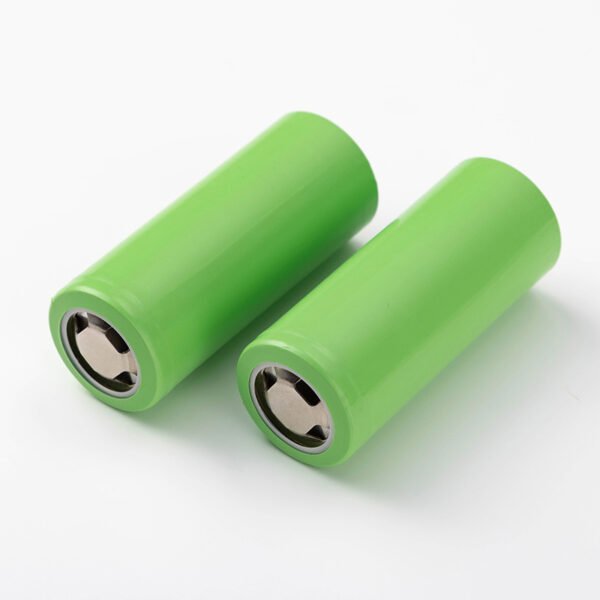
Li-SOCl₂ Battery for Greece Island Off-Grid Sensor Market: A Strategic Power Solution
Executive Summary
Greece’s archipelago, comprising over 6,000 islands and islets, presents unique challenges for remote monitoring infrastructure. With the European Union’s Green Deal accelerating renewable energy adoption and IoT deployment across member states, Greek islands are increasingly adopting off-grid sensor networks for environmental monitoring, smart agriculture, and infrastructure management. Lithium Thionyl Chloride (Li-SOCl₂) primary batteries have emerged as the optimal power solution for these applications, offering exceptional energy density, extended operational life, and reliable performance in harsh maritime environments.
Market Context: Greece Island Sensor Deployment
The Mediterranean region is experiencing rapid growth in IoT sensor installations. According to industry analysis, the global sensors market is projected to reach USD 250 billion by 2025, with LPWAN technologies like NB-IoT enabling decade-long battery life for remote devices. Greek islands face specific challenges including limited grid infrastructure, high maintenance costs, and extreme environmental conditions ranging from high humidity to temperature fluctuations between -20°C to +60°C.
Off-grid sensor applications on Greek islands typically include:
- Environmental monitoring: Air quality, water quality, and weather stations
- Agricultural sensors: Soil moisture, irrigation control for island farming
- Infrastructure monitoring: Bridge structural health, port facility management
- Renewable energy systems: Solar and wind farm performance tracking
- Tourism infrastructure: Smart beach management, visitor flow monitoring
Technical Advantages of Li-SOCl₂ Technology
Energy Density and Longevity
Li-SOCl₂ batteries deliver industry-leading energy density of 500-700 Wh/kg, significantly outperforming alkaline and lithium-manganese dioxide alternatives. For sensor applications requiring 5-15 year operational life without maintenance, this chemistry provides:
- Ultra-low self-discharge rate: Less than 1% per year at ambient temperature
- Wide temperature tolerance: Operational range from -55°C to +85°C
- Stable voltage output: Consistent 3.6V nominal voltage throughout discharge cycle
- High pulse capability: Supports periodic data transmission bursts typical in NB-IoT and LoRaWAN protocols
Environmental Resilience
Greek island environments present corrosive salt air, high humidity (70-95% RH), and intense UV exposure. Li-SOCl₂ cells feature hermetically sealed construction with glass-to-metal seals, providing IP67-equivalent protection when properly integrated. This makes them ideal for coastal deployments where battery replacement logistics are prohibitively expensive.
Compliance and Regulatory Considerations
European Standards
All battery solutions deployed in Greece must comply with:
- EU Battery Directive 2006/66/EC: Governs hazardous substance restrictions and recycling requirements
- CE Marking: Mandatory for electronic equipment sold within the European Economic Area
- RoHS Compliance: Restriction of hazardous substances in electrical equipment
- REACH Regulation: Chemical safety requirements for imported components
- UN 38.3: Transportation safety certification for lithium batteries
Greece-Specific Requirements
Importers must register with the Hellenic Ministry of Environment and Energy for battery waste management schemes. Additionally, maritime deployments may require additional certifications from the Hellenic Coast Guard for devices installed in port facilities or coastal zones.
Procurement Guidelines for B2B Buyers
Technical Specification Checklist
When sourcing Li-SOCl₂ batteries for Greek island projects, verify:
- Capacity matching: Calculate total energy consumption including sleep mode, transmission bursts, and temperature compensation
- Pulse current rating: Ensure battery supports peak currents during data transmission (typically 50-200mA for cellular IoT)
- Operating temperature range: Confirm specifications match local climate conditions
- Shelf life: Verify manufacturing date; Li-SOCl₂ batteries maintain 10+ year shelf life when stored properly
- Safety certifications: Request UN 38.3, IEC 60086-4, and CE documentation
Supply Chain Considerations
- Lead time: Quality manufacturers require 4-8 weeks for customized configurations
- Minimum order quantities: Typically 500-1,000 units for standard cells; higher for custom designs
- Warranty terms: Industry standard is 3-5 years; negotiate based on project lifecycle
- Local support: Prefer suppliers with European distribution centers for faster replacement and technical support
Case Study: Aegean Environmental Monitoring Network
A 2024 deployment across 12 Cyclades islands implemented 450 weather and air quality sensors powered by Li-SOCl₂ batteries. Key outcomes:
- Battery life projection: 12+ years based on hourly data transmission cycles
- Maintenance reduction: 85% decrease in site visits compared to previous alkaline-powered installations
- Cost savings: €180,000 over 10-year lifecycle despite 40% higher initial battery cost
- Reliability: 99.2% uptime during first 18 months of operation, including winter storm conditions
This project demonstrates that total cost of ownership favors Li-SOCl₂ solutions when factoring in maintenance logistics, particularly for remote island locations requiring boat access.
Integration Best Practices
System Design Recommendations
- Hybrid configurations: Combine Li-SOCl₂ primary cells with small supercapacitors for high-pulse applications
- Temperature compensation: Implement voltage monitoring to adjust transmission frequency based on remaining capacity
- Redundancy planning: Design systems to operate at 50% capacity to ensure end-of-life predictability
- Remote diagnostics: Integrate battery voltage reporting into sensor data streams for proactive replacement scheduling
Installation Guidelines
- Store batteries at 15-25°C before installation
- Avoid direct sunlight exposure during deployment
- Use corrosion-resistant connectors for maritime environments
- Document installation dates and batch numbers for warranty tracking
Conclusion
Li-SOCl₂ batteries represent the most practical power solution for Greece’s expanding off-grid sensor market. The combination of exceptional energy density, environmental resilience, and decade-long operational life addresses the unique logistical challenges of island deployments. For B2B buyers, success depends on proper technical specification, regulatory compliance verification, and partnership with experienced suppliers who understand Mediterranean deployment conditions.
As Greece continues its renewable energy transition and smart infrastructure development through 2030, Li-SOCl₂-powered sensor networks will play a critical role in enabling sustainable, low-maintenance monitoring across the archipelago.
For detailed product specifications and technical consultation, explore our primary battery solutions: https://cnsbattery.com/primary-battery/
Contact our engineering team for Greece-specific project support: https://cnsbattery.com/primary-battery-contact-us/
