
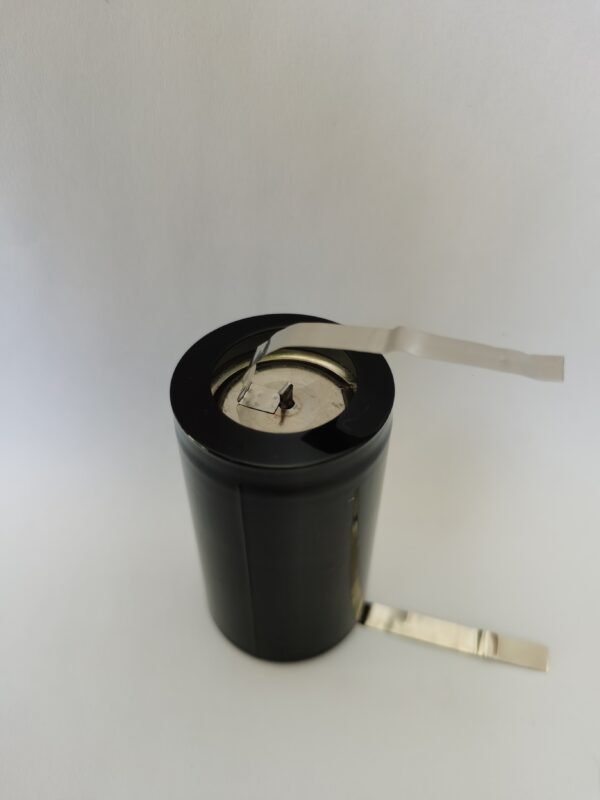
Here is the professional, SEO-optimized article tailored for your requirements.
Li-SOCl₂ vs Li-S: The Ultimate Guide for Downhole Logging Applications
In the high-stakes environment of oil and gas exploration, the “downhole” environment represents one of the most punishing conditions for electronic components. Downhole logging tools must operate reliably under extreme heat, immense pressure, and constant vibration, often for weeks or months at a time, with zero opportunity for maintenance or battery replacement. In this context, the choice between Lithium-Thionyl Chloride (Li-SOCl₂) and Lithium-Sulfur (Li-S) batteries is not merely a technical specification; it is a critical decision that dictates the success or failure of a well logging operation.
While both chemistries belong to the family of primary (non-rechargeable) lithium batteries, their performance profiles differ significantly when subjected to the thermal gradients and power demands of deep wells. Selecting the wrong chemistry can result in catastrophic voltage delay, thermal runaway, or premature failure. This guide provides a rigorous, engineer-to-engineer analysis of these two technologies, dissecting their electrochemical behavior to determine which is best suited for specific downhole scenarios.
The Electrochemical Fundamentals
To understand the application differences, we must first examine the core reaction mechanisms that define these cells.
Performance Comparison Matrix
For downhole logging, four parameters are non-negotiable: Operating Temperature, Power Density, Voltage Stability, and Shelf Life.
| Parameter | Lithium-Thionyl Chloride (Li-SOCl₂) | Lithium-Sulfur (Li-S) |
|---|---|---|
| Nominal Voltage | 3.6V (Stable) | 2.1V (Gradual Slope) |
| Operating Temp. | -55°C to +150°C (Standard) | -20°C to +85°C (Limited) |
| Voltage Delay | High (Requires special “bobbin” or “hybrid” types to mitigate) | Low (Instantaneous) |
| Energy Density | Very High (700+ Wh/kg) | Extremely High (Theoretical >500 Wh/kg) |
| Thermal Stability | Excellent (Passivation layer prevents thermal runaway) | Poor (Exothermic reactions at high temps) |
| Self-Discharge | <1% per year | Moderate to High |
Why Li-SOCl₂ is the Industry Standard for Deep Wells
Despite the allure of high energy density in Li-S batteries, Li-SOCl₂ remains the undisputed champion for deep downhole logging. Here is why:
1. Thermal Resilience
Downhole temperatures can exceed 150°C in deep formations. Li-SOCl₂ cells are uniquely capable of operating in these environments. The electrolyte (Thionyl Chloride) actually becomes more conductive at high temperatures, whereas Li-S electrolytes tend to decompose or vaporize. The passivation layer on the Lithium anode in Li-SOCl₂ cells also acts as a thermal buffer, preventing the violent exothermic reactions that plague Li-S cells when exposed to extreme heat.
2. Voltage Stability and “No Voltage Delay” Variants
Standard Li-SOCl₂ cells are unsuitable for pulse-power applications due to voltage delay. However, the industry has evolved to use “Hybrid” Li-SOCl₂ cells (often denoted as Li-SOCl₂ with added SO₂ or specific cathode formulations). These hybrids utilize a gas-tight construction and modified cathodes that eliminate the voltage delay, providing the stable 3.6V platform required for modern telemetry systems.
3. Safety and Reliability
The risk of “Thermal Runaway” is the primary concern in a sealed downhole tool. Li-S cells are prone to internal short circuits due to dendrite formation and the reactivity of polysulfides. If a Li-S cell fails underground, it can rupture the tool housing, leading to the loss of the entire logging string—a multimillion-dollar disaster. Li-SOCl₂ cells, while they can vent if abused, are significantly more predictable and stable.
The Niche for Lithium-Sulfur (Li-S)
While Li-S is rarely used in primary deep-well logging, it does have a niche in specific scenarios:
- Shallow or Mid-Depth Wells: Where temperatures remain below 85°C.
- High Pulse Power Requirements: If the logging tool requires massive current pulses (above 5A) and space is extremely limited, the high specific energy of Li-S might be considered.
- Cost-Sensitive Applications: Sulfur is cheaper than Thionyl Chloride, potentially reducing battery costs.
However, these advantages are often negated by the need for complex Battery Management Systems (BMS) to handle the thermal sensitivity, which adds bulk and potential points of failure.
Conclusion: The Verdict for Engineers
For the vast majority of downhole logging operations, the choice is clear: Lithium-Thionyl Chloride (Li-SOCl₂) is the superior and safer choice. Its ability to withstand extreme temperatures, provide stable voltage, and offer unparalleled reliability makes it the backbone of the oilfield services industry.
If you are designing or maintaining a logging tool and require a battery solution that can handle the heat and pressure of the deep earth, you need a partner with deep expertise in primary lithium chemistries.
Ready to engineer a solution for your next logging run? Explore our range of industrial-grade primary batteries designed for the harshest environments, or contact our technical team for a custom consultation.
