
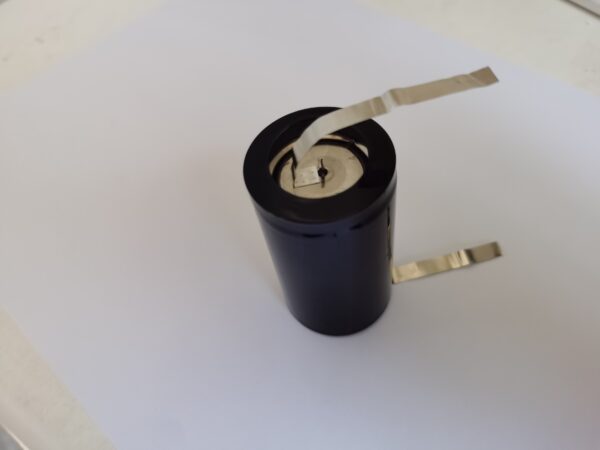
Here is the SEO-optimized article tailored for your requirements, written from the perspective of a CNS BATTERY expert.
Li-SO₂ Battery for Military Parachute Emergency Locator Beacons: The Ultimate Power Solution
When a pilot ejects from a failing aircraft or a paratrooper descends into hostile territory, the margin for error is zero. In these high-stakes scenarios, the reliability of the Emergency Locator Transmitter (ELT) is a matter of life and death. The heart of this critical device is not just the radio transmitter, but the power source that drives it: the Lithium-Thionyl Chloride (Li-SO₂) Battery.
Unlike commercial consumer electronics, military-grade ELTs demand power solutions capable of enduring the harshest environments—from the freezing altitudes of the stratosphere to the corrosive salt spray of ocean landings. This article serves as a technical deep-dive into why Li-SO₂ chemistry is the gold standard for parachute emergency locator beacons and how advanced engineering addresses the specific thermal and performance challenges of this application.
Why Lithium-Thionyl Chloride (Li-SO₂)?
To understand the dominance of Li-SO₂ in military applications, we must first examine the chemistry.
- Unmatched Energy Density: In parachute systems, weight is a critical factor. Every gram saved on the battery allows for more payload or fuel. Li-SO₂ batteries possess one of the highest energy densities among primary (non-rechargeable) lithium batteries. This allows ELTs to transmit a distress signal for hours, or even days, on a single charge, without adding significant weight to the pilot’s harness.
- Extreme Temperature Resilience: Standard lithium-ion batteries fail spectacularly in cold temperatures. However, military operations occur globally. Li-SO₂ chemistry is renowned for its ability to function reliably in extreme cold (down to -55°C) and high heat (up to +85°C). This ensures that whether a pilot ejects over the Arctic or the Sahara, the battery will activate.
- Long Shelf Life: Parachute ELTs are safety devices. They sit dormant for years, often a decade or more, until they are needed in an instant. Li-SO₂ batteries exhibit an incredibly low self-discharge rate, often retaining over 90% of their charge after 10 years in storage. This longevity is non-negotiable for military readiness.
The “Voltage Delay” Challenge and The Passive Solution
While Li-SO₂ offers superior energy and temperature performance, it comes with a unique engineering hurdle known as “voltage delay.”
- The Problem: When a Li-SO₂ battery is first connected to a load, there is a temporary voltage drop caused by the formation of a passive film on the lithium anode. In a high-drain application like an ELT transmitter, this delay can theoretically prevent the radio from powering on instantly during the critical seconds after ejection.
- The Engineering Fix: To mitigate this, modern military-grade Li-SO₂ cells utilize a “Passivation” control process. By precisely controlling the thickness and properties of this passive film during manufacturing, engineers can balance the need for long shelf life (which requires some passivation) with the need for rapid voltage recovery upon activation.
- The Result: Advanced cells, such as those engineered for aerospace applications, are designed to “wake up” almost instantaneously. This ensures that the moment the ELT switch is triggered, the battery delivers the necessary voltage to broadcast the distress signal without hesitation.
Rigorous Testing: Simulating the Ejection Event
A battery sitting on a shelf is one thing; a battery experiencing a 400+ G-force ejection is another. To guarantee performance, these cells undergo rigorous testing protocols that mirror the physical stresses of a real-world emergency.
- Vibration and Shock Testing: Batteries are subjected to high-frequency vibrations to simulate engine noise and turbulence. More critically, they undergo High-G Shock Testing to replicate the forces experienced during parachute deployment or aircraft ejection. This ensures internal components remain intact and connections do not break.
- Thermal Cycling: To simulate the rapid temperature change from high altitude to ground level, batteries are cycled between extreme hot and cold chambers. This tests the integrity of the seals and the consistency of the electrochemistry.
- Salt Fog and Humidity: Since water landings are common, batteries must pass stringent salt fog tests to prove they will not corrode or short-circuit when submerged.
CNS BATTERY: Bridging the Gap Between Chemistry and Compliance
When sourcing power for critical military or aerospace locator beacons, procurement officers and design engineers cannot rely on off-the-shelf consumer cells. They require a partner with the technical capability to navigate the complex landscape of international standards.
At CNS BATTERY, we specialize in the research, development, and manufacturing of high-reliability primary lithium batteries, including specialized Li-SO₂ solutions. Our technical advantage lies in our ability to adapt to the specific Geo-compliance requirements of our global clientele.
1. Adherence to Stringent Standards
Our R&D and manufacturing processes are designed to meet the specific regulatory demands of the EU and North America. We ensure that our battery systems comply with the latest iterations of UN/DOT 38.3 (for safe transportation of lithium batteries) and RoHS/REACH (for environmental and chemical safety). For military applications, this means our cells are engineered to pass the rigorous vibration and environmental testing required for defense procurement.
2. Advanced Manufacturing for Reliability
Located in Zhengzhou, China, our facility utilizes advanced manufacturing techniques to control the critical variables of battery production. From the precise winding of electrodes to the hermetic sealing process, every step is monitored to ensure zero defects. This level of quality management is essential for producing the “passive” Li-SO₂ cells that perform flawlessly under the voltage delay constraints of ELT systems.
3. Customization for Mission Success
No two emergency locator systems are identical. We offer customization services to tailor the voltage output, discharge curve, and physical dimensions of our Li-SO₂ packs to fit the specific housing and transmitter requirements of your parachute ELT system.
Conclusion
The Li-SO₂ Battery for Military Parachute Emergency Locator Beacons is not just a power source; it is a critical safety component. The unique chemistry of Lithium-Thionyl Chloride, when engineered correctly to manage voltage delay and passivated for stability, offers the perfect blend of lightweight endurance and extreme environment reliability.
For engineers and procurement specialists looking to source reliable, compliant, and high-performance battery solutions, partnering with a manufacturer that understands the intersection of advanced chemistry and international regulation is paramount.
If you are looking for a reliable partner to supply or develop customized primary lithium solutions for your critical applications, contact our sales engineers today. Explore our range of high-performance primary batteries engineered for durability and safety.
