
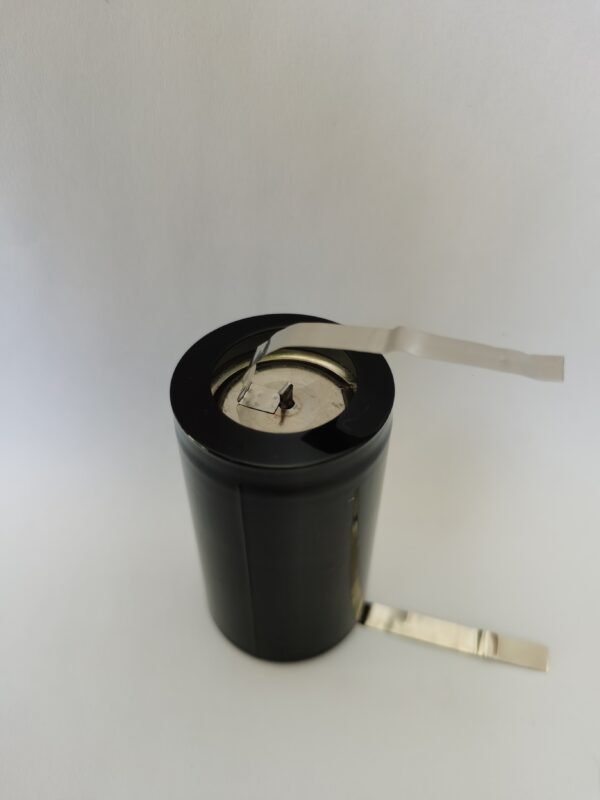
Li-SO₂ Battery for Marine Life Raft Emergency Beacons: Technical Deep-Dive for Global Compliance
Introduction
Marine life raft emergency beacons represent one of the most critical safety applications in maritime operations. When lives depend on reliable power sources in extreme conditions, Li-SO₂ (Lithium Sulfur Dioxide) batteries emerge as the industry-preferred solution. This technical analysis examines why Li-SO₂ chemistry dominates marine emergency beacon applications and how manufacturers can ensure compliance with regional standards across EU, US, and Asian markets.
Fundamental Chemistry and Operating Principles
Li-SO₂ batteries utilize lithium metal as the anode and sulfur dioxide as the cathode active material, with acetonitrile-based electrolyte containing lithium bromide. The electrochemical reaction produces a nominal voltage of 3.0V per cell, significantly higher than alkaline alternatives. This chemistry delivers exceptional energy density (280-330 Wh/kg) and operates reliably across -55°C to +70°C temperature ranges—critical for marine environments where equipment faces extreme thermal cycling.
The hermetically sealed construction prevents electrolyte evaporation and moisture ingress, ensuring 10-15 year shelf life with less than 1% annual self-discharge. For emergency beacons requiring instant activation after years of storage, this low self-discharge rate proves essential for maintaining rescue signal integrity.
Key Parameter Advantages for Marine Applications
High Current Pulse Capability: Marine EPIRB (Emergency Position Indicating Radio Beacon) systems require high-current pulses during transmission cycles. Li-SO₂ cells deliver continuous discharge rates up to 2C and pulse currents exceeding 5C without significant voltage depression, ensuring consistent 406 MHz signal transmission.
Temperature Stability: Unlike Li-MnO₂ alternatives, Li-SO₂ chemistry maintains 90% capacity retention at -40°C, crucial for Arctic and Antarctic maritime routes. The electrolyte formulation prevents freezing while maintaining ionic conductivity in subzero conditions.
Vibration and Shock Resistance: Marine environments subject equipment to constant vibration and potential impact. Li-SO₂ cells feature welded stainless steel casings with glass-to-metal seals, passing MIL-STD-810G shock testing (1500G, 0.5ms) and random vibration profiles simulating rough sea conditions.
Safety Under Pressure: Emergency beacons may experience depth pressure during deployment. Li-SO₂ cells withstand external pressures up to 1000 kPa without casing deformation, maintaining internal integrity during underwater activation scenarios.
Testing Methodologies and Certification Requirements
Comprehensive validation requires multi-stage testing protocols:
Electrical Performance Testing: Measure open-circuit voltage (OCV), internal impedance, and capacity under C/20 discharge rates at 20°C±2°C. Pulse load testing simulates beacon transmission cycles with 2A pulses for 500ms every 50 seconds over 48-hour periods.
Environmental Stress Screening: Temperature cycling between -55°C and +70°C for 100 cycles with 15-minute dwell times. Humidity exposure at 95% RH, 40°C for 1000 hours validates seal integrity. Salt spray testing per ASTM B117 (5% NaCl, 35°C, 48 hours) confirms corrosion resistance for coastal deployments.
Safety Certification Testing: UL 1642 and IEC 60086-5 compliance requires crush, nail penetration, and thermal abuse testing. For marine-specific applications, additional testing per IEC 60945 (maritime navigation equipment) validates electromagnetic compatibility and environmental durability.
Regional Compliance and CNS Product Technical Barriers
European Union Market: CE marking requires compliance with Battery Directive 2006/66/EC, RoHS 2011/65/EU, and REACH regulations. Li-SO₂ batteries must pass EN 60086-1 safety standards with additional marine equipment directive (MED) certification for vessels operating in EU waters. Manufacturers targeting German and Nordic markets should prioritize cold-temperature performance documentation.
United States Market: US Coast Guard approval requires UL 1642 certification plus compliance with 46 CFR Part 160 for life-saving appliances. FCC Part 15 EMC testing validates beacon transmitter compatibility. California Proposition 65 labeling addresses lithium content disclosure requirements for West Coast distribution.
Asia-Pacific Considerations: Japanese market entry requires PSE marking with additional JIS C 8708 compliance. Australian maritime safety standards (AS/NZS 4777) demand tropical humidity testing at 95% RH for 2000 hours. Chinese manufacturers exporting globally must navigate GB/T 8897.4 standards while maintaining export documentation for customs clearance.
CNS Product Technical Advantages: CNS Battery’s Li-SO₂ primary battery lineup addresses these regional requirements through dedicated production lines with ISO 9001:2015 certification. Our marine-grade cells feature enhanced seal technology validated for 15-year shelf life, exceeding standard 10-year requirements for North American procurement specifications. For technical procurement teams evaluating suppliers, CNS products offer documented test reports traceable to UL and IEC accredited laboratories, streamlining certification processes across multiple jurisdictions.
Manufacturers serving global maritime customers should prioritize suppliers with established compliance documentation for target regions. CNS Battery maintains technical support teams familiar with EU MED certification processes and US Coast Guard approval pathways, reducing time-to-market for emergency beacon manufacturers targeting international sales.
Conclusion
Li-SO₂ battery technology remains unmatched for marine life raft emergency beacon applications, delivering the reliability, temperature performance, and shelf life that maritime safety demands. Successful market entry requires understanding regional certification landscapes and partnering with suppliers who maintain comprehensive compliance documentation.
For technical specifications and regional compliance documentation, explore our primary battery product portfolio. Engineering teams requiring detailed test reports or customization for specific maritime standards should contact our technical team for application-specific guidance.
Targeting maritime safety equipment manufacturers in Hamburg, Rotterdam, Houston, Singapore, and Busan—CNS Battery delivers Li-SO₂ solutions engineered for global compliance and extreme environment performance.
