
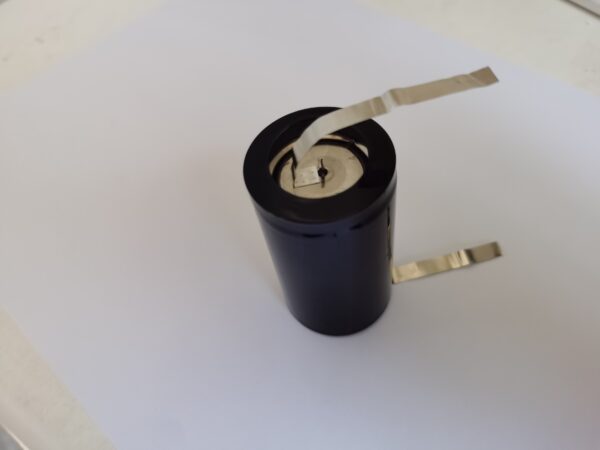
Li-SO₂ Battery for Aircraft Cockpit Voice Recorder Backup: A Technical Deep Dive
In the aviation industry, reliability is non-negotiable. When it comes to critical safety systems like the Cockpit Voice Recorder (CVR), backup power sources must deliver unwavering performance under extreme conditions. Lithium Sulfur Dioxide (Li-SO₂) primary batteries have emerged as the preferred choice for CVR backup applications, offering exceptional energy density, wide temperature tolerance, and long shelf life. This article explores why Li-SO₂ technology stands as the industry standard for aircraft CVR backup power systems.
Why Li-SO₂ Batteries Excel in Aviation Applications
Li-SO₂ batteries belong to the lithium primary (non-rechargeable) battery family, utilizing lithium metal as the anode and sulfur dioxide as the cathode active material. This chemistry delivers several critical advantages for aviation backup power:
1. Extended Operating Temperature Range
Aircraft operate in environments ranging from -55°C at high altitudes to +70°C on sun-exposed tarmacs. Li-SO₂ batteries maintain stable performance across -55°C to +85°C, ensuring CVR systems remain functional regardless of external conditions. The electrolyte system, typically composed of lithium bromide in acetonitrile with liquid SO₂, remains conductive even at extreme low temperatures where other chemistries fail.
2. High Energy Density and Compact Design
With volumetric energy density reaching 300-400 Wh/L, Li-SO₂ cells provide maximum backup duration in minimal space—a critical factor in aircraft where weight and volume constraints are stringent. A typical CVR backup requirement of 10-30 minutes of recording can be achieved with a compact battery pack weighing less than 500 grams.
3. Long Shelf Life and Low Self-Discharge
Li-SO₂ batteries exhibit self-discharge rates below 1% per year at room temperature, enabling 10+ years of storage without significant capacity loss. This aligns perfectly with aviation maintenance schedules and reduces total cost of ownership for fleet operators.
Technical Considerations for CVR Backup Integration
Voltage Stability Under Load
CVR systems require stable voltage during emergency power activation. Li-SO₂ cells deliver nominal 3.0V per cell with minimal voltage depression under moderate discharge rates (C/10 to C/5). Engineers must account for the characteristic voltage delay phenomenon—where initial voltage dips before stabilizing—by implementing appropriate circuit design or pre-conditioning protocols.
Safety and Certification Compliance
Aviation batteries must meet rigorous standards including RTCA DO-160, TSO-C142, and UN 38.3 transportation requirements. Li-SO₂ cells incorporate pressure-release vents and thermal fuses to prevent catastrophic failure. Proper battery management includes monitoring for SO₂ gas leakage and ensuring hermetic sealing integrity throughout the service life.
Discharge Profile Matching
CVR backup loads typically range from 0.5A to 2A depending on recorder architecture. Li-SO₂ batteries support continuous discharge up to 1C rate, though optimal performance occurs at C/5 or lower. System designers should validate discharge curves against actual CVR power consumption profiles to guarantee minimum backup duration under worst-case scenarios.
Procurement Guidelines for Technical Buyers
When sourcing Li-SO₂ batteries for CVR applications, consider these verification points:
- Cell Chemistry Verification: Confirm genuine Li-SO₂ composition versus alternative lithium chemistries
- Manufacturing Traceability: Require batch-level documentation and material certifications
- Environmental Testing Reports: Demand evidence of temperature cycling, vibration, and shock testing per DO-160 Section 4
- End-of-Life Voltage Specification: Ensure minimum cutoff voltage aligns with CVR system requirements (typically 2.0V per cell)
For engineers and procurement specialists evaluating Li-SO₂ battery solutions for aviation safety systems, partnering with experienced manufacturers ensures compliance and performance reliability. Explore comprehensive primary battery options at https://cnsbattery.com/primary-battery/ and connect with technical teams directly via https://cnsbattery.com/primary-battery-contact-us/ for application-specific consultation.
Conclusion
Li-SO₂ battery technology represents the optimal balance of energy density, environmental resilience, and long-term reliability for aircraft CVR backup power. As aviation safety regulations continue to evolve, selecting proven primary battery chemistry remains fundamental to maintaining airworthiness certification. Technical teams should prioritize validated suppliers with documented aviation experience when specifying backup power systems for critical flight recording equipment.
