
Here is the article tailored for your requirements, written from the perspective of a technical expert in Lithium Primary batteries.
Li-S Battery Remote Technical Support | China Factory
The Critical Need for Remote Expertise in Primary Lithium Systems
In the high-stakes world of industrial electronics and remote infrastructure, the shift from standard alkaline or Lithium-Ion (Li-ion) systems to Lithium-Thionyl Chloride (Li-S) technology is often driven by the need for extreme longevity and resilience. However, this advanced chemistry introduces unique engineering challenges that standard battery knowledge cannot solve.
When your design team encounters voltage delay issues, passivation layers, or thermal management hurdles, you need more than a sales sheet—you need immediate access to factory-level engineering expertise. This is where partnering with a manufacturer offering robust Li-S Battery Remote Technical Support becomes a strategic advantage. We understand that your project timeline cannot wait for a physical factory visit; therefore, our China factory operates on a “Remote-First” engineering support model.
This article details how our remote technical support framework ensures your Li-S battery integration is seamless, reliable, and optimized for the specific demands of your application.
1. Understanding Li-S Battery Chemistry: The “Why” Behind the Support
Before diving into the support services, it is crucial to understand the fundamental physics of the Lithium-Thionyl Chloride (Li-SOCl₂) system. Unlike rechargeable Li-ion batteries, primary lithium batteries are designed for single-use, high-energy-density applications.
- High Voltage & Energy Density: Li-S batteries operate at a nominal voltage of 3.6V, significantly higher than standard alkaline (1.5V) or Lithium Iron Phosphate (3.2V). This allows for smaller battery packs with longer service lives—often exceeding 10-15 years.
- Passivation Effect: A critical characteristic of Li-S chemistry is the formation of a passivation layer (LiCl) on the lithium anode when the cell is at rest. While this layer prevents self-discharge, it must be managed during pulse discharges.
- Thermal Sensitivity: These cells perform exceptionally well in extreme temperatures (-55°C to +85°C), but low-temperature performance requires specific heating strategies or cell formulations.
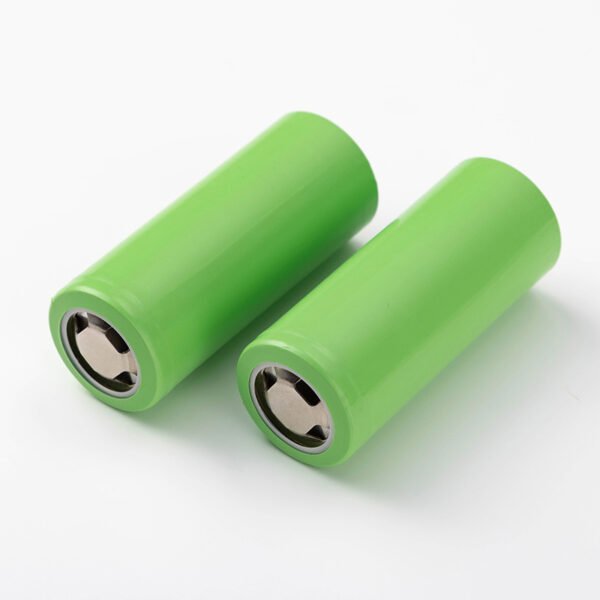
Remote Technical Intervention: Our engineers use remote simulation tools to analyze your device’s power profile. We help you determine if a standard bobbin-type cell or an energy-dense spirally wound cell is best suited for your thermal environment.
2. Real-Time Voltage & Pulse Analysis
One of the most common hurdles engineers face is the “voltage delay.” When a heavy load is applied to a resting Li-S cell, the passivation layer causes a temporary voltage drop before rebounding to the operating voltage.
The Challenge: If your IoT sensor or metering device draws a pulse current that exceeds the cell’s instantaneous capability, the system voltage may sag below the minimum operating threshold, causing a system reset or data loss.
Our Remote Solution:
Through secure remote desktop sharing and data log analysis, our technical team provides the following support:
- Pulse Testing Simulation: We guide you through configuring your test equipment to replicate real-world load profiles.
- Voltage Sag Mitigation: We provide mathematical models to calculate the necessary parallel capacitance required to “bridge” the voltage gap during the initial pulse.
- Custom Winding Design: If standard cells fail the pulse test, we remotely collaborate on designing a custom electrode winding structure to reduce internal impedance.
3. Thermal Management & Cold Weather Operation
While Li-S batteries are renowned for wide temperature operation, starting a device in sub-zero conditions (below -20°C) requires specific engineering considerations. The chemical reaction kinetics slow down significantly, and the internal resistance increases.
Remote Support Protocol:
Our China factory’s R&D team offers the following remote advisory services:
- Heater Integration Design: We provide schematics and datasheets for integrating PTC heaters or external heating elements directly into the battery pack.
- Pre-Heating Algorithms: We assist in programming the host device’s firmware to initiate a “warm-up” cycle before attempting to draw high current.
- Material Selection: We advise on the selection of low-temperature electrolyte additives that can be implemented without requiring a physical factory visit, ensuring the chemistry matches your geographical deployment.
4. Safety & Regulatory Compliance Audits
Handling primary lithium batteries requires strict adherence to safety standards (UN38.3, IEC 60086). A misconfigured battery pack can lead to catastrophic failure.
Remote Safety Review:
Our technical support team conducts virtual safety audits of your Battery Management System (BMS) design and mechanical housing:
- Venting Analysis: We review CAD drawings remotely to ensure proper venting channels are designed to handle gas release.
- Short-Circuit Protection: We verify that your protection circuit module (PCM) specifications align with the high-energy density of the Li-S chemistry.
- Documentation: We provide the necessary Material Safety Data Sheets (MSDS) and technical compliance documents required for global shipping and certification.
Conclusion: Partnering with the Source
Integrating Lithium-Thionyl Chloride (Li-S) technology into your next-generation product does not require you to board a plane to our manufacturing facility in Zhengzhou. Our commitment to Remote Technical Support ensures that you have a dedicated engineering team available to solve complex power problems instantly.
Whether you are designing a smart meter for the Siberian tundra or a medical device for long-term implantation, our factory-level expertise is just an email or message away. We bridge the gap between your design desk and our production line.
Ready to solve your power challenge?
If you are facing specific hurdles with voltage delay, low-temperature performance, or pulse current requirements, do not guess—ask the experts.
Contact our Technical Support Team today to discuss your project requirements: Li-S Battery Remote Technical Support | China Factory.
Explore our range of standard and customizable Primary Lithium Battery solutions to find the perfect fit for your application: View Product Range.
