
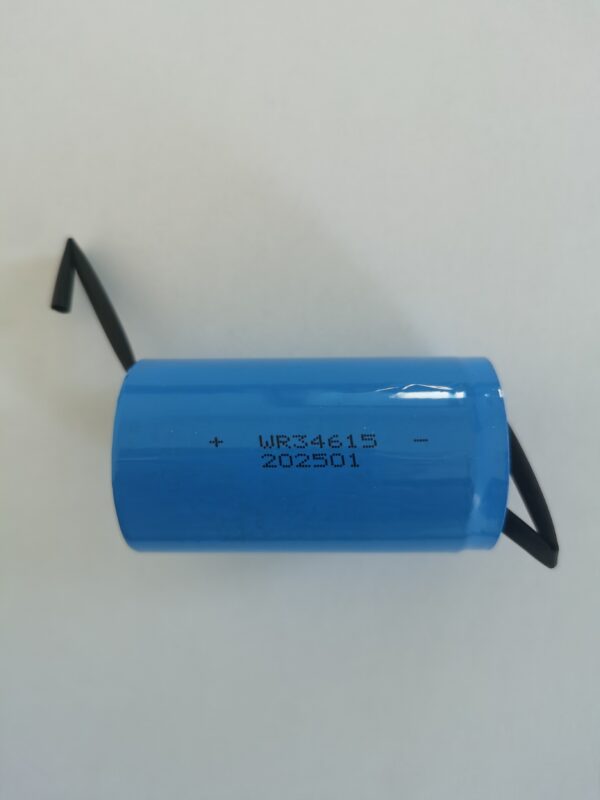
The Critical Role of Lithium-Thionyl Chloride (Li-SOCl₂) Batteries in Lunar Lander Experiment Backup Systems
In the unforgiving vacuum of space, where temperatures swing from scorching heat to cryogenic cold, reliability is not a feature—it is the only requirement. For engineers designing backup power systems for Lunar Lander experiments, the choice of battery chemistry is a make-or-break decision. While rechargeable lithium-ion dominates consumer electronics, the specific demands of deep-space backup power necessitate a different solution: the Lithium-Thionyl Chloride (Li-SOCl₂) primary battery.
This article delves into why Li-SOCl₂ technology is the gold standard for critical backup power in lunar missions, exploring its unique electrochemical properties, operational resilience, and why it is the preferred choice for sustaining life-supporting and data-critical systems when primary power fails.
Why Lithium Metal? The Chemistry of Extremes
To understand the dominance of Lithium-Thionyl Chlor. Batteries in aerospace, we must first examine the periodic table. Lithium, the lightest metal, offers the highest electrochemical potential. When paired with Thionyl Chloride (SOCl₂) as the cathode material, it creates a cell with an open-circuit voltage of 3.67V—the highest of any practical battery system.
Unlike secondary (rechargeable) cells that rely on intercalation compounds, primary lithium batteries utilize the direct oxidation of metallic lithium. This results in an energy density that is often 3 to 5 times higher than nickel-based systems. For a Lunar Lander, where every gram of payload costs thousands of dollars to launch, this gravimetric efficiency is paramount.
Core Technical Specifications:
- Nominal Voltage: 3.6 V
- Operating Temperature: -55°C to +85°C (with special designs up to +150°C)
- Annual Self-Discharge: <1% per year
- Shelf Life: 10–15 years (typical)
The “Sleep Mode” Advantage: Passive Safety and Longevity
One of the most critical features of a backup system is that it must work perfectly after sitting idle for years. In a Lunar Lander, the backup battery may not be called upon for the duration of the mission, or it may be required immediately after a harrowing launch and landing sequence.
Li-SOCl₂ batteries possess a unique characteristic known as “passive safety.” The electrolyte in these cells is non-aqueous and acts as an inhibitor at rest. This means the battery exhibits an extremely low self-discharge rate. Where a standard alkaline battery might lose 2-3% of its charge per month, a high-quality Li-SOCl₂ cell loses less than 1% per year. This ensures that when the primary power grid fails—whether due to a solar panel malfunction or a software glitch—the backup battery has retained nearly 100% of its original capacity.
Thermal Resilience: Surviving the Lunar Night
The surface of the Moon presents one of the harshest thermal environments in the solar system. During the lunar day, temperatures can soar to 127°C, while the lunar night plunges to -173°C. Standard lithium-ion batteries would freeze, rupture, or vent in these conditions.
Lithium-Thionyl Chloride batteries, however, are renowned for their wide operational window. While standard models operate from -55°C to +85°C, specialized versions utilize modified electrolytes and cell construction to withstand the extreme cold of space. The key lies in the low freezing point of the organic solvents used. Even in a frozen state, the solid electrolyte interface (SEI) remains intact, allowing the battery to deliver pulse currents upon warming, a crucial capability for restarting critical instrumentation.
Pulse Power Delivery: Meeting Peak Loads
A common misconception is that primary lithium batteries cannot deliver high currents. While it is true that standard Li-SOCl₂ cells have high internal impedance due to the passivation layer formed on the lithium anode, this is mitigated in two ways for aerospace applications:
- Bobbin-Type vs. Spirally Wound: For backup power, the “bobbin-type” construction is often preferred. While it has lower initial voltage delay, it offers superior resistance to passivation and is less prone to thermal runaway.
- Hybrid Tandem Systems: In critical Lunar Lander applications, Li-SOCl₂ cells are often paired with supercapacitors. The battery provides the high energy density for long-term storage, while the capacitor handles the high-current pulse required to restart motors or computers.
This hybrid approach ensures that the backup system can deliver the necessary pulse power to reinitialize critical avionics without the risk of voltage delay or cell damage.
The CNS BATTERY Advantage: Engineering for the Final Frontier
When designing backup power for extraterrestrial applications, standard commercial off-the-shelf (COTS) batteries are insufficient. The tolerances are too loose, and the quality control is rarely documented to the level required by aerospace standards.
This is where CNS BATTERY distinguishes itself. As a manufacturer specializing in primary lithium batteries, CNS BATTERY applies rigorous aerospace-grade quality management to every cell produced.
- Hermetic Sealing: For vacuum environments, outgassing is a death sentence for electronics. CNS BATTERY cells utilize laser welding and multi-layer sealing technologies to achieve hermeticity, preventing any electrolyte vapor from escaping into the Lander’s instrument bay.
- Advanced Manufacturing: Utilizing dry-room production environments with humidity control below 1% RH, CNS BATTERY ensures that moisture—public enemy number one for lithium metal—is eliminated from the manufacturing process.
- Customization: No two space missions are the same. CNS BATTERY offers customized form factors, voltage taps, and telemetry integration, allowing the backup battery to fit seamlessly into the tight confines of a Lunar Lander module.
Conclusion: The Unseen Guardian
In the grand theater of space exploration, the backup battery is the unseen guardian. It operates in silence until the moment of crisis. For Lunar Lander experiments, where failure means the loss of irreplaceable scientific data and potentially human lives, the Lithium-Thionyl Chloride battery is the optimal choice.
Its combination of unmatched energy density, decade-long shelf life, and resilience against the thermal extremes of the Moon makes it irreplaceable. By partnering with a manufacturer like CNS BATTERY, which adheres to the highest standards of R&D and quality control, aerospace engineers can ensure that their backup power is not just a component, but a guarantee of mission success.
Ready to engineer a power solution for your next critical application? Whether you are designing for the depths of space or the demands of terrestrial industry, CNS BATTERY provides the primary power expertise you need. Explore our full range of standard and custom battery solutions designed for resilience.
Explore our Primary Battery Range
Contact our technical team today for a consultation on your specific project requirements.
