
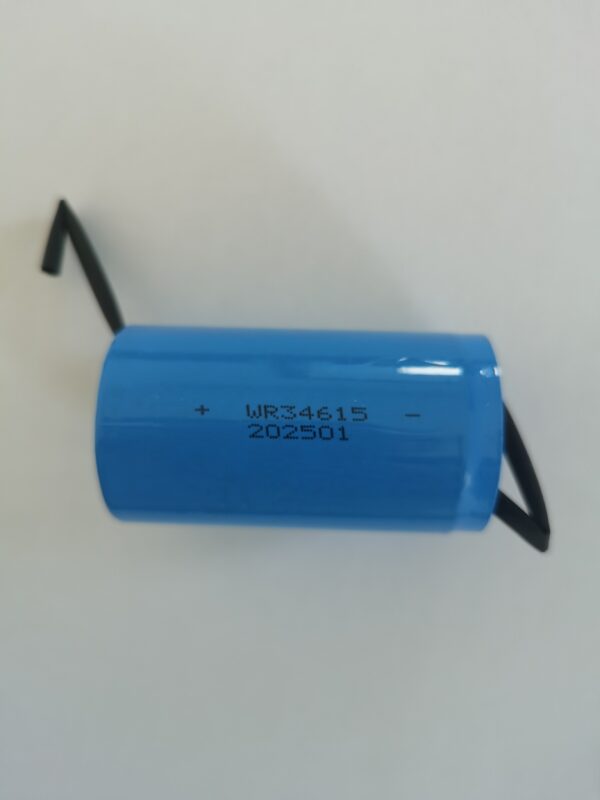
The Unseen Powerhouse: Why Lithium-Sulfur (Li-S) Batteries are the Ultimate Choice for High-Altitude Pseudo-Satellite Backup Systems
In the relentless pursuit of atmospheric exploration and persistent surveillance, High-Altitude Pseudo-Satellites (HAPS) operate in a domain where weight is the enemy and reliability is non-negotiable. These solar-powered aircraft must maintain flight through the night, relying entirely on energy storage systems that defy the limitations of conventional technology. For engineers and system integrators facing the “power-to-weight” paradox, the answer lies not in incremental improvements, but in a fundamental shift in electrochemistry: Lithium-Sulfur (Li-S) batteries.
Unlike terrestrial applications where cost and cycle life often dominate the conversation, HAPS applications prioritize specific energy (Wh/kg) above all else. This article explores why Li-S chemistry is emerging as the superior solution for these stratospheric missions, providing a deep dive into the technical advantages that make it the ideal candidate for high-altitude pseudo-satellite backup power.
The Gravitational Challenge of Stratospheric Flight
To understand the necessity of Li-S batteries, one must first understand the physics of HAPS. Operating in the lower stratosphere (approximately 20 km or 65,000 ft), these vehicles exist in a near-vacuum environment with extreme temperature fluctuations. Every gram of payload dictates the size of the aircraft, the amount of solar panel required, and ultimately, the feasibility of the mission.
Traditional lithium-ion batteries, while reliable for consumer electronics or even electric vehicles, simply cannot compete in this arena. Their energy density ceiling is too low. For a HAPS to remain airborne for weeks or months, it needs a battery that stores the maximum amount of energy for the absolute minimum mass. This is where the unique chemistry of Lithium-Sulfur takes flight.
Decoding the Chemistry: The Superiority of Li-S
Lithium-Sulfur batteries represent a distinct branch of the lithium-metal family. While standard primary lithium batteries often use Manganese Dioxide (Li-MnO2) or Thionyl Chloride (Li-SOCl2), Li-S operates on a different redox reaction.
Key Technical Advantages:
- Unmatched Specific Energy: The theoretical specific energy of a Li-S cell exceeds 2,500 Wh/kg. In practical, high-grade aerospace applications, achieving 500 Wh/kg to 600 Wh/kg is realistic. Compare this to the 150-250 Wh/kg of standard lithium-ion, and the gravitational advantage becomes obvious.
- Elemental Simplicity: Sulfur is a lightweight, abundant, and low-cost cathode material. Combined with a metallic lithium anode, the cell chemistry eliminates the heavy transition metals (like Cobalt or Nickel) found in conventional batteries.
- Low-Temperature Performance: The stratosphere is cold—often dropping below -50°C. Lithium-based chemistries, in general, exhibit superior discharge characteristics at sub-zero temperatures compared to aqueous systems. Li-S batteries maintain high discharge efficiency even in the frigid upper atmosphere, ensuring the backup power system activates reliably when the sun sets.
The Lithium Metal Distinction
It is crucial to distinguish the Li-S system discussed here from rechargeable lithium-ion. In the context of HAPS backup power, we are often discussing primary lithium batteries (non-rechargeable) or advanced lithium metal anode technologies.
Primary lithium batteries are the workhorses of critical backup systems. They offer:
- Indefinite Shelf Life: With annual self-discharge rates often below 1%, primary lithium cells can sit dormant for years, holding their charge until the moment of deployment.
- Absolute Safety: Unlike systems that require complex Battery Management Systems (BMS) to prevent thermal runaway, primary lithium chemistries are inherently stable and do not suffer from dendrite formation in the same way rechargeable lithium-metal cells can.
For HAPS, this translates to a “fit-and-forget” philosophy. The backup system must be there when needed, without the risk of failure due to complex electronics or degradation over time.
Engineering for the Edge of Space
Deploying Li-S technology in a HAPS is not without its engineering hurdles. The conversion reaction in Li-S batteries can produce polysulfides, which can shuttle between electrodes and reduce efficiency. However, for a primary (single-use or long-cycle backup) application, these degradation mechanisms are less of a concern than in a daily cycling application.
The focus for manufacturers shifts to:
- Hermetic Sealing: Preventing any electrolyte evaporation in the near-vacuum conditions.
- Thermal Management: Designing casings that can withstand the thermal shock of the day/night cycle without cracking.
- Voltage Regulation: Ensuring the discharge curve of the Li-S cell matches the motor or avionics requirements, potentially utilizing advanced pulse discharge capabilities.
Why Choose CNS BATTERY for Your Aerospace Power Needs?
At CNS BATTERY, we understand that powering a HAPS is not just about selling cells; it is about enabling missions that push the boundaries of engineering. While our standard product lines focus on the robustness of prismatic, pouch, and cylindrical cells for terrestrial applications, our R&D capabilities extend into the specialized realm of high-energy-density solutions required for the stratosphere.
We recognize that your project likely requires a customized approach. Whether you are looking for standard primary lithium cells for auxiliary power or exploring the integration of advanced high-density chemistries, our team is equipped to handle the complexities of aerospace power.
Our Commitment to Your Project:
- Customized Engineering: We don’t just sell off-the-shelf products. We work with you to design a power solution that fits the exact voltage, capacity, and dimensional constraints of your aircraft.
- Quality Management: Operating in Zhengzhou, China, we adhere to strict quality control standards to ensure that every cell shipped meets the rigorous demands of high-altitude performance.
- Global Support: We provide the technical documentation and support necessary for international aerospace compliance.
If you are an engineer or project manager looking to optimize the energy storage system for your High-Altitude Pseudo-Satellite, we invite you to explore our capabilities. Let us help you lighten the load so you can reach higher.
Explore our range of advanced battery solutions and contact our engineering team today to discuss your specific requirements.
Explore Primary Battery Solutions
Contact CNS BATTERY Engineering Team
