
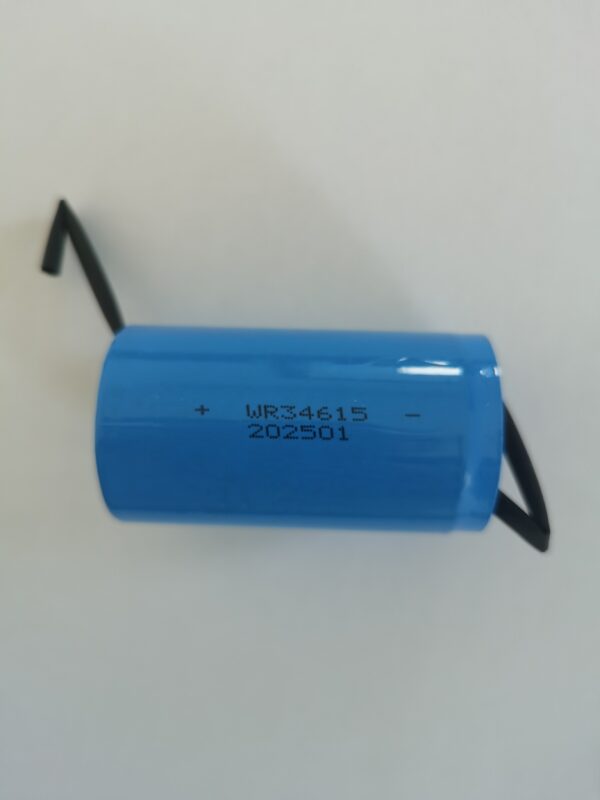
Li-S Battery for Aerospace Mass Production | China Manufacturer
The aerospace industry stands at a critical juncture where energy density, weight reduction, and operational reliability converge as paramount requirements. Lithium-sulfur (Li-S) battery technology has emerged as a transformative solution for aerospace applications, offering theoretical energy densities exceeding 2,600 Wh/kg—nearly five times that of conventional lithium-ion systems. As a leading China manufacturer specializing in primary lithium metal batteries, we understand the technical complexities and production demands that define aerospace-grade power solutions.
Technical Advantages of Li-S Battery Architecture
Lithium-sulfur batteries operate on a fundamentally different electrochemical mechanism compared to traditional intercalation-based lithium-ion cells. The cathode utilizes elemental sulfur, which undergoes a conversion reaction with lithium ions during discharge, forming lithium sulfide (Li₂S). This conversion chemistry enables significantly higher specific capacity—approximately 1,675 mAh/g for sulfur versus 140-200 mAh/g for typical lithium-ion cathode materials.
For aerospace applications, this translates into three critical advantages:
1. Exceptional Energy-to-Weight Ratio
The gravimetric energy density of Li-S cells ranges from 400-600 Wh/kg in practical configurations, making them ideal for satellites, unmanned aerial vehicles (UAVs), and high-altitude pseudo-satellites (HAPS) where every gram matters. Our production facilities maintain strict mass tolerances to ensure consistent performance across batch production.
2. Extended Operational Temperature Range
Aerospace environments demand battery systems capable of functioning across extreme temperature variations. Advanced Li-S configurations with optimized electrolyte formulations can operate reliably from -40°C to +85°C, meeting MIL-STD-810G requirements for military and commercial aerospace applications.
3. Reduced Material Cost Structure
Sulfur is abundant, environmentally benign, and costs approximately $0.25/kg compared to cobalt-based cathode materials exceeding $30/kg. This economic advantage becomes significant when scaling to mass production volumes required by aerospace OEMs.
Mass Production Challenges and Manufacturing Solutions
Transitioning Li-S battery technology from laboratory prototypes to aerospace-certified mass production requires addressing several technical hurdles:
Polysulfide Shuttle Effect Mitigation
During cycling, intermediate lithium polysulfides (Li₂Sₓ, 4≤x≤8) dissolve into the electrolyte and migrate between electrodes, causing capacity fade. Our manufacturing process incorporates advanced cathode host structures using porous carbon matrices and functional separator coatings to physically confine polysulfides within the cathode region.
Lithium Anode Stabilization
Metallic lithium anodes present dendrite formation risks during repeated cycling. For primary (non-rechargeable) aerospace applications, this concern is substantially reduced since the battery discharges only once during mission deployment. Our primary Li-S cells leverage this advantage while implementing protective SEI (Solid Electrolyte Interphase) layers to ensure shelf life exceeding 10 years at ambient storage conditions.
Quality Control and Testing Protocols
Aerospace certification demands rigorous validation. Each production batch undergoes:
- UN 38.3 transportation safety testing
- Vibration and shock testing per RTCA DO-160 standards
- Thermal vacuum cycling simulation
- Hermetic sealing verification for low-pressure environments
China Manufacturing Capability and Supply Chain Integration
China has established itself as a global hub for advanced battery manufacturing, with comprehensive supply chain integration from raw material processing to cell assembly. Our production facilities feature:
- ISO 9001:2015 and AS9100D certified manufacturing systems
- Automated electrode coating lines with ±2μm thickness precision
- Dry room environments maintaining dew points below -50°C
- In-line X-ray inspection for defect detection
- Traceability systems tracking each cell from raw material to final shipment
For international aerospace customers, we provide complete documentation packages including material safety data sheets (MSDS), certificates of conformity, and batch-specific performance data. Our export compliance team ensures adherence to ITAR regulations and regional certification requirements.
Application-Specific Configuration Options
Different aerospace platforms require tailored battery configurations:
Satellite Systems: Hermetically sealed cylindrical cells with radiation-hardened components
UAV Applications: Lightweight pouch cells with flexible form factors
High-Altitude Platforms: Low-pressure optimized designs with enhanced thermal management
Military Systems: Ruggedized configurations meeting MIL-PRF-32565 specifications
Our engineering team works directly with customers to optimize cell chemistry, form factor, and electrical characteristics for specific mission profiles.
Conclusion and Product Engagement
The convergence of Li-S battery technology with mature Chinese manufacturing capabilities presents unprecedented opportunities for aerospace programs seeking next-generation power solutions. Primary lithium metal batteries offer the reliability and energy density required for critical missions where recharging is impossible.
For technical specifications, customization options, and volume pricing inquiries, explore our comprehensive primary battery product portfolio. Our engineering team is ready to discuss your specific aerospace power requirements and provide detailed technical documentation.
Contact our international sales and technical support team: Get in Touch
As the aerospace industry accelerates toward electrification and extended mission durations, partnering with an experienced China manufacturer ensures access to scalable production capacity, competitive pricing, and continuous technical support throughout your program lifecycle.
