
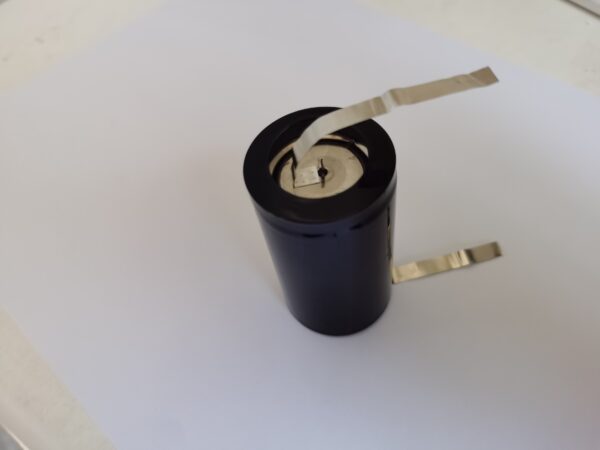
Li-S Battery | Deep Sea Equipment High Energy Battery Manufacturer
The deep-sea exploration industry demands power solutions that can withstand extreme pressures, temperature variations, and extended operational periods without maintenance. As a professional lithium battery manufacturer specializing in primary lithium-metal cells, we recognize that Lithium-Sulfur (Li-S) battery technology represents a transformative advancement for underwater equipment, remotely operated vehicles (ROVs), and autonomous underwater vehicles (AUVs). This technical analysis examines why Li-S batteries are becoming the preferred energy storage solution for deep-sea applications.
Technical Advantages of Li-S Battery Chemistry
Lithium-sulfur batteries utilize sulfur as the cathode material and metallic lithium as the anode, offering a theoretical specific capacity of up to 1,675 mAh/g for sulfur—significantly higher than conventional lithium-ion intercalation compounds. This fundamental chemistry difference enables Li-S batteries to achieve energy densities ranging from 400-600 Wh/kg, approximately 2-3 times that of traditional lithium-ion systems.
For deep-sea equipment manufacturers, this translates to extended mission durations without increasing battery pack volume or weight. The reduced mass is particularly critical for buoyancy-controlled underwater vehicles where every kilogram affects operational efficiency and deployment costs.
Deep-Sea Environmental Compatibility
The extreme conditions of deep-sea environments present unique challenges for battery systems. Pressures exceeding 1,000 bar at depths beyond 10,000 meters require robust cell construction and specialized electrolyte formulations. Our primary lithium-metal batteries incorporate pressure-resistant housing designs and solid-state electrolyte options that eliminate the risk of leakage under high-pressure conditions.
Temperature stability is another critical factor. Deep-sea temperatures typically range from 2-4°C, with hydrothermal vent areas reaching significantly higher temperatures. Li-S battery systems maintain consistent performance across this temperature spectrum, unlike conventional lithium-ion cells that experience capacity degradation in cold environments. The absence of thermal runaway risks in properly designed primary lithium cells makes them inherently safer for enclosed underwater systems where maintenance access is impossible.
Energy Density vs. Operational Requirements
Deep-sea exploration missions often require continuous power delivery over extended periods. A typical AUV mission may last 24-72 hours, while seabed monitoring stations require year-long operation without battery replacement. The high energy density of Li-S chemistry enables manufacturers to design compact power systems that meet these demanding requirements.
Consider the power consumption profile of modern underwater equipment: navigation systems, sonar arrays, communication modules, and scientific instruments collectively draw 50-200W depending on operational mode. A 10 kWh Li-S battery pack weighs approximately 20kg, compared to 40-50kg for an equivalent lithium-ion system. This 50-60% weight reduction directly impacts vehicle design, allowing for additional payload capacity or extended range.
Addressing Technical Challenges
While Li-S batteries offer significant advantages, several technical considerations require attention during system integration. The polysulfide shuttle effect, where intermediate lithium polysulfides migrate between electrodes, can reduce cycle life in rechargeable configurations. However, for primary (non-rechargeable) deep-sea applications, this limitation is minimized since the battery operates in a single discharge cycle.
Our manufacturing process incorporates advanced separator technologies and electrolyte additives that suppress polysulfide migration, ensuring stable voltage output throughout the discharge curve. This is essential for sensitive underwater instrumentation that requires consistent power delivery.
Another consideration is the operating voltage profile. Li-S batteries typically operate at 2.1-2.4V nominal voltage per cell, lower than the 3.6-3.7V of lithium-ion cells. System designers must account for this when configuring battery packs to meet equipment voltage requirements. Our engineering team provides technical support for optimal pack configuration based on specific application needs.
Manufacturing Quality and Reliability
For deep-sea applications, battery reliability is non-negotiable. Equipment failure at extreme depths can result in losses exceeding hundreds of thousands of dollars, not to mention critical data loss. Our primary lithium battery manufacturing follows ISO 9001 quality management standards with comprehensive testing protocols including:
- High-pressure chamber testing up to 1,500 bar
- Thermal cycling from -40°C to +85°C
- Vibration and shock testing per MIL-STD-810G
- Long-term storage stability verification
Each battery cell undergoes individual quality inspection before assembly into custom pack configurations. Traceability systems track every component from raw material sourcing through final testing, ensuring accountability and consistent quality across production batches.
Application-Specific Solutions
Different deep-sea applications require tailored power solutions. Scientific research vessels deploying sensor arrays need long-duration, low-drain batteries with minimal self-discharge. Military and defense applications prioritize energy density and rapid deployment capability. Commercial offshore operations focus on cost-effectiveness and supply chain reliability.
Our engineering team works directly with equipment manufacturers to develop customized battery solutions that match specific operational profiles. This collaborative approach ensures optimal performance while maintaining safety margins appropriate for underwater deployment.
Conclusion and Product Integration
Li-S battery technology represents the next generation of high-energy power solutions for deep-sea equipment. The combination of superior energy density, environmental compatibility, and manufacturing maturity makes it an ideal choice for ROVs, AUVs, seabed monitoring stations, and underwater communication systems.
For technical specifications, customization options, and engineering support, explore our comprehensive primary battery product range. Our team of battery specialists is ready to discuss your specific deep-sea application requirements and develop tailored power solutions that meet your operational demands.
Contact our technical sales team through our dedicated contact page to request detailed specifications, sample testing, or engineering consultation. With decades of experience in primary lithium battery manufacturing, we deliver reliable, high-performance power solutions for the most demanding underwater environments.
Technical Note: All battery systems for deep-sea deployment should undergo thorough validation testing under simulated operating conditions before field deployment. Our engineering team provides comprehensive technical documentation and testing support to ensure successful system integration.
