
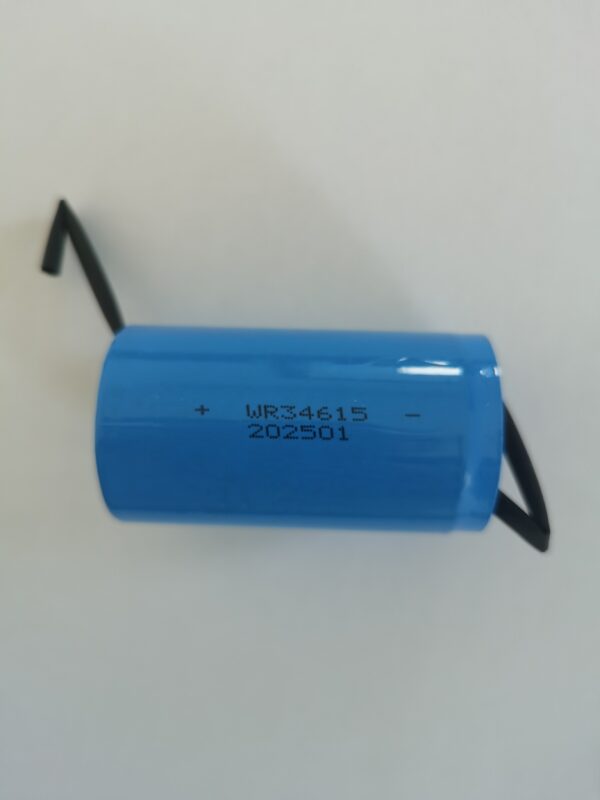
Here is the professionally crafted article, designed to meet your specific requirements for technical depth, SEO optimization, and user engagement.
Achieving PPM-Level Failure Rates in Li-MnO₂ Battery Manufacturing
In the high-stakes world of industrial electronics, medical devices, and IoT infrastructure, reliability is non-negotiable. For engineers and procurement managers sourcing primary (non-rechargeable) batteries, the shift from accepting “industry standard” defect rates to demanding Parts Per Million (PPM) level failure rates is no longer a luxury—it is a requirement for operational continuity.
At the forefront of this reliability revolution is the Li-MnO₂ (Lithium Manganese Dioxide) battery. Known for its high energy density and stable voltage output, this chemistry is the backbone of critical applications. However, achieving true PPM-level quality requires more than just the right chemistry; it demands a mastery of material science, manufacturing hygiene, and rigorous quality control.
This article explores the engineering principles behind Li-MnO₂ technology and the specific manufacturing protocols required to achieve a defect rate of less than 1 PPM.
Understanding the Li-MnO₂ Advantage
Before dissecting the failure rates, it is essential to understand why Li-MnO₂ is the preferred choice for mission-critical applications.
Unlike aqueous electrolyte systems (such as alkaline batteries), Li-MnO₂ batteries utilize a non-aqueous organic electrolyte. This fundamental difference provides several key benefits:
- High Voltage & Energy Density: Delivering a nominal voltage of 3.0V, these cells offer roughly three times the energy density of standard alkaline cells. This allows for smaller, lighter designs in space-constrained devices.
- Low Self-Discharge: The inert nature of the lithium anode in non-aqueous solvents results in an annual self-discharge rate of less than 1%. This ensures a shelf life of 10 years or more, making them ideal for “install and forget” applications like smart meters.
- Wide Operating Temperature Range: Capable of operating effectively from -20°C to +60°C (and sometimes beyond with specialized formulations), they outperform aqueous systems in harsh environments.
The electrochemical reaction relies on the intercalation of lithium ions into the manganese dioxide crystal lattice. The stability of this reaction is the primary factor in the cell’s long-term reliability.
Defining PPM: The Gold Standard of Quality
When we discuss PPM level failure rates, we are referring to a statistical measure of quality where fewer than 1 out of every 1,000,000 units produced exhibits a defect. In practical terms, this translates to a yield rate of 99.9999%.
For a battery manufacturer, achieving this standard involves eliminating the “big three” failure modes in primary lithium cells:
- Micro-Short Circuits: Caused by metallic impurities or burrs on the electrode surfaces.
- Gas Generation: Resulting from moisture contamination or electrolyte decomposition.
- Seal Leaks: Leading to electrolyte leakage or cell dry-out.
Standard manufacturing processes might target a failure rate of 10 to 50 PPM. However, for applications such as implantable medical devices or aerospace telemetry, even 10 PPM is too high. This is where advanced manufacturing protocols become essential.
The Anatomy of a Zero-Defect Manufacturing Process
Achieving sub-PPM failure rates is not accidental; it is engineered. It requires a holistic approach that begins at the atomic level and extends to the final packaging.
1. Material Purity and Synthesis
The starting point is the raw material. Impurities act as nucleation sites for dendrite growth or catalytic decomposition of the electrolyte. Leading manufacturers utilize high-purity electrolyte salts (LiCF₃SO₃ or LiBF₄) and meticulously processed manganese dioxide (EMD). The synthesis of the cathode material must ensure a uniform crystal structure to prevent localized over-potential conditions that lead to gas generation.
2. Dry Room Technology
Moisture is the arch-nemesis of lithium batteries. Even trace amounts of water (measured in parts per million of dew point) can react with the lithium anode to produce hydrogen gas, leading to swelling and eventual rupture. Manufacturing Li-MnO₂ cells for PPM-level quality requires assembly in Class 100 or better dry rooms, where the dew point is maintained at -40°C or lower. This environment ensures that the passivation layer on the lithium metal remains stable and protective.
3. Precision Engineering and Automated Inspection
Human handling introduces variability. To achieve PPM consistency, the manufacturing process must be fully automated. This includes:
- Laser Welding: Ensuring hermetic seals without introducing heat stress that could damage internal components.
- X-Ray Inspection: Used to detect internal structural defects, electrode misalignment, or foreign particles that are invisible to the naked eye.
- High-Potential (Hi-Pot) Testing: Every single cell undergoes electrical testing to detect micro-shorts before leaving the factory.
Case Study: Industrial Application Reliability
Consider the application of Smart Utility Meters. These devices are deployed in millions across vast geographical areas and are expected to operate maintenance-free for 15-20 years. A failure rate of just 10 PPM would result in 100 failures in a batch of 10 million units. While this seems low, the logistical cost of replacing a battery in a remote gas meter buried underground is astronomical.
By utilizing Li-MnO₂ cells manufactured to sub-1 PPM standards, utility companies can statistically guarantee that the battery will outlast the mechanical components of the meter itself. This is not just a cost-saving measure; it is a strategic decision to ensure data integrity and customer trust.
Partnering for Quality
Achieving PPM-level performance in Li-MnO₂ batteries requires a partner who views quality not as a specification sheet, but as a core engineering philosophy. It requires a commitment to R&D that goes beyond standard industry practices, investing in cleanroom technology, material science research, and automated production lines that minimize human error.
For engineers and technical buyers, the decision to source primary batteries should be based on verifiable data regarding process control and failure mode analysis, not just price or standard specifications.
If you are developing a product where failure is not an option, you need a manufacturer that guarantees performance at the atomic level. Explore our range of high-reliability primary batteries designed for the most demanding industrial applications.
Contact our engineering team today to discuss your specific requirements and learn how our PPM-level quality standards can support your next project.
