
Here is the professional article tailored for your requirements, optimized for both SEO and B2B readership.
Powering the Silent Guardians: Why Li-MnO₂ is the Ultimate Choice for Industrial Data Logger Backup
In the unforgiving landscape of industrial automation, data is king. Whether monitoring pipeline pressure in the Siberian winter or tracking structural integrity on a suspension bridge, Industrial Data Loggers (IDLs) are the silent guardians of operational integrity. However, these devices face a critical vulnerability: power failure. When the main power grid drops or a primary battery degrades, the continuity of data relies entirely on a robust backup power solution.
For engineers and procurement managers tasked with securing these systems, the choice of backup chemistry is not merely a technicality; it is a risk management decision. Among the myriad of options, the Lithium Manganese Dioxide (Li-MnO₂) battery stands out as the gold standard for long-term, maintenance-free backup in harsh environments.
The Core Challenge: Why Standard Batteries Fail
Before diving into the solution, it is crucial to understand why conventional power sources often fall short in IDL applications.
Most standard alkaline or lead-acid batteries suffer from high self-discharge rates. In a “sleep mode” scenario—where a backup battery sits idle for years waiting for a mains failure—these chemistries can lose significant capacity. By the time a power outage occurs, the backup might already be dead, resulting in catastrophic data loss.
Furthermore, industrial environments are rarely kind. Temperature extremes, humidity, and physical vibration can degrade lesser batteries rapidly. This is where the unique physics of primary lithium batteries comes into play.
The Science of Stability: How Li-MnO₂ Works
The Li-MnO₂ battery operates on a non-aqueous (organic solvent) electrolyte system. This fundamental difference from water-based batteries provides three critical advantages:
- Exceptional Voltage Stability: Unlike alkaline cells that experience a steady voltage drop during discharge, Li-MnO₂ cells maintain a remarkably flat discharge curve at approximately 3.0V. This ensures that the backup circuitry receives consistent power from the first day to the last, preventing brownouts that could corrupt memory.
- Ultra-Low Self-Discharge: The chemical stability of the lithium anode and manganese dioxide cathode results in an annual self-discharge rate of less than 1%. This translates to a theoretical shelf life of 10 to 15 years at room temperature. For an IDL, this means the backup battery will likely outlast the device itself.
- Thermal Resilience: With an operating range typically spanning -40°C to +85°C, these cells function reliably in environments where standard batteries would freeze or rupture.
Application Spotlight: The Data Logger Dilemma
Consider a typical scenario: an IDL deployed in a remote water treatment facility. The device runs on AC power but requires a backup to maintain its real-time clock (RTC) and volatile memory during outages.
- The Requirement: The backup must draw microamps of current in standby but be ready to power the system instantly.
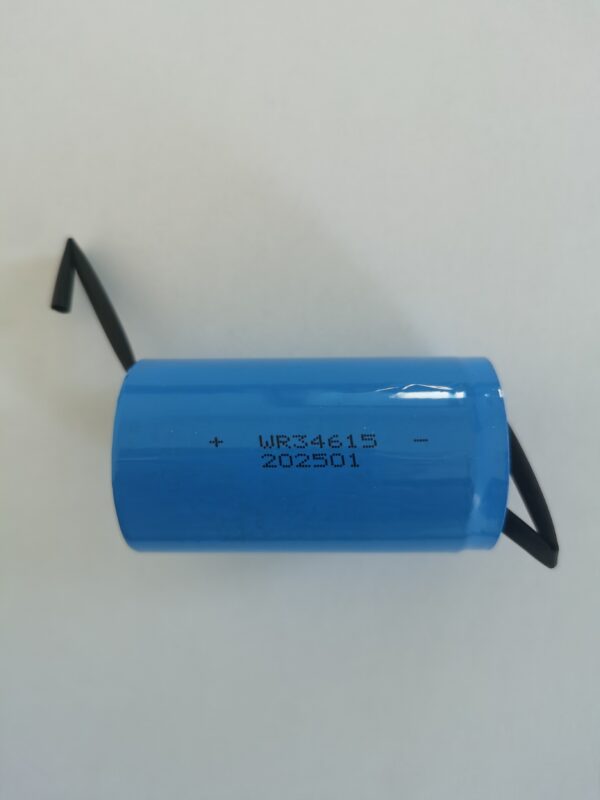
- The Solution: A C-sized or D-sized Li-MnO₂ cell. These high-energy-density cells provide the necessary amp-hour capacity to bridge gaps between maintenance visits.
- The Outcome: Even if the mains power fails for an extended period due to a storm, the Li-MnO₂ backup ensures that the logger continues to timestamp and store critical data without a glitch.
Unlike rechargeable Lithium-Ion batteries, which require complex Battery Management Systems (BMS) and degrade with each charge cycle, the primary lithium nature of Li-MnO₂ means it is a “fit and forget” solution. There is no memory effect, no need for periodic cycling, and no risk of deep discharge damage.
Technical Specifications: Matching the Chemistry to the Hardware
When sourcing Li-MnO₂ batteries for industrial integration, engineers must consider the specific energy density and pulse capabilities required by their telemetry systems.
The following table highlights the standard specifications for industrial-grade cylindrical Li-MnO₂ cells, which are commonly used in ruggedized data logging enclosures:
| Parameter | Standard Specification | Industrial Relevance |
|---|---|---|
| Nominal Voltage | 3.0 V | Compatible with most RTC chips and SRAM modules without voltage regulation. |
| Operating Temp. | -40°C to +85°C | Suitable for outdoor kiosks, underground sensors, and unheated facilities. |
| Anode Material | Lithium (Li) | Provides high specific energy and long-term stability. |
| Cathode Material | Manganese Dioxide (MnO₂) | Offers excellent pulse capability for radio transmission during power loss. |
| Avg. Service Life | 10+ Years | Reduces Total Cost of Ownership (TCO) by eliminating battery swaps. |
The Strategic Advantage: Total Cost of Ownership (TCO)
While the upfront cost of a Li-MnO₂ battery may be higher than a standard alkaline cell, the Total Cost of Ownership (TCO) is significantly lower in industrial settings.
Imagine an IDL installed on a high-voltage transmission tower or inside a chemical reactor vessel. The labor cost to access, open, and replace a failed backup battery can run into thousands of dollars. By utilizing a battery technology designed for longevity and resilience, you are not just buying power; you are purchasing peace of mind.
For mission-critical applications where data integrity is non-negotiable, specifying the wrong backup chemistry is a gamble no engineer should take. The Lithium Manganese Dioxide cell remains the most pragmatic choice for ensuring that when the lights go out, your data remains safe.
Ready to Secure Your Data?
If you are designing or maintaining industrial systems that require fail-safe backup power, it is time to upgrade to the reliability of primary lithium technology. Don’t let a power outage compromise your data integrity.
Explore our range of industrial-grade Li-MnO₂ batteries engineered for extreme environments and long-term performance. Whether you need standard cylindrical cells or custom configurations for specialized telemetry hardware, our team is ready to assist.
For technical specifications, datasheets, or custom integration advice, please visit our Primary Battery Product Page or contact our engineering team directly via the Contact Us portal.
