
The Unseen Guardians: Why Li-MnO₂ Batteries Are the Optimal Power Source for HVAC Air Quality Sensors
In the intricate ecosystem of modern Heating, Ventilation, and Air Conditioning (HVAC) systems, the silent sentinels of indoor air quality (IAQ) are the sensors. These devices continuously monitor volatile organic compounds (VOCs), carbon dioxide (CO₂), humidity, and particulate matter. For Original Equipment Manufacturers (OEMs) and design engineers, the challenge isn’t just detecting these elements—it’s ensuring the sensor remains operational, accurate, and maintenance-free for a decade or more. This is where the Lithium-Manganese Dioxide (Li-MnO₂) battery enters the equation, not merely as a power source, but as a critical component of the sensor’s architecture.
Unlike consumer electronics that recharge nightly, HVAC sensors often reside in inaccessible ducts or ceiling cavities. The reliance on grid power is inefficient for low-duty-cycle sensing, and maintenance calls for battery replacement are costly and inconvenient for end-users. Primary lithium batteries, specifically the Li-MnO₂ chemistry, offer a solution that perfectly aligns with the duty cycle and environmental demands of these applications.
The Technical Superiority of Li-MnO₂ Chemistry
To understand why Li-MnO₂ is the industry standard for these applications, we must dissect the electrochemical relationship between the anode and cathode.
1. The Energy Density Advantage
The fundamental metric for any embedded sensor is volumetric and gravimetric energy density. Lithium, as the anode material, possesses the highest specific capacity (3860 mAh/g) and the most negative electrochemical potential (-3.045 V vs. Standard Hydrogen Electrode) of all metallic elements. When paired with Manganese Dioxide (MnO₂) as the cathode, the resulting cell delivers a nominal voltage of 3.0V, significantly higher than traditional alkaline (1.5V) or Lithium-Thionyl Chloride (3.6V, but with different characteristics) cells.
This high voltage allows engineers to power complex microcontrollers and wireless transmitters (often utilizing Zigbee or Bluetooth Low Energy protocols) with fewer cells, reducing the overall footprint of the sensor module.
2. Intrinsic Safety and Stability
HVAC environments can be thermally volatile. The electrolyte used in Li-Mn0₂ cells is typically a mixture of organic carbonates (such as Propylene Carbonate and Dimethoxyethane). Crucially, this chemistry is inherently safer than Lithium-Ion (Li-ion) because it does not utilize a flammable liquid organic electrolyte in the same reactive state, nor does it rely on a complex oxide cathode structure that can degrade.
Unlike Lithium-Sulfur Dioxide or Lithium-Thionyl Chloride batteries, Li-MnO₂ cells do not generate gas during normal operation or upon discharge. This eliminates the need for complex safety vents in the sensor housing, simplifying the mechanical design.
3. Low Self-Discharge and Longevity
The shelf life of a Li-MnO₂ cell is exceptional, often retaining 90% of its capacity after 10 years of storage at room temperature. This is due to the formation of a stable, protective passivation layer (Solid Electrolyte Interphase – SEI) on the lithium anode. For HVAC sensors that may sit in a warehouse for years before installation, this means the “first power-on” experience is identical to the “last power-on” experience.
Application-Specific Engineering for HVAC Sensors
When integrating a battery into an IAQ sensor, engineers face three primary constraints: space, temperature, and pulse capability. While Li-MnO₂ is renowned for stable voltage output, HVAC sensors often transmit data wirelessly in short bursts. This requires the battery to handle high pulse loads without significant voltage drop.
Pulse Performance and Internal Impedance
Standard “bobbin”-type Li-MnO₂ cells can struggle with high current pulses due to their construction. However, advanced “jelly-roll” or “prismatic” constructions, often utilizing carbon-coated anodes or specialized cathode formulations, significantly lower the internal impedance.
For an HVAC sensor transmitting a 1-second RF burst every 5 minutes, the battery must maintain a voltage above the brown-out reset threshold of the microcontroller (typically 2.0V–2.7V). A well-engineered Li-MnO₂ cell can deliver pulse currents of up to 100mA to 500mA, depending on the size, making it suitable for modern low-power wide-area network (LPWAN) sensors.
Thermal Resilience
HVAC ducts can exceed 60°C during operation, and sensors installed in attics or unconditioned spaces can experience temperatures as low as -20°C. The organic electrolyte in Li-MnO₂ batteries has a wide liquid range, allowing operation from -40°C to +85°C. This robustness ensures that the sensor does not fail during the extreme temperature swings common in ventilation systems.
Selecting the Right Format: From Coin Cells to Cylindrical
The choice of cell format is dictated by the physical constraints of the sensor housing and the required runtime.
- Coin Cells (CR Series): For ultra-compact, non-transmitting monitors (simply displaying data locally), CR2032 or CR2477 cells are sufficient. They provide the necessary 3V logic compatibility for digital displays.
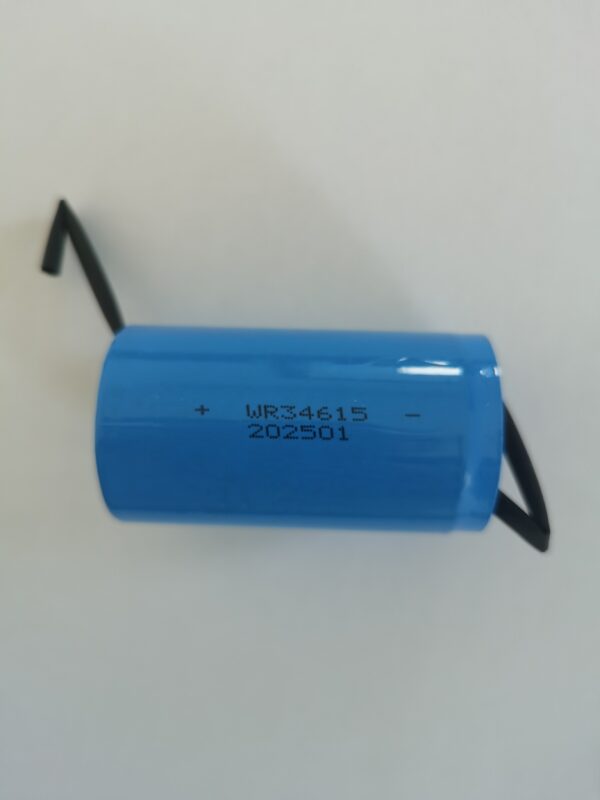
- Cylindrical Cells (BR/CR Series): For whole-home IAQ monitors that require higher capacity and better pulse performance, cylindrical cells such as the CR123A or custom sizes are preferred. These offer a higher amp-hour capacity, ensuring the sensor outlasts the HVAC unit itself.
For OEMs designing next-generation sensors, the ability to customize the battery pack—whether through spot welding tabs, adding specialized protection circuits, or conforming to a unique shape—is paramount.
Powering the Future of Indoor Air Quality
In the realm of commercial and residential HVAC, reliability is non-negotiable. A failing sensor battery doesn’t just mean a dead device; it means compromised air quality data, leading to potential health risks or inefficient system operation. The Li-MnO₂ battery, with its marriage of high energy density, thermal stability, and long service life, is the definitive choice for powering these critical environmental monitors.
As an industry leader in primary battery technology, we understand that the “fit and forget” nature of HVAC sensors demands batteries that are engineered to perfection. Whether you are designing a compact CO₂ detector or a comprehensive multi-gas analyzer, our expertise in lithium primary chemistry ensures your product meets the rigorous standards of the modern building automation industry.
To discuss how our battery solutions can be tailored to your specific HVAC sensor design, please visit our Product Center or contact our engineering team directly through our Contact Us page for a technical consultation.
