
Li-MnO₂ Battery Custom Form Factor Design | China
The demand for customized lithium manganese dioxide (Li-MnO₂) primary batteries continues to grow across industrial, medical, and IoT applications. As a leading manufacturer based in China, we understand that standard cell configurations cannot always meet the unique spatial and performance requirements of modern electronic devices. This article provides technical insights into custom form factor design for Li-MnO₂ batteries, addressing key considerations for overseas engineers and technical procurement professionals.
Understanding Li-MnO₂ Battery Chemistry
Li-MnO₂ batteries operate on a primary lithium chemistry system where metallic lithium serves as the anode and manganese dioxide functions as the cathode. The electrochemical reaction follows: Li + MnO₂ → LiMnO₂, delivering a nominal voltage of 3.0V with exceptional energy density ranging from 250-280 Wh/kg. Unlike rechargeable lithium-ion systems, Li-MnO₂ cells offer superior shelf life (10+ years) and stable discharge characteristics across wide temperature ranges (-40°C to +85°C).
The organic electrolyte system typically employs lithium perchlorate (LiClO₄) or lithium tetrafluoroborate (LiBF₄) dissolved in propylene carbonate-based solvents. This composition ensures low internal resistance and consistent voltage output throughout the discharge cycle, making it ideal for applications requiring long-term reliability without maintenance.
Custom Form Factor Design Considerations
1. Dimensional Flexibility
Custom pouch-type Li-MnO₂ cells can be engineered to fit constrained spaces where cylindrical or coin cells are impractical. Our design team works with clients to optimize length, width, and thickness parameters while maintaining electrochemical performance. Typical custom dimensions range from 5mm to 50mm in thickness, with length and width adjustable based on capacity requirements.
2. Capacity Optimization
Energy capacity in custom designs correlates directly with electrode surface area and active material loading. Through precision coating techniques and electrode stacking optimization, we achieve capacity ranges from 50mAh to 5000mAh in custom configurations. Engineers must balance capacity targets with discharge rate requirements, as higher loads may necessitate increased electrode porosity or modified electrolyte formulations.
3. Terminal Configuration
Custom terminal placement significantly impacts integration efficiency. Options include:
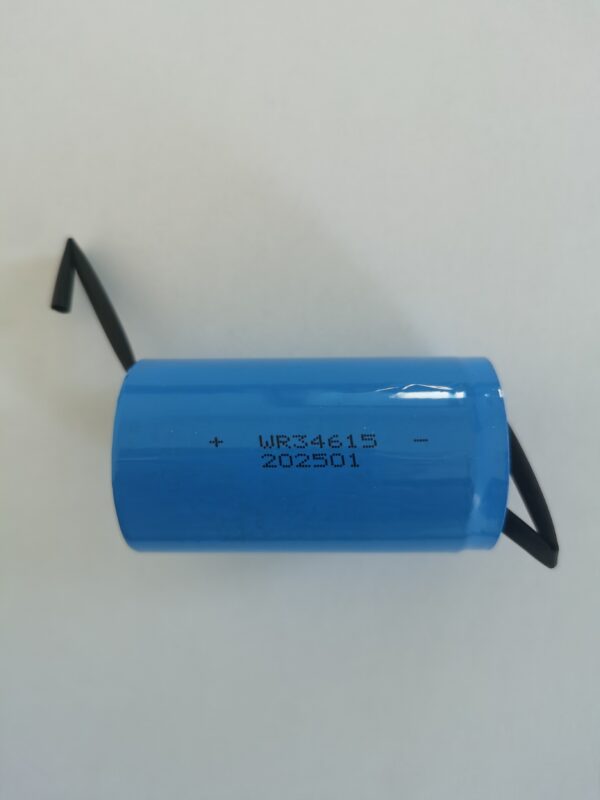
- Tab terminals: Nickel or aluminum tabs positioned for direct PCB soldering
- Wire leads: Insulated wires with various connector types
- Contact pads: Exposed metal surfaces for spring-loaded connections
Terminal material selection considers corrosion resistance, conductivity, and compatibility with assembly processes.
4. Safety and Protection Features
Custom designs incorporate multiple safety mechanisms:
- PTC devices: Limit current during short-circuit conditions
- Pressure relief vents: Prevent catastrophic failure under abuse conditions
- Insulation layers: Prevent internal short circuits during assembly
All custom cells undergo rigorous testing per IEC 60086-4 and UL 1642 standards before production release.
Manufacturing Capabilities in China
China’s lithium battery manufacturing ecosystem offers significant advantages for custom Li-MnO₂ development:
- Advanced coating equipment: Precision electrode coating with ±2μm tolerance
- Clean room assembly: Class 10,000 environments preventing contamination
- Automated welding: Laser welding for consistent tab attachment
- Quality testing: 100% voltage and impedance screening
Our facility maintains ISO 9001:2015 certification with full traceability from raw materials to finished products. Lead times for custom designs typically range from 8-12 weeks for prototype samples, with volume production scaling based on order quantities.
Application-Specific Design Examples
Medical Devices: Ultra-thin profiles (≤3mm) for implantable and portable diagnostic equipment, emphasizing biocompatibility and leak-proof construction.
IoT Sensors: Low self-discharge designs (<1% per year) for remote monitoring applications requiring 5-10 year operational life without battery replacement.
Industrial Instruments: High-temperature variants with specialized electrolyte formulations for downhole tools and automotive under-hood applications.
Smart Cards: Flexible pouch cells conforming to ISO 7810 card dimensions for RFID and payment systems.
Technical Collaboration Process
Successful custom battery development requires close engineering collaboration:
- Requirement Analysis: Define voltage, capacity, dimensions, and environmental conditions
- Feasibility Assessment: Evaluate technical constraints and performance trade-offs
- Prototype Development: Build and test initial samples (typically 3-5 iterations)
- Validation Testing: Complete application-specific qualification protocols
- Production Ramp: Scale manufacturing with consistent quality control
For detailed technical specifications and custom design consultation, please visit our primary battery product page to explore our standard and customizable Li-MnO₂ solutions.
Conclusion
Custom Li-MnO₂ battery form factor design represents a critical enabler for next-generation electronic devices requiring optimized power solutions. China’s manufacturing infrastructure, combined with advanced electrochemical engineering expertise, delivers reliable, cost-effective custom battery solutions for global markets. Whether you need modified dimensions, specialized terminals, or enhanced safety features, professional collaboration ensures your power requirements are met without compromising performance or reliability.
For technical inquiries and custom project discussions, contact our engineering team through our contact page to initiate your custom Li-MnO₂ battery development project.
