Industrial AGV OEM Pain Points Solved by 26650 NCM Cylindrical Batteries Ultimate Guide
For Industrial AGV OEMs, the battery is not just a power source; it is the heart of the system. As automation deepens, the demand for AGV batteries has shifted from simple “energy storage” to “high reliability, long life, and safety assurance.” However, many OEMs are still trapped in the “pain triangle” of traditional battery selection: low energy density leads to bulky designs, poor cycle life increases maintenance costs, and inconsistent quality creates safety hazards.
As a professional lithium battery manufacturer in China, we often receive inquiries from OEM engineers struggling with these issues. This guide will dissect how 26650 NCM (Nickel Cobalt Manganese) Cylindrical Batteries provide the ultimate solution to these pain points, offering a superior balance of performance and economics for industrial applications.
The “Pain Triangle” of Traditional AGV Batteries
Before diving into the solution, let’s identify the specific problems OEMs face with common battery chemistries:
- Lead-Acid Batteries: While cheap, they suffer from the “Memory Effect,” require frequent replacement, and are too heavy, limiting AGV payload capacity.
- 18650 Lithium Batteries: Although they solved the weight issue, their small capacity often leads to complex Battery Management Systems (BMS) with thousands of weld points, increasing the risk of failure.
- Prismatic/Pouch Cells: While offering high capacity, they often come with a premium price tag and can be prone to swelling issues under high vibration environments typical in industrial settings.
This is where the 26650 Cylindrical Battery enters the scene as a “Goldilocks” solution.
Why 26650 NCM is the “Goldilocks” Solution for AGV OEMs
The 26650 cylindrical cell (26mm diameter, 65mm height) strikes a perfect balance between the 18650 and the larger 32700 formats. For AGV OEMs, this translates into three core advantages:
1. Higher Energy Density & Simplified Pack Design
Unlike the 18650, which requires thousands of cells to reach the required voltage and capacity, the 26650 offers a significantly higher single-cell capacity. This means an AGV battery pack requires fewer cells to achieve the same energy output. Fewer cells mean:
- Simpler BMS Architecture: Reduced complexity in the Battery Management System.
- Fewer Welding Points: Drastically lowering the risk of welding defects and short circuits.
- Compact Structure: Easier integration into the tight spaces of AGV chassis.
2. Superior Cycle Life (Reducing TCO)
Total Cost of Ownership (TCO) is a critical metric for warehouse automation. 26650 NCM batteries are engineered for longevity. With a robust cylindrical structure and advanced NCM chemistry, these cells can withstand over 2000 charge-discharge cycles while maintaining high performance. This durability eliminates the need for frequent battery replacements, a major pain point in 24/7 industrial operations.
3. Enhanced Safety & Structural Integrity
Industrial environments are harsh. AGVs face constant vibration, shock, and temperature fluctuations. The cylindrical design of the 26650 is inherently stronger than pouch or prismatic cells. The steel or aluminum casing provides excellent mechanical stability, preventing deformation and swelling. Furthermore, the NCM chemistry offers a stable thermal profile, mitigating the risk of thermal runaway—a nightmare scenario for any OEM.
Technical Deep Dive: The Anatomy of a 26650 NCM Cell
To truly appreciate why this cell solves OEM problems, we must look at its internal structure and chemistry.
The NCM Advantage
NCM (Nickel Cobalt Manganese) Oxide is the cathode material of choice for high-performance applications. In the context of a 26650 cell, the NCM formula is typically optimized for a balance of energy and power:
- Nickel (Ni): Provides high specific capacity (energy density).
- Cobalt (Co): Stabilizes the crystal structure and improves cycle life.
- Manganese (Mn): Enhances thermal stability and safety.
Robust Mechanical Design
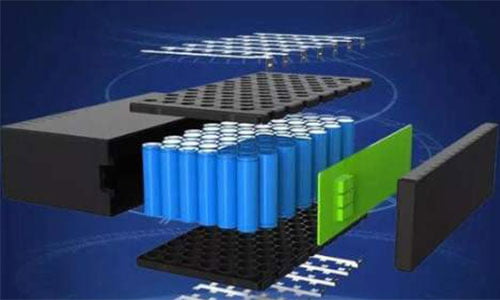
The 26650 format features a wound jellyroll structure housed in a rigid metal case. This design is crucial for AGVs because:
- Vibration Resistance: The tight winding and rigid case prevent internal electrode displacement during movement.
- Thermal Management: The metal case acts as a heat sink, dissipating heat generated during fast charging or high-load discharge.
Safety Mechanisms
Every high-quality 26650 cell includes built-in safety features:
- CID (Current Interrupt Device): A pressure-sensitive mechanism that disconnects the cell if internal pressure rises too high.
- PTC (Positive Temperature Coefficient) Device: Increases resistance dramatically if the temperature spikes, limiting current flow.
Application Scenarios: Where 26650 NCM Shines
While the 26650 is versatile, it is particularly suited for specific industrial applications:
1. Heavy-Duty Load AGVs
For AGVs designed to carry heavy payloads, weight is a premium. The high energy density of the 26650 NCM allows OEMs to design lighter battery packs without sacrificing runtime, maximizing the payload capacity of the vehicle.
2. 24/7 Warehouse Logistics
In environments where downtime is not an option, the long cycle life of the 26650 reduces maintenance frequency. The robust safety profile also ensures that even in the event of a minor collision or drop, the battery remains intact.
3. Outdoor & Rugged Terrain AGVs
For AGVs operating in less controlled environments (e.g., construction sites or outdoor yards), the 26650’s resistance to physical stress and wide operating temperature range (-20°C to 60°C) makes it the ideal choice.
Comparison Table: 26650 vs. The Alternatives
To help you make an informed decision, here is a comparison of the 26650 NCM against other common cylindrical formats.
| Feature | 18650 Cell | 26650 Cell | 32700 Cell |
|---|---|---|---|
| Diameter | 18mm | 26mm | 32mm |
| Capacity Range | 1.5Ah – 3.5Ah | 4.0Ah – 5.5Ah | 6.0Ah+ |
| Pack Complexity | High (Many Cells) | Medium (Balanced) | Low (Few Cells) |
| Best For | Consumer Electronics | Industrial AGV / Power Tools | High-Capacity ESS |
| Safety/Structure | Good | Excellent | Good |
Table 1: Comparison of Cylindrical Battery Formats for Industrial Use.
Choosing the Right Manufacturer: A Checklist
Selecting a battery is not just about chemistry; it is about supply chain stability. As an OEM, you must partner with a manufacturer that understands industrial demands. Here is what to look for:
- Consistency: Every cell in the batch must have identical voltage and internal resistance. Variance leads to “weak cells” that drag down the entire pack.
- Customization: Can the manufacturer tweak the electrolyte or add specific protection circuits for your unique AGV design?
- Certifications: Look for ISO 9001, IATF 16949 (for automotive-grade quality), and safety certifications like UL, CE, and RoHS.
At CNS Battery, we specialize in providing customizable cylindrical battery cells for the global market. Our automated production lines ensure the consistency required for industrial applications, and our R&D team works closely with OEMs to solve specific energy storage challenges.
Conclusion: The Future of Industrial Energy Storage
For Industrial AGV OEMs, the choice is clear. While 18650 cells are a legacy solution and 32700 cells may be overkill for some designs, the 26650 NCM Cylindrical Battery offers the perfect blend of high energy density, robust safety, and economic efficiency.
By adopting this technology, OEMs can break free from the “pain triangle” and deliver products that are lighter, safer, and more reliable. If you are ready to optimize your AGV design or need a reliable partner for high-performance cylindrical cells, we are here to help.
Ready to solve your OEM pain points? Explore our comprehensive range of cylindrical battery cells or contact our team for a customized solution.
- Explore our Products: Cylindrical Battery Cell Product Center
- Contact our Experts: Get in Touch with CNS Battery
- Learn More: Why Choose a Professional Battery Manufacturer in China?