
Here is the SEO-optimized article tailored for your requirements.
🇭🇺 Hungary Smart Meter Li-SOCl₂ Battery | CE Certified
In the rapidly evolving landscape of utility management and smart infrastructure, the transition from traditional mechanical meters to advanced Smart Metering Systems is not just a trend; it is a necessity for energy efficiency. As a professional lithium battery engineer specializing in primary cells, I have observed that the backbone of these Hungarian smart metering projects is not just the sensor technology, but the power source that keeps them running for 15 to 20 years without maintenance.
When deploying smart meters across Hungary or any European region, the critical requirement is reliability. This is where Lithium Thionyl Chloride (Li-SOCl₂) batteries become the industry standard. Specifically, the demand for CE Certified solutions ensures that these batteries meet stringent European safety and environmental directives (such as RoHS and REACH), which is non-negotiable for market entry and long-term compliance.
Why Li-SOCl₂ is the “Gold Standard” for Smart Meters
Smart meters operate in a “sleep mode” for the vast majority of their lifespan, waking up only periodically to transmit data. This operational profile requires a power source with an extremely low self-discharge rate and high energy density. Lithium Thionyl Chloride chemistry fits this need perfectly.
Technical Superiority
- Voltage & Energy Density: Li-SOCl₂ cells typically deliver a nominal voltage of 3.6V. This high voltage reduces the need for complex battery packs, allowing smart meters to be designed smaller and lighter.
- Longevity: With a shelf life and operational life exceeding 20 years, these batteries are designed to match the lifecycle of the meter itself.
- Wide Temperature Range: Smart meters in Hungary must endure harsh winters and hot summers. Li-SOCl₂ batteries operate effectively from -55°C to +85°C, ensuring data integrity regardless of external weather conditions.
The “Voltage Delay” Phenomenon
One technical nuance engineers must understand is the “voltage delay.” When a Li-SOCl₂ battery is first connected, the voltage may take a few seconds to stabilize to its nominal value. This is due to the chemical reaction between Lithium and Thionyl Chloride. For smart meter applications, this is easily managed through circuit design, and the trade-off for decades of maintenance-free operation is well worth it.
The Critical Importance of CE Certification
As a battery manufacturer deeply familiar with the European market, I cannot stress enough the importance of CE Certification. For Hungarian smart meter OEMs, importing non-certified batteries is a legal and financial risk.
- Safety Compliance: The CE mark signifies that the battery has been tested for safety (including short-circuit protection, crush tests, and low-pressure simulations).
- Environmental Standards: It verifies that the battery is free from restricted hazardous substances (RoHS compliance), which is vital for environmental sustainability in smart city projects.
- Market Access: Without the CE mark, a smart meter cannot be legally sold or installed within the European Economic Area (EEA), which includes Hungary.
Choosing the Right Partner: Reliability Meets Geography
Hungary, particularly the capital city of Budapest, is a strategic hub for technology and energy distribution in Central Europe. When sourcing batteries for smart meters, proximity and logistical support matter.
Based in Zhengzhou, China, our facility is strategically located to support global logistics. However, our expertise is tailored for the European market. We understand that Hungarian engineers need batteries that are not just powerful, but also logistically reliable. Our supply chain is designed to minimize lead times and ensure that your smart meter production lines never halt due to power supply shortages.
Customization for Your Smart Meter Design
Every smart meter design is unique. While standard cylindrical cells are common, many advanced meters require specific form factors.
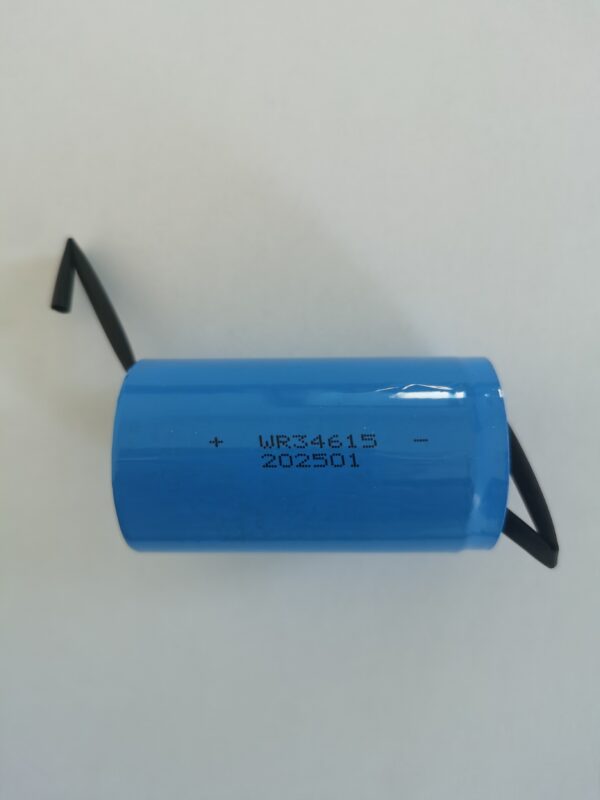
- PCB Integration: We offer batteries with pre-soldered tabs, connectors, or even integrated PCBs to simplify your assembly process.
- Capacity Matching: Whether your meter requires a standard capacity or a high-drain variant for frequent data transmission, we have the technical capability to adjust the electrochemistry to meet your specific current draw requirements.
Conclusion
For the Hungarian smart metering industry, the choice of a CE Certified Li-SOCl₂ battery is a decision that safeguards the investment in smart grid technology. It ensures that the meters deployed today will continue to communicate accurate data for the next two decades, supporting Hungary’s journey toward a smarter, more efficient energy future.
If you are looking for a reliable partner to supply high-quality, compliant primary lithium batteries for your smart metering projects, we are here to assist.
- Explore our range of Primary Lithium Batteries: Product Link
- Contact our engineering team for a customized solution: Contact Us
