
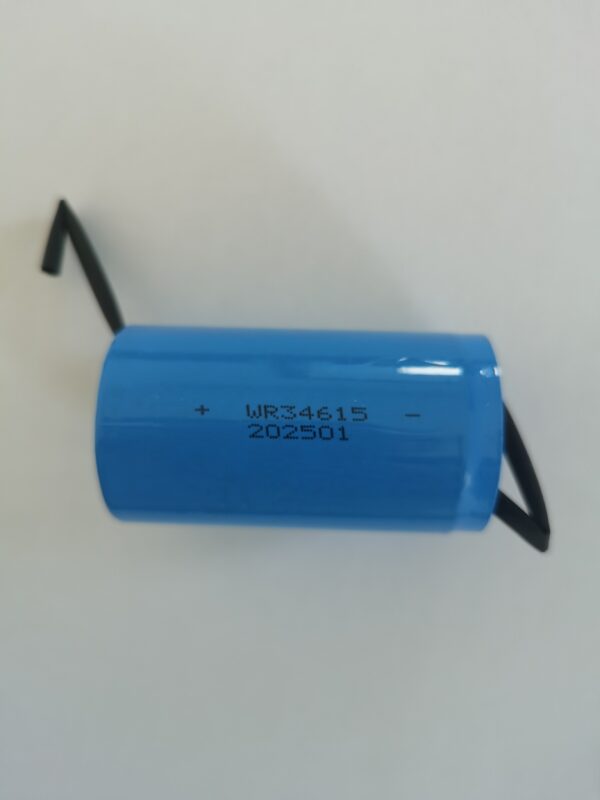
Here is the SEO-optimized article on verifying Lithium Battery MIL-STD Military Certification, tailored for a technical B2B audience.
How to Verify Lithium Battery MIL-STD Military Certification
In the demanding world of defense electronics, aerospace, and industrial applications, the term “Military Grade” is often thrown around loosely in marketing materials. However, for engineers and procurement managers responsible for system reliability, verifying the actual compliance of a Lithium Battery with MIL-STD (Military Standard) specifications is not optional—it is a critical due diligence process. A failure in the field due to substandard components can result in catastrophic system failures, endangering lives and equipment.
This guide provides a rigorous, step-by-step methodology for validating MIL-STD certification. It moves beyond marketing fluff to focus on the technical verification of primary lithium batteries, specifically lithium-thionyl chloride (Li-SOCl₂) and lithium-manganese dioxide (Li-MnO₂) chemistries, which are the workhorses of high-reliability military applications.
1. Understanding the “Gold Standard”: MIL-PRF-49471
Before diving into verification, it is essential to understand the specific standard governing primary lithium batteries used in military applications: MIL-PRF-49471.
Unlike commercial standards that focus primarily on capacity and voltage, MIL-PRF-49471 is designed to test a battery’s ability to withstand the harshest environments. Verification is not just about checking a box; it is about understanding the physics of the electrochemical system.
- The Chemistry: Primary lithium batteries utilize non-aqueous electrolytes, allowing them to operate in extreme temperatures (typically -55°C to +85°C or higher).
- The Standard: MIL-PRF-49471 covers physical dimensions, electrical performance, and rigorous environmental testing. If a supplier claims “military certification,” they must explicitly state compliance with this or a relevant derivative standard.
2. The Verification Checklist: 4 Critical Steps
To separate certified manufacturers from those merely using buzzwords, follow this verification protocol.
Step 1: Demand the “Source Control Drawing” (SCD) or “Qualification Test Report” (QTR)
Do not accept a generic certificate. You must request documentation that links the specific battery part number (PN) you are purchasing to the MIL-STD test results.
- What to look for: A report listing the specific test procedures (e.g., Method 514.7 for Vibration, Method 501.7 for High Temperature).
- Red Flag: If the supplier provides a certificate for a “similar” battery or a generic factory audit certificate (like ISO 9001), this does not prove the specific battery cell passed MIL-STD.
Step 2: Audit the Environmental Stress Tests
MIL-STD certification hinges on the battery’s ability to survive mechanical and thermal abuse. You should verify the following specific tests were conducted:
| Test Category | MIL-STD Method Reference | Verification Criteria |
|---|---|---|
| Vibration | MIL-STD-810 Method 514 | The battery must withstand random vibration profiles simulating transport and operation in vehicles/aircraft without leakage or voltage drop. |
| Shock | MIL-STD-810 Method 516 | The battery must endure high-G mechanical shocks (e.g., 100G for 6ms) without physical damage. |
| Temperature Cycling | MIL-STD-810 Method 503 | The battery is cycled between extreme cold and heat to verify the integrity of the seals and internal components. |
| Humidity | MIL-STD-810 Method 507 | The battery must resist corrosion and leakage under high humidity conditions. |
Step 3: Examine the Hermetic Seal (The Most Critical Feature)
The single most important factor in a primary lithium battery’s longevity and reliability is the hermetic seal. In military applications, batteries often sit dormant for years (shelf life) before being activated.
- Verification: Ask the manufacturer if they perform Helium Leak Testing (a standard method for detecting microscopic leaks in metal-to-glass or metal-to-ceramic seals).
- Technical Insight: A failed seal allows moisture ingress, which reacts violently with lithium metal, leading to cell rupture. A certified MIL-STD battery will have a robust hermetic seal verified by 100% production testing.
Step 4: Traceability and Lot Coding
Military specifications require full traceability. Every batch of batteries should have a unique lot code that allows you to trace back to the raw materials and production data.
- Action: Check the physical battery can or the packaging for a laser-etched or stamped lot code. Verify that the manufacturer can provide the test data specific to that lot if requested.
3. The Technical Reality: Primary vs. Secondary Batteries
It is crucial to distinguish between Primary (Non-Rechargeable) and Secondary (Rechargeable) lithium batteries in the context of military standards.
- Primary Lithium (Li-SOCl₂, Li-MnO₂): These are the batteries most commonly associated with MIL-PRF-49471. They offer the highest energy density and longest shelf life (10-20 years), making them ideal for remote sensors, GPS trackers, and backup memory.
- Secondary Lithium (Li-ion): While MIL-SPEC Li-ion batteries exist, they are less common due to the complexity of managing charge cycles in extreme temperatures. If you are sourcing a rechargeable battery for military use, you are likely looking at custom ruggedized solutions rather than a standard “MIL-STD” certification.
4. Partnering with a Certified Manufacturer
Verifying certification is only half the battle. You need a partner who understands the nuances of the defense supply chain.
At CNS Battery, we specialize in manufacturing Primary Lithium Batteries designed to meet and exceed the rigorous requirements of MIL-PRF-49471. Our commitment to quality is not just in the paperwork; it is built into our R&D and manufacturing processes.
We understand that your project timeline is critical. Whether you need a standard Prismatic Battery Cell or a custom Battery System Development solution, our engineering team is ready to assist.
Ready to verify your power solution?
Contact our technical sales team today to request our latest qualification test reports and discuss your specific project requirements. Ensure your next design is powered by true military-grade reliability.
Contact Us for Technical Verification
Explore our range of Primary Lithium Battery solutions designed for high-reliability applications:
View Our Primary Battery Products
