
Here is the article tailored for your requirements.
How to Extend Li-SOCl₂ Battery Life in HVAC Damper Position Sensors
In the realm of Building Automation Systems (BAS), the reliability of HVAC Damper Position Sensors is non-negotiable. These sensors ensure optimal airflow, temperature regulation, and energy efficiency. At the heart of these maintenance-free devices lies a specific power source: the Lithium Thionyl Chloride (Li-SOCl₂) Battery. Unlike consumer electronics that recharge daily, these sensors are designed for “fit and forget” deployment, often requiring a lifespan of 10 to 20 years.
As a technical expert, I often encounter the question: “Why does my sensor fail prematurely?” The answer usually isn’t a defect in the sensor, but rather a misunderstanding of the unique characteristics of primary lithium batteries and the application environment. This article provides a deep dive into the technical strategies for maximizing the life of Li-SOCl₂ cells within damper position sensing applications.
1. Understanding the Electrochemistry: Why Li-SOCl₂ is the Standard
Before discussing lifespan extension, it is crucial to understand why Lithium Thionyl Chloride is the industry standard for these applications.
The Chemistry Advantage
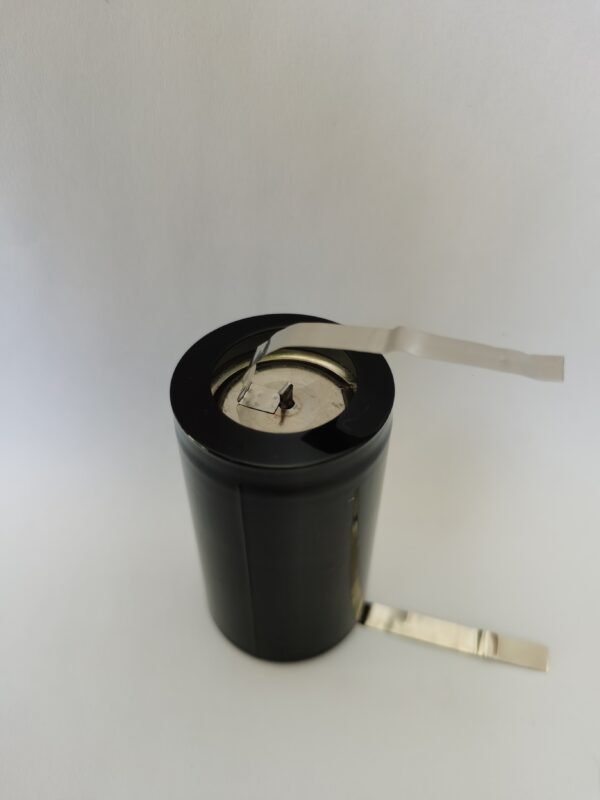
Li-SOCl₂ batteries offer the highest energy density of any commercial battery chemistry available today. For HVAC damper sensors—which are often small, cylindrical, or coin-shaped devices—space is at an absolute premium. These batteries provide a nominal voltage of 3.6V, which is significantly higher than alkaline (1.5V) or Lithium Manganese Dioxide (3.0V) alternatives. This high voltage allows the sensor circuitry to operate efficiently for a longer duration before the voltage drops below the minimum operating threshold.
The Passivation Layer
A unique characteristic of Li-SOCl₂ cells is the formation of a passivation layer (LiCl film) on the lithium anode. This layer forms spontaneously when the battery is at rest and serves to protect the anode from self-discharge. However, this layer is a double-edged sword. When a high load is applied, the voltage can temporarily drop (voltage delay) as the layer dissolves. For damper sensors, which typically operate in a low-current “sleep” mode with periodic “wake” pulses to report position, understanding this passivation behavior is key to preventing premature voltage collapse.
2. Managing Voltage Delay and Pulse Loads
HVAC damper position sensors do not draw a constant current. They spend 99% of their time in a deep sleep state (drawing nanoamps or microamps) and wake up periodically (every few seconds or minutes) to transmit data or check the damper position. This creates a pulsed load scenario.
The “Pulse” Challenge
If the sensor draws too high a current during the wake-up pulse, the internal resistance of the Li-SOCl₂ cell can cause a significant voltage drop. If the voltage sags below the sensor’s minimum operating voltage (usually around 2.0V to 2.5V), the sensor will reset or fail to transmit, interpreting this as a “dead battery” even though the cell still has 90% of its capacity left.
Solution: Hybrid Capacitor Buffering
To extend the functional life, engineers often pair the Li-SOCl₂ cell with a parallel hybrid layer capacitor (HLC) or a supercapacitor. The primary battery slowly charges the capacitor during the sleep period. When the sensor wakes up and needs a burst of energy (e.g., 100mA to 500mA for a radio transmission), the capacitor, not the battery, supplies the peak current. This technique prevents the voltage from sagging and protects the passivation layer from being stripped too aggressively, effectively utilizing the full capacity of the cell.
3. Temperature Compensation and Storage
Temperature is the most significant environmental factor affecting battery life. Li-SOCl₂ batteries perform exceptionally well across a wide range (-55°C to +85°C), but their internal resistance and voltage output are temperature-dependent.
The Cold Weather Effect
In cold environments (below 0°C), the internal resistance of the cell increases dramatically. This exacerbates the voltage delay issue mentioned earlier. If a damper sensor in a cold air duct attempts a high-current transmission, the voltage may drop out of spec.
Design Strategy
To extend life in variable climates, the sensor firmware should be programmed to implement temperature-dependent duty cycling. In colder temperatures, the sensor should reduce its transmission frequency or lower its transmit power. This reduces the average load on the battery, counteracting the increased internal resistance caused by the cold. Additionally, during long-term storage before installation, batteries should be kept at room temperature to minimize the growth of the passivation layer, which can become too thick and resistive if stored at high temperatures for extended periods.
4. Selecting the Right Cell Format and Manufacturer
Not all Li-SOCl₂ batteries are created equal. For high-reliability damper sensors, the choice of cell format and quality control is paramount.
Bobbin vs. Spiral Construction
There are two main construction types:
- Spiral Wound: Higher capacity, better for moderate pulse loads. Best for sensors with lower peak currents.
- Bobbin Type: Lower capacity but significantly lower internal resistance and better pulse capability. Best for sensors that require frequent, high-current pulses.
For most modern wireless damper sensors that use RF modules (like Zigbee or Bluetooth), the Spiral Wound construction is often preferred due to its higher energy density, provided the pulse current requirements are managed via the capacitor buffering method described above.
Quality Assurance
The purity of the electrolyte and the precision of the electrode coating are critical. Impurities can lead to micro-shorts, increasing the self-discharge rate and reducing the shelf life. High-quality manufacturing ensures that the passivation layer forms uniformly and predictably.
5. Partnering with a Technical Battery Specialist
Designing a power solution for HVAC damper sensors is not a one-size-fits-all task. It requires a deep understanding of both the electrochemistry and the specific power profile of your sensor.
If you are an engineer or a procurement manager looking to optimize the battery life of your damper position sensors, it is essential to work with a manufacturer that understands these nuances. A partner that can provide not just cells, but also technical support regarding pulse load management and temperature compensation, can be the difference between a 5-year product and a 20-year product.
For technical inquiries regarding primary lithium batteries suitable for high-reliability sensor applications, you can explore the range of solutions offered by CNS BATTERY or reach out to their engineering team directly for support.
Explore our range of Primary Lithium Batteries for Sensor Applications
