
Here is the professional article tailored for your requirements, designed to rank for “Li-SOCl₂ Battery” related searches and attract B2B technical buyers.
The Ultimate Guide to Selecting Li-SOCl₂ Batteries for Waste Bin Fill Level Sensors
In the rapidly expanding Internet of Things (IoT) landscape, waste management optimization stands as a critical application. At the heart of every efficient Smart Waste Bin Fill Level Sensor lies a robust power source capable of enduring extreme conditions and operating autonomously for years. While various chemistries exist, Lithium Thionyl Chloride (Li-SOCl₂) batteries have emerged as the undisputed standard for this specific use case.
This guide is designed for hardware engineers, R&D managers, and technical procurement officers responsible for deploying outdoor IoT sensor networks. We will dissect the technical nuances of selecting the right primary lithium battery, ensuring your waste management solution achieves maximum uptime and minimal maintenance costs.
Why Li-SOCl₂ is the Gold Standard for Waste Sensors
Before diving into selection criteria, it is essential to understand why Lithium Thionyl Chloride chemistry is uniquely suited for waste bin sensors compared to standard Lithium-ion (Li-ion) or Alkaline cells.
- Unmatched Energy Density: Li-SOCl₂ cells possess the highest energy density of any commercially available primary (non-rechargeable) battery chemistry. This allows the sensor to be compact yet powerful enough to last 5–10 years on a single charge.
- Extreme Temperature Resilience: Waste bins are exposed to harsh environments. Li-SOCl₂ batteries operate reliably from -55°C to +85°C, functioning perfectly in freezing winters or scorching summers.
- Low Self-Discharge: Unlike rechargeable batteries that lose charge rapidly when idle, Li-SOCl₂ cells have an annual self-discharge rate of less than 1%. This ensures the sensor remains operational even if data transmission is infrequent.
5 Critical Selection Criteria for Your Application
Selecting the wrong battery can lead to “voltage delay” issues or premature failure. Follow these five technical checkpoints to ensure compatibility with your ultrasonic or radar fill-level detection system.
1. Understanding Voltage Delay and Pulse Handling
One of the primary technical challenges with standard Li-SOCl₂ cells is voltage delay. When a load is first applied, the voltage can drop significantly before recovering. Waste sensors often use ultrasonic transducers that require a high initial current pulse to operate.
- The Solution: You must select a battery specifically designed for “Pulse Applications.”
- Technical Note: Look for cells with a modified internal structure or specific electrode formulations that minimize this voltage drop. Alternatively, the sensor circuit must include a capacitor bank to handle the initial surge, but this adds cost and bulk.
2. Selecting the Right Cell Format
The physical constraints of a waste bin sensor housing dictate the battery format. The most common formats for this application are:
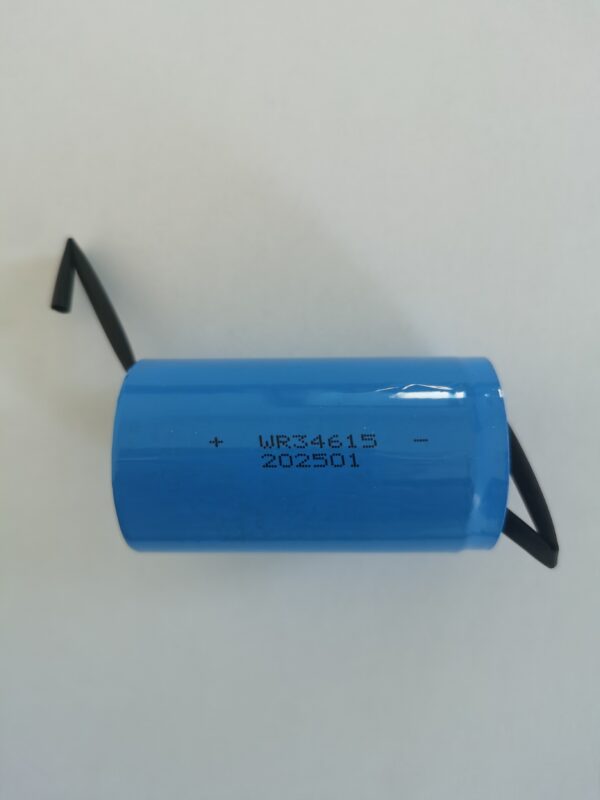
- Cylindrical Cells (e.g., C, D, or SC size): These offer the highest capacity and are ideal for larger bins or long-range sensors.
- Prismatic (Polymer) Cells: While less common for primary cells, specialized prismatic Li-SOCl₂ packs can fit into slim-profile sensors mounted on the bin lid.
3. Hermetic Sealing and Corrosion Resistance
Waste bins are humid, corrosive environments. Gases and moisture ingress can destroy electronics.
- Requirement: The battery must feature a laser-welded stainless steel or nickel-plated steel case with a high-quality glass-to-metal seal (GTMS) on the terminal. This prevents electrolyte leakage and ingress of corrosive landfill gases, which standard batteries cannot withstand.
4. Low-Temperature Performance
While Li-SOCl₂ operates in cold climates, the internal resistance increases at low temperatures, reducing the available pulse current.
- Recommendation: If deploying in sub-zero regions (below -20°C), select cells specifically rated for Low-Temperature (LT) or Super High Voltage (SHV) specifications. These variants are formulated to maintain higher voltage under load in freezing conditions.
5. Safety and Regulatory Compliance
IoT devices deployed in public spaces require strict safety certifications.
- Checklist: Ensure the battery meets UN 38.3 transportation testing standards and relevant IEC safety certifications. As a primary lithium cell manufacturer, we ensure our cells are non-hazardous for air freight when properly packaged.
Technical Comparison: Standard vs. IoT-Optimized Li-SOCl₂
To aid in your decision-making, we have compared standard primary cells against specialized IoT solutions.
| Feature | Standard Li-SOCl₂ | IoT-Optimized Li-SOCl₂ |
|---|---|---|
| Voltage Delay | High (Requires external capacitors) | Low (Optimized for direct sensor load) |
| Pulse Current | Limited (Risk of voltage drop) | High (Stable during transmission) |
| Operating Temp | -55°C to +85°C | -60°C to +85°C (Extended range options) |
| Internal Resistance | High (Increases with age) | Low & Stable (Maintains voltage under load) |
| Best For | Simple data loggers, meters | Smart waste sensors, 5G IoT, Radar sensors |
Integration Best Practices
Once you have selected the battery, proper integration is key to maximizing lifespan.
- PCB Layout: Avoid direct soldering of the battery terminals to the PCB if possible. Use spring contacts or welding tabs to prevent thermal stress damage during manufacturing.
- Battery Management: While primary cells do not require a BMS (Battery Management System) for charging, a simple fuel gauge IC can be integrated to monitor the open-circuit voltage (OCV) and predict end-of-life, allowing for proactive bin replacement.
- Environmental Buffering: If the sensor is mounted inside the bin (exposed to direct waste), ensure the battery compartment is potted with a conformal coating to prevent short circuits from conductive debris.
Partnering with a Specialized Manufacturer
Choosing a battery is not just a component selection; it is a partnership for the lifecycle of your product. Generic off-the-shelf cells may work initially but often fail prematurely due to the specific pulse demands of wireless transmission.
As a manufacturer specializing in primary lithium solutions, we provide customized battery packs designed explicitly for waste management sensors. Whether you need a specific voltage booster circuit integrated into the pack or a non-standard cylindrical size to fit your housing, our engineering team can assist.
Ready to optimize your waste bin sensor design? Contact our technical sales team to discuss your specific voltage, capacity, and environmental requirements.
📞 Contact Us for a Custom Solution: CNS Battery Contact Information
About the Author & Company
This article is written from the perspective of an R&D expert at CNS Battery, a leading manufacturer of high-reliability primary lithium batteries based in Zhengzhou, China. With over two decades of experience in electrochemistry, we focus on providing mission-critical power solutions for the global IoT and smart city infrastructure markets. Explore our range of standard and custom cells to power your next generation of smart waste technology.
🔋 Browse Our Product Range: Primary Battery Product Center
