
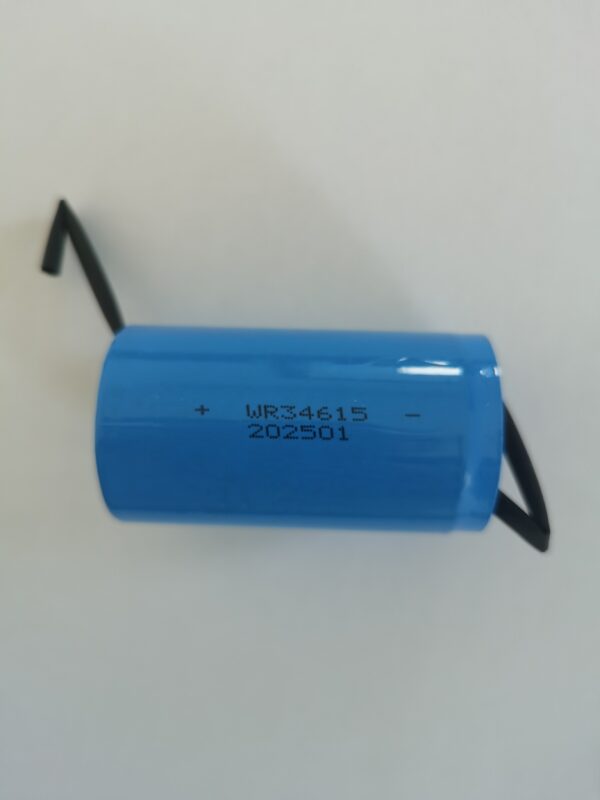
Here is the SEO-optimized article tailored for a professional B2B audience, focusing on the technical selection criteria for high-pulse lithium batteries in IoT applications.
How to Choose a High-Pulse Lithium Battery for IoT Sensor Wake-Up
In the rapidly expanding ecosystem of the Industrial Internet of Things (IIoT), the reliability of wireless sensors is paramount. These devices often operate in remote or inaccessible locations, relying on primary (non-rechargeable) lithium batteries for power. A critical, yet often underestimated, challenge arises during the “wake-up” cycle: the brief but intense power surge required for wireless transmission.
Standard low-power batteries frequently fail here, suffering from voltage delay or premature aging when asked to deliver the high current pulses necessary for modern LPWAN protocols. Selecting the wrong chemistry can lead to system failure, costly maintenance calls, and data blackouts. This guide outlines the specific criteria engineers and technical buyers must evaluate to ensure their IoT sensors have the robust, long-lasting power they need.
1. Understanding the Physics of High Pulse Loads
To select the right battery, one must first understand why standard lithium batteries struggle with high pulses.
The Voltage Delay Phenomenon
Most primary lithium batteries, such as Lithium-Thionyl Chloride (LiSOCl₂), offer exceptional energy density but suffer from high internal impedance. When a sensor wakes up and demands a sudden high current (often 1A to 5A for GSM/GPRS or 2G/3G fallback, or even high pulses for LoRa/NB-IoT), the internal resistance of a standard bobbin-type cell causes a significant voltage drop.
This is known as voltage delay or transient voltage drop. The voltage sags below the minimum operating threshold of the transmitter, causing the device to crash or fail to connect. It can take minutes for the chemical reaction inside the cell to recover and restore the voltage.
The Solution: Hybrid Layer Capacitor (HLC) Technology
To overcome this, modern IoT batteries utilize a Hybrid Layer Capacitor (HLC) design. Unlike standard bobbin cells, HLC cells incorporate a carbon super-capacitive layer within the electrode structure.
- How it works: This layer acts like a tiny internal capacitor, instantly releasing the stored charge to meet the peak current demand without causing the voltage to sag.
- The result: The sensor receives the high pulse power it needs for transmission while the battery maintains a stable voltage, preventing system crashes and eliminating the “voltage delay” recovery period.
2. Evaluating Pulse Power Capability vs. Energy Density
There is a fundamental trade-off in battery design: high pulse power often comes at the expense of total energy capacity.
The Chemistry Balance
When choosing a High-Pulse Lithium Battery, you are balancing two factors:
- Pulse Current (I_pulse): The maximum current the battery can deliver during transmission.
- Capacity (Ah): The total energy stored, which dictates the device’s lifespan.
A standard LiSOCl₂ cell might have a capacity of 19,000 mAh but can only deliver pulses of 100-200 mA. In contrast, an HLC-enhanced cell might have a slightly lower capacity (e.g., 15,000 mAh) but can deliver pulses exceeding 5A.
Selection Strategy
For IoT sensors transmitting small data packets infrequently (e.g., utility meters), the standard cell might suffice. However, for sensors requiring reliable transmission in cold environments, or those using higher-power protocols, the HLC-enhanced cell is non-negotiable. You must calculate the total energy consumed per wake-up cycle (including the high pulse) against the battery’s rated capacity to ensure the projected lifespan meets your deployment requirements.
3. The Impact of Temperature on Pulse Performance
IoT sensors do not operate in a controlled lab environment; they are exposed to extreme temperatures, from the freezing cold of outdoor utility boxes to the heat of industrial machinery.
The Cold Weather Challenge
As temperatures drop, the internal resistance of a lithium battery increases exponentially. This makes it even harder for a standard cell to deliver the required high pulse.
- Standard Cells: At -20°C, a standard LiSOCl₂ cell may not be able to deliver enough current to power the transmitter, leading to complete system failure.
- HLC Cells: The capacitive properties of HLC technology are far less sensitive to temperature. While the total capacity of the battery will decrease in the cold, the ability to deliver the high pulse remains robust. If your deployment involves sub-zero environments, an HLC battery is essential to maintain signal integrity.
4. Longevity and Shelf Life Considerations
The primary advantage of Lithium Primary batteries is their longevity. However, the addition of pulse technology must not compromise this.
Self-Discharge Rates
High-quality HLC batteries maintain the ultra-low self-discharge rates characteristic of lithium chemistry. This means a shelf life of up to 10 years and an operational life of 15-20 years in low-duty-cycle applications.
Passivation Effects
LiSOCl₂ chemistry naturally forms a passivation layer (a thin film) on the lithium anode when not in use. While this protects the cell, it can cause a temporary voltage drop when a load is first applied. HLC technology mitigates this passivation effect during the initial wake-up surge, ensuring that “first transmission” is reliable even after years of storage.
5. Partnering with a Certified Manufacturer
Selecting the right battery is only half the battle; sourcing it from a reliable partner ensures quality and compliance.
Quality Management Systems
When evaluating suppliers, look for manufacturers with rigorous quality management systems. Certifications such as ISO 9001 and IATF 16949 indicate a commitment to consistency and defect-free production. In the B2B sector, batch traceability and strict testing protocols are critical for minimizing field failures.
Customization Capabilities
No two IoT applications are exactly the same. A leading battery provider should offer customization options, such as specific connector types, cable lengths, or even custom battery packs designed to fit unique sensor housings.
Conclusion
Choosing a High-Pulse Lithium Battery for IoT sensor wake-up is a technical exercise in balancing chemistry, physics, and environmental resilience. By prioritizing HLC technology to overcome voltage delay, calculating the pulse-to-capacity ratio accurately, and ensuring performance in extreme temperatures, engineers can design systems that last for decades without maintenance.
For technical inquiries or to discuss custom battery solutions for your specific IoT deployment, contact our engineering team.
Contact Us: Primary Battery Contact Information
Explore Our Product Range: Primary Battery Product Line
