
Here is the professional SEO article drafted from the perspective of a Li-SOCl₂ battery expert, tailored for a B2B audience and optimized for search engines.
How Li-SOCl₂ Batteries Reduce Gas Utility Maintenance Costs
In the utility sector, the transition from mechanical meters to Automated Metering Infrastructure (AMI) has been revolutionary. However, the Achilles’ heel of this transition remains the power source. For gas utilities, the specific challenge lies in the fact that gas is often metered in environments that are difficult to access and inherently hazardous. Standard lithium-ion batteries, while common in consumer electronics, pose a safety risk and often lack the longevity required for a return on investment (ROI). This is where Lithium-Thionyl Chloride (Li-SOCl₂) batteries become the definitive solution. By leveraging the unique chemistry of primary lithium batteries, gas utilities can effectively reduce their total cost of ownership by minimizing physical maintenance interventions.
The “Fit and Forget” Philosophy
The primary driver of maintenance costs in gas AMI is the need for human interaction. Whether it is replacing depleted batteries or servicing failed electronics, dispatching a technician to a residential or commercial gas meter is an expensive logistical operation.
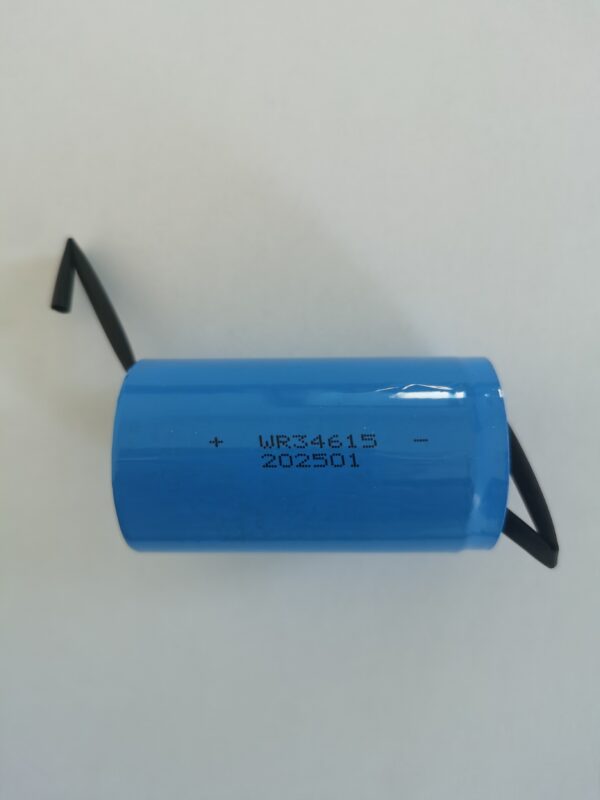
Li-SOCl₂ batteries operate on a “Fit and Forget” philosophy. These primary (non-rechargeable) cells are designed to last the entire lifespan of the meter—often 20 years or more. Unlike secondary (rechargeable) batteries that degrade with charge cycles, the electrochemical potential of a Li-SOCl₂ cell remains stable for decades. By eliminating the need for battery replacement, utilities effectively cut a massive portion of their field maintenance budget.
Technical Deep Dive: Why Lithium-Thionyl Chloride?
To understand how these batteries reduce costs, one must first understand the chemistry.
1. Unmatched Energy Density
The energy density of a battery directly correlates to its runtime. Li-SOCl₂ chemistry offers one of the highest specific energies available in commercial batteries today (typically 500–650 Wh/kg). This high density allows manufacturers to pack enough energy into a compact cell to power low-current radio transmissions for two decades without needing a recharge.
2. The Passivation Layer & Self-Discharge
A critical feature of the Li-SOCl₂ system is the formation of a passivation layer (LiCl) on the lithium anode when the cell is at rest. While this layer can cause voltage delay issues in some applications, in the context of gas meters—which transmit data in brief bursts—it is actually beneficial. More importantly, this chemistry exhibits an incredibly low annual self-discharge rate (often less than 1% per year). This means that over a 15-year period, the battery retains virtually all of its original capacity, ensuring the meter remains operational until decommissioning.
Solving the “Cold Start” Problem in Smart Gas Meters
One of the most significant technical hurdles in deploying smart gas meters is the “Cold Start” or initial transmission. When a meter is first installed, the battery is fresh, and the passivation layer is minimal. However, after years of storage or operation, the internal resistance of the cell increases due to the build-up of the passivation layer.
If the battery cannot deliver the necessary voltage and current to “break through” this layer during a data transmission, the meter fails to report. This results in a “false failure,” where the meter is blamed, but the battery is the culprit. This scenario leads to unnecessary maintenance calls and Return Merchandise Authorizations (RMAs), which are costly for both the utility and the meter manufacturer.
The Solution: Bobbin vs. Flat Spiral Design
To mitigate this, battery engineers utilize specific cell designs:
- Bobbin-Type Cells: These are the traditional design, offering excellent long-term stability but lower pulse capability.
- Spiral (Jelly Roll) Cells: These offer higher pulse currents but can suffer from high self-discharge.
For gas utilities, the ideal solution often involves a modified bobbin design or hybrid technologies that balance low self-discharge with sufficient pulse power to handle the cold start scenario without voltage delay.
Safety First: Intrinsic Safety in Hazardous Zones
Gas metering environments are classified as hazardous areas due to the potential presence of explosive gases. Maintenance costs skyrocket if a battery were to fail catastrophically (e.g., vent, rupture, or ignite) within such an environment, leading to safety liabilities and mandatory recalls.
Li-SOCl₂ batteries are inherently safe for these applications. The electrolyte (Thionyl Chloride) is not only the cathode material but also acts as a flame retardant. Furthermore, primary lithium cells do not rely on the complex Battery Management Systems (BMS) required by lithium-ion batteries. Without a BMS, there are fewer electronic components that can fail and cause a short circuit. This intrinsic safety reduces the risk of hazardous incidents, thereby reducing liability and safety-related maintenance costs.
Geo-Specific Considerations: Temperature & Longevity
Utilities operate in diverse climates, from the freezing winters of Canada to the scorching heat of the Middle East. Temperature fluctuations are a major factor in battery degradation.
Li-SOCl₂ batteries have a distinct advantage here. They can operate in a wide temperature range, typically from -55°C to +85°C. This wide operating window ensures that batteries deployed in outdoor gas meters in harsh environments do not require expensive thermal management systems or early replacement due to temperature-induced failure.
Partnering for Utility Efficiency
Reducing maintenance costs isn’t just about buying a cheap battery; it is about investing in a reliable power partner. At CNS Battery, we specialize in engineering primary lithium solutions that meet the rigorous demands of the utility industry.
Whether you are deploying new AMI infrastructure or replacing legacy systems, choosing the right battery chemistry is the first step toward operational efficiency. Our team of experts is ready to assist you in selecting the optimal power solution for your specific gas metering application.
Ready to optimize your utility’s maintenance budget? Explore our range of industrial-grade primary batteries or get in touch with our sales engineers today.
- Explore our Li-SOCl₂ Product Line: Primary Battery Products
- Contact our Utility Power Experts: Contact Us
