
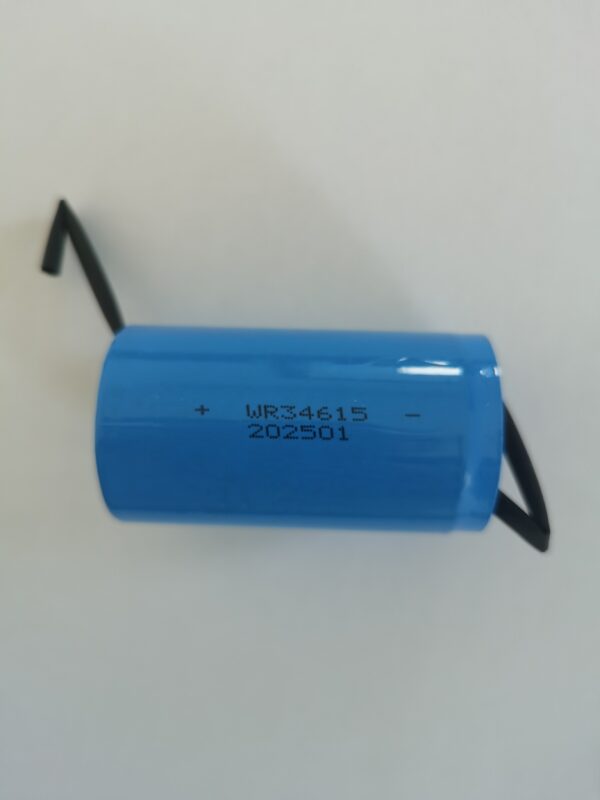
Here is the SEO-optimized article tailored for your requirements, focusing on the technical and practical aspects of High-Pressure Resistant Li-SOCl₂ Batteries for deep-sea applications.
Deep Dive into High-Pressure Resistant Li-SOCl₂ Batteries: The Ultimate Power Source for the Abyss
The deep ocean is a realm of extremes. For engineers and procurement managers working on subsea instrumentation, oceanographic sensors, or autonomous underwater vehicles (AUVs), one of the most critical challenges is finding a power source that can withstand crushing hydrostatic pressure while maintaining reliable, long-term operation. Standard battery chemistries often fail catastrophically under these conditions, leading to mission failure and expensive equipment loss.
This is where High-Pressure Resistant Lithium Thionyl Chloride (Li-SOCl₂) Batteries become the non-negotiable solution. Unlike consumer-grade cells, these specialized batteries are engineered to function flawlessly at depths exceeding 6,000 meters. In this article, we dissect the technology behind these rugged powerhouses, their specific advantages for deep-sea use, and the key selection criteria for your next marine project.
Why Lithium Thionyl Chloride (Li-SOCl₂) is the Standard for Deep Sea
To understand why Li-SOCl₂ dominates the deep-sea battery market, we must first look at the chemistry. Lithium batteries, in general, offer the highest energy density available. However, not all lithium chemistries are created equal when it comes to pressure resistance.
The “Bobbin” Cell Design:
The secret lies in the specific construction of the Bobbin-type Li-SOCl₂ cell. Unlike “spiral wound” cells (which have internal void spaces and are prone to crushing), the bobbin design features a solid, concentric construction.
- Solid Internal Structure: The cathode and anode materials are packed tightly without internal air pockets.
- No Free Volume: Because there is no “empty space” inside the cell for water pressure to collapse, the cell remains structurally intact even under extreme hydrostatic forces.
- Chemical Stability: The electrolyte (Thionyl Chloride) is a liquid that does not compress or decompress significantly, preventing the cell from rupturing.
This design allows Li-SOCl₂ cells to operate effectively in environments where pressure exceeds 600 atmospheres, making them the gold standard for deep-ocean telemetry and data logging.
Technical Specifications: What Defines a “Deep-Sea” Battery?
When sourcing batteries for subsea applications, specifications are not just numbers—they are survival parameters. Here is a breakdown of the core attributes you must verify:
| Feature | Standard Surface Battery | High-Pressure Resistant Li-SOCl₂ |
|---|---|---|
| Depth Rating | 0 meters (Sea Level) | Up to 6,000+ meters |
| Construction | Spiral Wound (Vulnerable to Crushing) | Solid Bobbin Design (Crush Resistant) |
| Energy Density | Moderate | Ultra-High (1,000+ Wh/kg) |
| Operating Temp | 0°C to 60°C | -55°C to +85°C (Cold Tolerant) |
| Shelf Life | 3-5 years | 10-20 years (Low Self-Discharge) |
Key Technical Insight: The pressure rating is not just about the cell itself, but also the battery pack assembly. Even if the cell is robust, a poorly sealed pack can implode. Look for manufacturers that utilize pressure-compensated housings or potting techniques to eliminate internal air gaps in the final assembly.
Real-World Applications: Where These Batteries Perform
The reliability of High-Pressure Resistant Li-SOCl₂ batteries is proven across various marine industries. If your project involves any of the following, this chemistry is likely your best fit:
- Subsea Data Loggers: For long-term ocean current or seismic monitoring where retrieval is difficult.
- Deep-Sea Transponders: Used in underwater navigation and communication systems that require decades of standby power.
- Moored Instrumentation: Sensors attached to buoys or fixed platforms on the continental shelf.
- Oil & Gas Exploration: Downhole tools and subsea control modules.
Case Study: A common scenario involves a client needing to power a sensor array at a depth of 4,500 meters for a 10-year mission. Standard alkaline or lithium-ion batteries would require bulky, heavy pressure housings to protect them from implosion. By utilizing a bobbin-type Li-SOCl₂ cell, the client was able to reduce the housing weight by 40% and eliminate the need for complex pressure compensation systems, significantly cutting launch costs.
Procurement and Compliance: Ensuring Project Success
For B2B buyers and OEMs, selecting a battery is only half the battle. Ensuring compliance and supply chain stability is crucial.
1. Certifications Matter
Deep-sea projects often require strict adherence to safety and environmental standards. Ensure your supplier provides:
- UN/DOT 38.3: Mandatory for the safe transport of lithium batteries by air or sea.
- RoHS/REACH Compliance: Essential for environmental regulations, especially in European waters.
- Material Safety Data Sheets (MSDS): Required for handling and emergency response protocols.
2. The Customization Factor
No two subsea projects are identical. You may require specific voltage configurations, custom connectors that mate directly with your housing, or specific discharge profiles. A reliable manufacturer should offer customized battery system development to integrate seamlessly into your pressure vessel.
3. Avoiding “False” Deep-Sea Batteries
Beware of suppliers offering standard industrial batteries repackaged for deep-sea use. Always ask for pressure chamber test data. A genuine deep-sea battery should have documentation proving it has been cycled and tested at its rated depth equivalent.
Conclusion: Choosing the Right Partner
Investing in High-Pressure Resistant Li-SOCl₂ technology is an investment in mission assurance. While the upfront cost may be higher than standard cells, the return on investment comes from eliminating the risk of implosion, reducing the weight of support hardware, and guaranteeing power for the duration of your deployment.
If you are currently engineering a solution for the deep ocean and need a power source that matches your ambition, it is time to consult with a specialist.
Ready to engineer a power solution for the abyss? For technical inquiries, custom specifications, or to discuss your deep-sea project requirements, contact our R&D and sales team today. Explore our full range of ruggedized battery systems designed for extreme environments on our Product Center.
