High Energy Density Battery For Drone
Why Energy Density is the Ultimate Metric for Drone Performance
In the world of Unmanned Aerial Vehicles (UAVs), every gram counts. As an engineer or technical procurement manager, you know that the primary bottleneck in drone design is rarely the flight controller or the camera—it is the battery. Specifically, the battle between flight time and payload capacity is won or lost on the metric of energy density. If you are currently facing the dilemma of choosing between a heavy, long-lasting battery and a light, short-lived one, you are not alone. The solution lies in leveraging advanced cylindrical cell chemistry that maximizes Watt-hours per kilogram (Wh/kg) without compromising safety.
At CNS Battery, we understand that a drone is only as good as its weakest component. Our high-energy-density cylindrical cells are engineered to provide the “power-to-weight” ratio necessary for industrial, commercial, and high-performance consumer drones. This article will dissect why energy density is non-negotiable, how our specific cell formats (18650, 21700, and 32700) solve common drone power issues, and how you can integrate these solutions into your next project.
The Physics of Flight: Why Wh/kg Matters More Than mAh
Before diving into specific products, it is crucial to debunk a common misconception in battery selection: Capacity (measured in mAh) is not the same as energy.
- The Gravity Challenge: Drones must fight gravity constantly. The heavier the battery, the more energy is required just to stay airborne, creating a negative feedback loop.
- Energy Density Defined: True performance is measured in Watt-hours per kilogram (Wh/kg). This metric tells you how much energy you get for every gram of weight.
- The Trade-Off: A standard battery might offer 200 Wh/kg, forcing a drone designer to choose between a 20-minute flight with a camera or a 40-minute flight with no payload. High-energy-density cells push this boundary, allowing for both payload and endurance.
For drone applications, this translates directly into extended flight times and the ability to carry heavier sensors, gimbals, or delivery cargo.
CNS Battery Solutions: Optimized Cylindrical Cells for UAVs
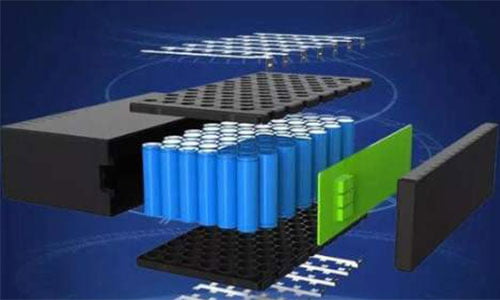
CNS Battery specializes in cylindrical lithium-ion technology. Unlike pouch or prismatic cells, cylindrical cells offer superior mechanical stability and thermal management—critical factors when a battery is exposed to the aerodynamic stresses and wind-chill of flight.
We offer a range of high-energy-density cells, but three specific formats are particularly suited for drone applications due to their balance of size, capacity, and discharge capability.
1. The Compact Powerhouse: 18650 Series
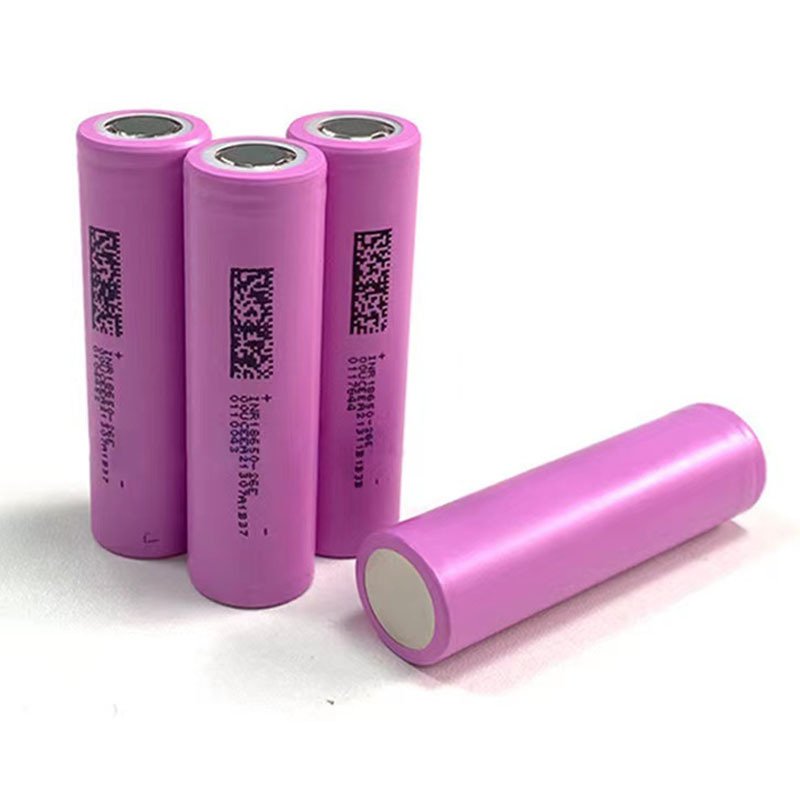
While older, the 18650 format remains popular for smaller consumer drones and long-endurance fixed-wing UAVs due to its maturity and high packing density.
- Key Drone Models: The INR18650-3500 and INR18650-3800 are standouts.
- Technical Edge: These cells utilize Nickel Manganese Cobalt (NMC) chemistry to achieve high specific energy. For instance, the INR18650-3500 offers 3.5Ah of capacity with a nominal voltage of 3.6V.
- Application: Ideal for drones where space is extremely limited, or where a very high cell count is needed to achieve high voltage stacks.
2. The Modern Standard: 21700 Series
This is the “Goldilocks” zone for most modern high-performance drones. The 21700 format offers a significant jump in capacity over the 18650 without the thermal management challenges of larger cells.
- Key Drone Models: INR21700-4500 and INR21700-5000.
- Technical Edge: With a diameter of 21mm and length of 70mm, these cells have a larger volume to store active materials. They typically offer 15-20% higher energy density than their 18650 counterparts. Furthermore, the 21700 format reduces the number of cells needed in a Battery Management System (BMS), thereby reducing the overall weight of the protection circuit and structural frame.
- Application: Perfect for high-end consumer drones, agricultural spraying drones, and industrial inspection drones that require both power and runtime.
3. The Heavy-Lift Champion: 32700 Series
When the mission requires lifting heavy payloads (such as LiDAR systems or medical supplies), the 32700 (also known as 32650/32700) format is the ultimate choice.
- Key Drone Models: IFR32700-6000.
- Technical Edge: Featuring an even larger footprint (32mm diameter), these cells can store massive amounts of energy (up to 6.0Ah) and handle high continuous discharge currents. They excel in thermal stability, generating less heat during high-load operations, which is vital when the drone’s airflow might be restricted during hover or heavy lifting.
- Application: Built for heavy-lift commercial drones, long-range surveillance drones, and electric Vertical Take-Off and Landing (eVTOL) prototypes.
Technical Specifications Comparison
To help you select the right cell for your drone’s power-to-weight optimization, please refer to the comparison table below. These values represent the high-energy variants suitable for maximizing flight time.
| Parameter | 18650 Series (e.g., 3500mAh) | 21700 Series (e.g., 5000mAh) | 32700 Series (e.g., 6000mAh) |
|---|---|---|---|
| Dimensions | 18mm x 65mm | 21mm x 70mm | 32mm x 70mm |
| Typical Capacity | 3.5 Ah | 5.0 Ah | 6.0 Ah |
| Nominal Voltage | 3.6 V | 3.7 V | 3.2 V |
| Approx. Weight | 48 g | 76 g | 137 g |
| Energy Density | High (Standard) | Very High (Optimized) | Ultra-High (Heavy Duty) |
| Best For Drone Type | Mini/Cinewhoops, Fixed Wing | Prosumer, Agriculture, Inspection | Heavy Lift, Industrial, eVTOL |
Engineering for Safety and Reliability
Selecting a high-energy-density battery is not just about the numbers; it is about trust. A drone battery failure is not merely an inconvenience—it is a safety hazard.
- Thermal Runaway Prevention: Our cells are manufactured using automated production lines that ensure consistent weld quality and electrolyte injection. This consistency is vital for preventing hot spots during fast charging or high-current discharge.
- Mechanical Robustness: Cylindrical cells have the highest tensile strength of any battery format. This is crucial for drones that experience vibration and G-forces.
- Customization: We understand that off-the-shelf might not fit your aerodynamic housing. We offer customization of the Protective Circuit Module (PCM), discharge current ratings, and even form factor dimensions to fit your specific drone chassis.
Conclusion: Powering Your Next Innovation
Choosing the right battery is the single most impactful decision you can make to enhance your drone’s capabilities. By selecting a high-energy-density cylindrical cell from CNS Battery, you are not just buying a power source; you are buying additional flight time, increased payload capacity, and engineering reliability.
If you are ready to optimize your UAV design, we invite you to explore our full range of Battery Manufacturers in China and our comprehensive Cylindrical Battery Cell catalog.
Let’s Engineer Your Success:
For technical data sheets, sample requests, or custom design consultations, please Contact Us today. Our team of application engineers is ready to assist you in selecting the perfect cell chemistry for your next drone project.