

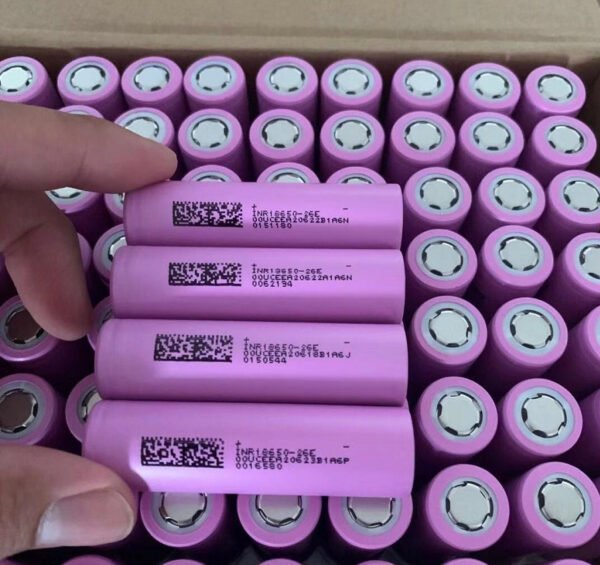
High Energy Density 46150 Lithium Ion Cylindrical Battery Cells for EV – vs Competitors
The electric vehicle industry continues to evolve at an unprecedented pace, with battery technology serving as the cornerstone of this transformation. Among various cell formats, the 46150 lithium ion cylindrical battery has emerged as a compelling solution for EV manufacturers seeking optimal balance between energy density, thermal management, and manufacturing scalability. This comprehensive analysis examines how 46150 cells compare against competing formats and leading manufacturers in the global marketplace.
Understanding the 46150 Cell Architecture
The 46150 designation refers to a cylindrical cell with 46mm diameter and 150mm height. This larger format compared to traditional 18650 or 21700 cells offers significant advantages in volumetric energy density and reduced cell count per pack. The gravimetric energy density typically ranges between 250-280 Wh/kg, while volumetric density reaches approximately 650-750 Wh/L depending on cathode chemistry and manufacturing processes.
From a technical standpoint, the 46150 format enables improved thermal dissipation through enhanced surface-area-to-volume ratio compared to prismatic alternatives. The cylindrical geometry provides superior mechanical strength, reducing the risk of thermal runaway propagation—a critical consideration for EV safety certifications across North American and European markets.
Competitive Landscape Analysis
Versus Tesla 4680 Cells
Tesla’s 4680 cells share similar dimensional characteristics but feature tabless design technology. While the 4680 offers marginally better power density, the 46150 format provides comparable energy density with more established manufacturing processes. For OEMs outside Tesla’s ecosystem, 46150 cells offer greater supply chain flexibility and reduced dependency on single-source manufacturing.
Versus LG Energy Solution & Samsung SDI
Korean manufacturers predominantly focus on prismatic and pouch formats for EV applications. LG’s prismatic cells achieve approximately 270 Wh/kg, while Samsung’s offerings emphasize fast-charging capabilities. However, cylindrical 46150 cells maintain advantages in thermal management consistency and pack-level integration efficiency. The standardized cylindrical format simplifies battery management system (BMS) design and reduces engineering complexity for tier-1 suppliers.
Versus CATL & Chinese Manufacturers
Chinese battery giants like CATL have invested heavily in CTP (Cell-to-Pack) technology with prismatic cells. While this approach reduces pack-level components, the 46150 cylindrical format offers superior serviceability and module-level replacement options. For commercial fleet operators and secondary market considerations, this maintainability factor represents significant total-cost-of-ownership advantages.
Key Technical Differentiators
Energy Density Optimization: Advanced nickel-rich cathode materials (NMC 811 or NCMA) enable 46150 cells to achieve industry-leading specific energy while maintaining cycle life exceeding 2,000 full cycles at 80% depth of discharge.
Thermal Performance: The cylindrical geometry facilitates uniform heat distribution during high-rate charging and discharging. Liquid cooling integration proves more efficient compared to pouch cells, particularly in extreme climate conditions prevalent in Middle Eastern and Southeast Asian markets.
Manufacturing Scalability: Established cylindrical cell production lines can be adapted for 46150 format with minimal capital expenditure. This manufacturing flexibility enables rapid capacity scaling to meet growing EV demand across Europe, North America, and emerging markets.
Regional Market Considerations
For battery procurement professionals in Germany, United States, and China, understanding regional certification requirements proves essential. The 46150 format complies with UN 38.3 transportation standards and meets ECE R100 electromagnetic compatibility requirements. Manufacturers serving global OEMs must ensure cells meet both regional safety standards and customer-specific validation protocols.
Supply chain resilience remains paramount. Diversified manufacturing locations across Asia, Europe, and North America reduce geopolitical risks while enabling just-in-time delivery models. Leading manufacturers maintain production facilities in multiple regions to serve local content requirements for EV tax incentives and regulatory compliance.
Strategic Selection Criteria
When evaluating 46150 cells against competitors, procurement teams should consider:
- Validated cycle life data under application-specific conditions
- Thermal runaway propagation testing results per UN GTR 20
- Manufacturing capacity and lead times for volume production
- Technical support and warranty terms for pack integration
- Cost per kWh at pack level, not just cell-level pricing
Conclusion
The 46150 lithium ion cylindrical battery represents a mature, scalable solution for EV manufacturers seeking balanced performance across energy density, safety, and manufacturability. While competing formats offer specific advantages in niche applications, the 46150 format delivers comprehensive value for mainstream EV platforms requiring proven technology with global supply chain support.
For detailed technical specifications and partnership opportunities, explore our comprehensive cylindrical battery cell portfolio. Manufacturers seeking reliable supply chain partners can review our credentials as established battery manufacturers in China with global distribution capabilities. Contact our technical team directly through our contact page for customized solutions matching your specific EV platform requirements.
The transition to electrification demands battery solutions that balance innovation with proven reliability. The 46150 cylindrical cell format delivers this balance, positioning OEMs for sustainable growth in the evolving global EV marketplace.

