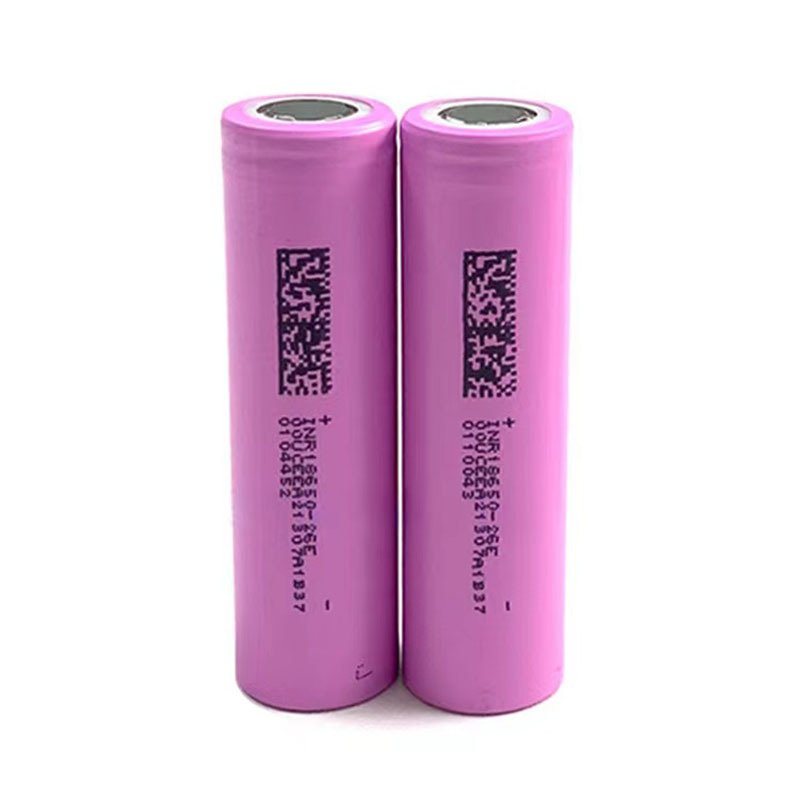
Fast Charging Without Heat: 18650 LFP Cells for Solar Storage vs Competitors
The renewable energy sector demands battery solutions that balance performance, safety, and longevity. Among emerging technologies, 18650 LFP (Lithium Iron Phosphate) cells have gained significant traction for solar storage applications, particularly due to their ability to support fast charging with minimal heat generation. This article examines the technical advantages of 18650 LFP cells compared to competing battery chemistries, providing engineers and procurement specialists with actionable insights for system design.
Understanding the Thermal Challenge in Fast Charging
Fast charging generates heat through internal resistance (I²R losses) and electrochemical reactions. In conventional NMC (Nickel Manganese Cobalt) or LCO (Lithium Cobalt Oxide) cells, rapid ion movement creates significant thermal buildup, requiring complex cooling systems. LFP chemistry inherently offers lower internal resistance and more stable crystal structures, reducing heat generation during high-current charging cycles.
The olivine structure of LiFePO₄ provides stronger P-O bonds compared to layered oxide cathodes, minimizing oxygen release risks and thermal runaway potential. This structural stability translates to safer operation in solar installations where ambient temperatures fluctuate significantly.
Key Advantages of 18650 LFP for Solar Storage
1. Superior Thermal Management
18650 LFP cells operate efficiently within a wider temperature range (-20°C to 60°C) without active cooling. During fast charging at 1C-2C rates, temperature rise typically remains below 15°C, compared to 25-30°C in NMC equivalents. This characteristic reduces system complexity and maintenance costs for solar storage installations.
2. Extended Cycle Life
LFP chemistry delivers 3,000-5,000 full cycles at 80% depth of discharge, significantly outperforming NMC (1,500-2,500 cycles) in solar applications with daily charge-discharge patterns. The stable cathode structure minimizes capacity fade over time, ensuring consistent performance throughout the system’s operational lifetime.
3. Enhanced Safety Profile
The thermal runaway threshold for LFP cells exceeds 270°C, compared to 150-200°C for NMC cells. This safety margin is critical for solar installations in remote locations where monitoring may be limited. The reduced fire risk also lowers insurance costs and regulatory compliance burdens.
Competitive Comparison Analysis
| Parameter | 18650 LFP | NMC 18650 | Lead-Acid |
|---|---|---|---|
| Energy Density | 90-120 Wh/kg | 150-220 Wh/kg | 30-50 Wh/kg |
| Cycle Life | 3,000-5,000 | 1,500-2,500 | 500-1,000 |
| Thermal Runaway | >270°C | 150-200°C | N/A |
| Fast Charge Capability | 1C-2C | 1C-1.5C | 0.1C-0.3C |
| Cost per Cycle | Lowest | Medium | High |
While NMC cells offer higher energy density, LFP’s total cost of ownership proves superior for stationary solar storage where weight is less critical than longevity and safety.
Technical Implementation Considerations
For optimal performance, solar storage systems should implement BMS (Battery Management Systems) with cell-level monitoring. The cylindrical 18650 form factor provides mechanical robustness and efficient heat dissipation through surface area optimization. Proper cell balancing ensures uniform charging across battery packs, maximizing the fast-charge capability without compromising individual cell health.
When designing solar storage systems, engineers should consider the C-rate specifications carefully. While 18650 LFP cells support 1C-2C charging, sustained operation at maximum rates may reduce overall cycle life. A balanced approach of 0.5C-1C for daily cycling with occasional 2C bursts provides optimal longevity.
Market Position and Supplier Selection
China has emerged as a leading manufacturing hub for LFP battery technology, offering competitive pricing without compromising quality standards. Working with established battery manufacturers in China ensures access to certified products meeting international safety requirements.
For procurement specialists evaluating suppliers, key verification points include IEC 62619 certification, UN 38.3 transportation compliance, and documented cycle life testing under solar-relevant conditions. The cylindrical cell format offers flexibility in pack design, allowing customization for specific installation requirements.
Conclusion
18650 LFP cells represent the optimal balance of safety, longevity, and fast-charging capability for solar storage applications. While competing chemistries may offer advantages in specific scenarios, LFP’s thermal stability and cycle life make it the preferred choice for stationary energy storage systems. Engineers should prioritize total cost of ownership over initial purchase price when selecting battery technology for solar installations.
For detailed product specifications and technical consultation, explore our cylindrical battery cell offerings or reach out through our contact page for customized solutions matching your project requirements.
This technical analysis is based on current industry standards and testing data. Specific performance may vary based on system design, operating conditions, and manufacturing quality.