

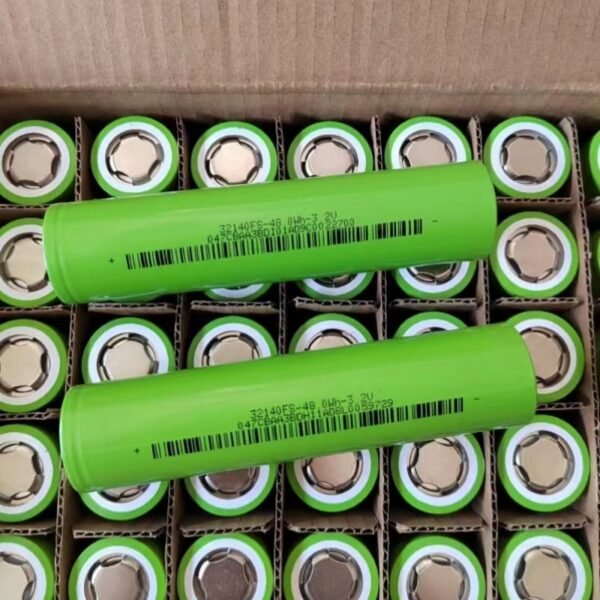
Factory Direct 32700 Cylindrical Lithium Cell Cells China Export: No Fast Charging Without Heat for UAV Projects Solve Today
The rapid expansion of unmanned aerial vehicle (UAV) applications has intensified demand for high-performance battery solutions. Among available options, the 32700 cylindrical lithium cell has emerged as a preferred choice for industrial drone projects requiring extended flight time, reliable power delivery, and enhanced safety. However, fast charging without proper thermal management remains a critical challenge that manufacturers and integrators must address. This article examines key technical considerations for deploying 32700 cells in UAV applications while ensuring optimal performance and safety.
Understanding 32700 Cylindrical Cell Specifications
The 32700 designation refers to a cylindrical battery cell with 32mm diameter and 70mm height. These cells typically utilize LiFePO4 (Lithium Iron Phosphate) chemistry, offering superior thermal stability compared to NCM alternatives. Standard capacity ranges from 6000mAh to 6200mAh, making them ideal for high-energy-density applications where safety cannot be compromised.
For B2B buyers sourcing from China, factory-direct procurement ensures competitive pricing while maintaining quality control. Reputable battery manufacturers in China provide comprehensive certification including CE, UL 1642, IEC 62619, and UN38.3 for international shipping compliance.
Thermal Management: The Core Challenge in Fast Charging
Fast charging generates significant heat due to internal resistance and electrochemical reactions. Without proper thermal management, cell temperature can exceed safe operating limits (typically 45-60°C), leading to:
- Accelerated degradation reducing cycle life
- Thermal runaway risk in extreme conditions
- Capacity imbalance across battery packs
- BMS protection triggers interrupting operation
Effective thermal management maintains cells within the optimal 20-40°C range where charging efficiency and longevity are maximized. Advanced Battery Management Systems (BMS) coordinate with thermal control systems to monitor temperature, adjust charging rates, and activate cooling mechanisms when necessary.
UAV-Specific Design Considerations
UAV applications present unique challenges distinct from stationary energy storage or electric vehicles:
Weight-to-Power Ratio
Every gram matters in aerial platforms. 32700 cells offer favorable energy density while maintaining structural integrity under vibration and G-force conditions experienced during flight maneuvers.
Discharge Rate Requirements
Industrial drones often require 5C continuous discharge with 8C peak capability for takeoff and emergency maneuvers. Cell selection must match application-specific power demands without compromising safety margins.
Environmental Exposure
UAVs operate across diverse climates from sub-zero conditions to high-temperature environments. Cells must maintain performance across the full operating range while protecting against moisture and dust ingress at the pack level.
Integrated BMS Solutions for Safe Operation
A sophisticated Battery Management System serves as the control中枢 for 32700 battery packs in UAV applications. Key BMS functions include:
- Cell voltage monitoring with ±2mV accuracy
- Temperature sensing at multiple pack locations
- Active or passive balancing to maintain cell uniformity
- State of Charge (SoC) estimation using coulomb counting and OCV correlation
- Communication interfaces (CAN, RS485, UART) for integration with flight controllers
Quality BMS implementation prevents over 60% of lithium battery failures attributed to inadequate cell monitoring. For detailed product specifications, explore our cylindrical battery cell catalog featuring 32700 options with integrated protection circuits.
Export Compliance and Shipping Regulations
International buyers must navigate evolving lithium battery transportation regulations. The 2026 IATA Dangerous Goods Regulations (DGR) mandate that lithium cells shipped by air maintain State of Charge below 30% for enhanced safety. Proper UN3480 classification, packaging, and documentation are essential for smooth customs clearance.
Factory-direct suppliers experienced in export procedures streamline this process, providing complete shipping documentation including MSDS, UN38.3 test reports, and air transport certificates.
Solving the Heat Challenge: Practical Approaches
Addressing thermal issues requires a multi-layered strategy:
- Cell Selection: Choose 32700 cells with low internal resistance (<15mΩ) to minimize heat generation during charging.
- Charging Protocol: Implement CC-CV charging with temperature-based current derating. Reduce charging rate when cell temperature exceeds 35°C.
- Pack Design: Incorporate thermal interface materials, heat sinks, or forced air cooling for high-power applications.
- BMS Integration: Configure thermal protection thresholds with appropriate hysteresis to prevent rapid cycling.
- Testing Validation: Conduct thermal imaging and cycle testing under worst-case conditions before deployment.
Partner Selection for Long-Term Success
Choosing the right manufacturing partner extends beyond unit pricing. Evaluate suppliers based on:
- Production capacity and lead time reliability
- Quality management systems (ISO 9001, IATF 16949)
- Technical support for custom pack integration
- After-sales service and warranty terms
- R&D capabilities for future product evolution
Established manufacturers provide OEM/ODM services tailored to specific UAV requirements, from cell selection to complete pack assembly with integrated BMS.
Conclusion
The 32700 cylindrical lithium cell represents a compelling solution for UAV projects demanding high capacity, safety, and reliability. However, successful deployment requires comprehensive attention to thermal management, BMS integration, and regulatory compliance. Factory-direct sourcing from qualified Chinese manufacturers offers cost advantages while maintaining quality standards necessary for commercial drone applications.
For technical consultations or customization requirements, contact our team through the contact page to discuss your specific UAV battery project needs. With proper engineering and partner selection, the heat challenges associated with fast charging can be effectively managed, enabling reliable UAV operations across diverse mission profiles.


