

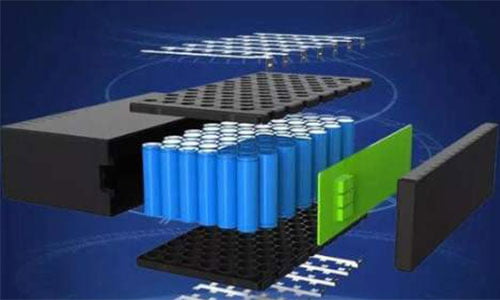
The 18650 LFP Standard for Industrial Energy Storage
In the rapidly evolving landscape of stationary energy storage, the shift towards Lithium Iron Phosphate (LFP) chemistry is no longer a trend but a standard. For global B2B purchasers and system integrators, the decision to select 18650 LFP cells is often driven by the critical need for safety and longevity. Unlike consumer-grade NMC cells, industrial LFP formulations prioritize thermal stability and cycle life over raw energy density. However, not all 18650 LFP cells are created equal. The primary technical challenge in this sector is capacity fade—the gradual loss of charge-holding capability over time.
Capacity fade is the silent killer of Energy Storage System (ESS) Return on Investment (ROI). It occurs due to parasitic side reactions at the electrode-electrolyte interface, often accelerated by high temperatures or improper voltage windows. A cell that promises 2000 cycles but fades 30% in capacity after 1000 cycles is a liability, not an asset. To mitigate this, our engineering approach focuses on three pillars: electrode homogeneity, electrolyte formulation, and manufacturing precision. By utilizing high-purity, nano-scale LFP cathode materials and proprietary electrolyte additives, we suppress the growth of the Solid Electrolyte Interphase (SEI) layer, which is the primary culprit of irreversible lithium loss.
Why 18650 Cylindrical for Stationary Storage?
The debate between prismatic/pouch cells and cylindrical cells (specifically the 18650 format) for ESS often centers on volumetric efficiency. Critics argue that the steel casing of cylindrical cells wastes space. However, from a thermal management and safety engineering perspective, the 18650 format offers distinct advantages that make it ideal for industrial applications where “no minimal capacity fade” is a requirement.
Thermal Runaway Propagation
Cylindrical cells have a distinct advantage in safety due to their robust mechanical structure. The 18650 format features a high-strength steel can that acts as a pressure vessel. In the event of a thermal event, this structure contains the pressure far more effectively than a pouch or prismatic cell, significantly reducing the risk of fire propagation to adjacent cells. This inherent safety allows for denser packing in modules without the need for excessively bulky external cooling systems.
Mechanical Stability and Vibration Resistance
For applications that may experience environmental stress (such as outdoor telecom cabinets or mobile storage units), the 18650 cell’s mechanical robustness is unmatched. The “jellyroll” winding process creates a self-supporting structure that resists deformation. This mechanical stability ensures that the internal electrode alignment remains consistent over thousands of cycles, preventing micro-shorts that lead to accelerated self-discharge and capacity fade.
Manufacturing Consistency
The cylindrical format is the most mature and automated form factor in lithium-ion manufacturing. The high-speed, precision winding and assembly processes result in extremely low standard deviations in capacity and internal resistance. This consistency is vital for ESS, where thousands of cells are connected in series and parallel. Mismatched cells cause imbalances, forcing the Battery Management System (BMS) to cut cycles prematurely, effectively reducing the system’s usable life.
Technical Note: The “18650” nomenclature refers to the physical dimensions: 18mm in diameter and 65mm in length. While newer formats like 21700 exist, the 18650 remains the gold standard for cost-sensitive, high-reliability industrial applications due to its vast manufacturing infrastructure.
The CNS 18650 LFP Advantage
At CNS, we engineer our 18650 LFP cells specifically for the rigors of industrial energy storage. We do not repurpose consumer electronics cells; we build cells designed for 10+ years of continuous operation.
1. Optimized for Cycle Life
Our INR18650-3500 and INR18650-3800 models are engineered with a focus on energy density and cycle stability. By utilizing advanced graphite anodes and phosphate-based cathodes, we achieve a balance that allows for over 2000 deep cycles with minimal degradation. The key is our proprietary electrolyte, which forms a stable interface, preventing the continuous consumption of active lithium ions during charge and discharge.
2. Ultra-Safe Chemistry
Safety is non-negotiable. Our LFP chemistry has an olivine crystal structure that is inherently more stable than layered oxide structures (like NMC). Even under extreme conditions—such as overcharging, short-circuiting, or high temperatures (up to 270°C decomposition temperature)—LFP cells do not release oxygen, eliminating the risk of thermal runaway explosions. This makes them the ideal choice for indoor installations or environments where safety regulations are strict.
3. Complete System Solution
We understand that purchasing cells is only one part of the equation. To ensure your ESS project has “no minimal capacity fade,” you need a complete solution. This includes:
- Battery Management Systems (BMS): Tailored to the specific voltage and current profiles of our 18650 modules.
- Thermal Management Integration: Design guides for optimal airflow around cylindrical cells to maintain the ideal temperature window (25°C – 45°C) for longevity.
- Custom Module Design: From simple 4S configurations for small UPS units to complex 16S/32S stacks for residential storage.
Technical Specifications Comparison
To assist engineers and procurement managers in making an informed decision, we have compiled a comparison of our most popular 18650 LFP cells suitable for ESS applications. These cells are designed to operate efficiently within a wide temperature range, ensuring reliability in diverse global climates.
| Model | Typical Capacity | Nominal Voltage | Max Continuous Discharge | Weight | Primary Application |
|---|---|---|---|---|---|
| INR18650-3500 | 3500 mAh | 3.6 V | 7.0 A (2C) | 48 g | Smart Home, ESS, Ebike |
| INR18650-3800 | 3800 mAh | 3.6 V | 7.6 A (2C) | 48 g | Smart Home, ESS |
| INR21700-5000 | 5000 mAh | 3.7 V | 10 A (2C) | 76 g | E-Bikes, Portable ESS |
| IFR32700-6000 | 6000 mAh | 3.2 V | 18 A (3C) | 137 g | EV, UPS, Starting Power |
Note: All capacities listed are typical values. For detailed datasheets including cycle life graphs and temperature performance curves, please contact our engineering team.
Partnering for Your Next ESS Project
Selecting the right cell is a critical decision that impacts the entire lifecycle cost of your energy storage project. While the initial cost per watt-hour is important, the Levelized Cost of Storage (LCOS)—which factors in cycle life, degradation, and maintenance—is the true metric of value. Our 18650 LFP cells are designed to minimize LCOS by delivering consistent performance and minimal capacity fade over thousands of cycles.
We invite global distributors, OEMs, and system integrators to leverage our manufacturing expertise. Whether you require standard cells or a fully customized cylindrical battery solution, our R&D team is equipped to support your specific voltage, form factor, and performance requirements.
Ready to build a storage solution that lasts? Explore our full range of cylindrical battery cells and discover how our technology can support your next high-capacity project.
Explore Our Cylindrical Battery Range
For specific technical inquiries or custom project requirements, our team of battery specialists is standing by to assist you.
Looking for a reliable battery manufacturer in China? Visit our manufacturer page to learn more about our capabilities and global partnerships.


