Factory Direct 18650 LFP Cells China Export: No Fast Charging Without Heat for E-bike Projects
The global e-bike market is undergoing a paradigm shift. As urban mobility demands evolve, the industry is moving away from “one-size-fits-all” battery solutions toward highly specialized, application-specific energy systems. For Original Equipment Manufacturers (OEMs) and technical procurement managers, the challenge lies in sourcing cylindrical cells that balance high energy density, thermal stability, and cost-efficiency.
This article delves into the engineering rationale behind selecting specific 18650 Lithium Iron Phosphate (LFP) chemistries for e-bike applications. We will analyze the thermal dynamics of fast charging, the structural advantages of cylindrical form factors, and how direct factory collaboration can mitigate the risks associated with “fast charging without heat” requirements.
The Thermal Physics of Fast Charging: Why Heat Management is Non-Negotiable
Fast charging is a coveted feature in the e-bike sector, often marketed as a key differentiator. However, from a lithium-ion battery chemistry perspective, rapid charging is an exothermic process governed by Joule heating principles ($Q = I^2 R t$).
When an e-bike battery pack is charged rapidly, lithium ions are forced to intercalate into the anode at a higher velocity. If the internal resistance (IR) of the cell is not meticulously controlled, or if the charging algorithm does not account for thermal runaway thresholds, the result is excessive heat generation. For standard Lithium Nickel Manganese Cobalt Oxide (NMC) cells, this heat can accelerate electrolyte decomposition and SEI (Solid Electrolyte Interphase) layer growth, leading to capacity fade and potential safety hazards.
This is where the 18650 LFP (Lithium Iron Phosphate) chemistry presents a distinct advantage for specific e-bike projects. LFP cathodes have a more robust olivine crystal structure compared to layered oxide structures (like NMC). This structure provides superior thermal stability. While NMC cells may reach thermal runaway at temperatures as low as 150°C to 200°C, LFP cells typically remain stable up to 270°C. Therefore, for projects that require “fast charging” but must strictly avoid “heat generation” due to constraints in Battery Management System (BMS) cooling capabilities or enclosure design, LFP offers a safer physical boundary condition.
However, it is crucial to note that while LFP is thermally safer, it traditionally has a lower ionic conductivity than NMC. To achieve fast charging with LFP, manufacturers must utilize nano-phosphate technology and specialized conductive coatings to lower the internal resistance. This requires precise manufacturing control, which is why partnering with a factory that has advanced R&D capabilities is essential.
Cylindrical Cell Architecture: The 18650 Advantage in E-Bike Design
While pouch and prismatic cells dominate the electric vehicle market, the 18650 cylindrical cell remains a workhorse for e-bike applications. The reasons are rooted in mechanical engineering and scalability.
- Mechanical Robustness: The cylindrical geometry is inherently strong. The “jelly roll” construction of the 18650 cell distributes mechanical stress evenly. In the rugged environment of an e-bike—subjected to constant vibration, bumps, and weather fluctuations—the rigid steel (or aluminum) casing of a cylindrical cell provides superior protection for the internal electrodes compared to the flexible laminate of a pouch cell.
- Thermal Management Scalability: E-bike packs consist of hundreds of cells arranged in Series (S) and Parallel (P) configurations. The uniform surface area of cylindrical cells allows for predictable air-gap spacing. This makes passive and active cooling systems easier to engineer. If your project requires “no heat” generation, the ability to dissipate the heat that is generated is significantly easier with cylindrical arrays than with large-format pouch cells, which often have “hot spots” in the center of the electrode.
- Supply Chain Maturity: The 18650 format was pioneered for consumer electronics and has benefited from decades of manufacturing optimization. This maturity translates to lower costs and higher consistency (lower standard deviation in capacity and IR). For e-bike manufacturers looking to scale production without compromising quality, the 18650 offers the best “Quality-to-Cost” ratio.
Strategic Sourcing: Navigating “Factory Direct” Procurement
Sourcing directly from a Chinese manufacturer presents unique opportunities and challenges. The phrase “Factory Direct” implies the removal of trading company margins, potentially reducing costs by 15-25%. However, it also places the burden of Quality Assurance (QA) and technical communication squarely on the buyer.
For engineers and procurement managers dealing with “E-bike Projects,” the following criteria should be non-negotiable when evaluating a factory:
- Automated Production Lines (MES): Manual assembly of 18650 packs is a recipe for disaster. Look for manufacturers with fully automated Module Assembly Lines. Automation ensures consistent welding (laser vs. resistance), uniform pressure application, and precise BMS soldering, all of which contribute to the “no heat” requirement by minimizing contact resistance.
- Customization Capability: Not all e-bikes are the same. A high-performance mountain e-bike requires different discharge curves than a city commuter scooter. A true factory should offer customization on the INR (Nickel Manganese Cobalt) or IFR (Iron Phosphate) chemistry level, as well as mechanical dimensions and tabbing configurations.
- Certification Compliance: The European market (EN 55032, EN 62133) and the North American market (UL 2271, DOT) have strict regulations regarding battery safety. Factory-direct sourcing requires rigorous auditing to ensure the cells meet IATF 16949 (if automotive-grade) or ISO 9001 standards.
CNS Battery: Engineering Solutions for Global E-bike OEMs
At CNS Energy, we operate at the intersection of advanced chemistry and industrial manufacturing. As a leading Lithium-ion Cylindrical Battery Manufacturer in China, we specialize in providing OEMs with the specific 18650 solutions needed for demanding e-bike applications.
We understand that “fast charging without heat” is not just a marketing slogan; it is a complex engineering equation involving Anode-to-Cathode (N/P) ratio balancing, electrolyte formulation, and BMS co-design. Our R&D Center focuses on optimizing LFP and NMC chemistries to achieve high energy density while maintaining the thermal stability required for safe, rapid charging cycles.
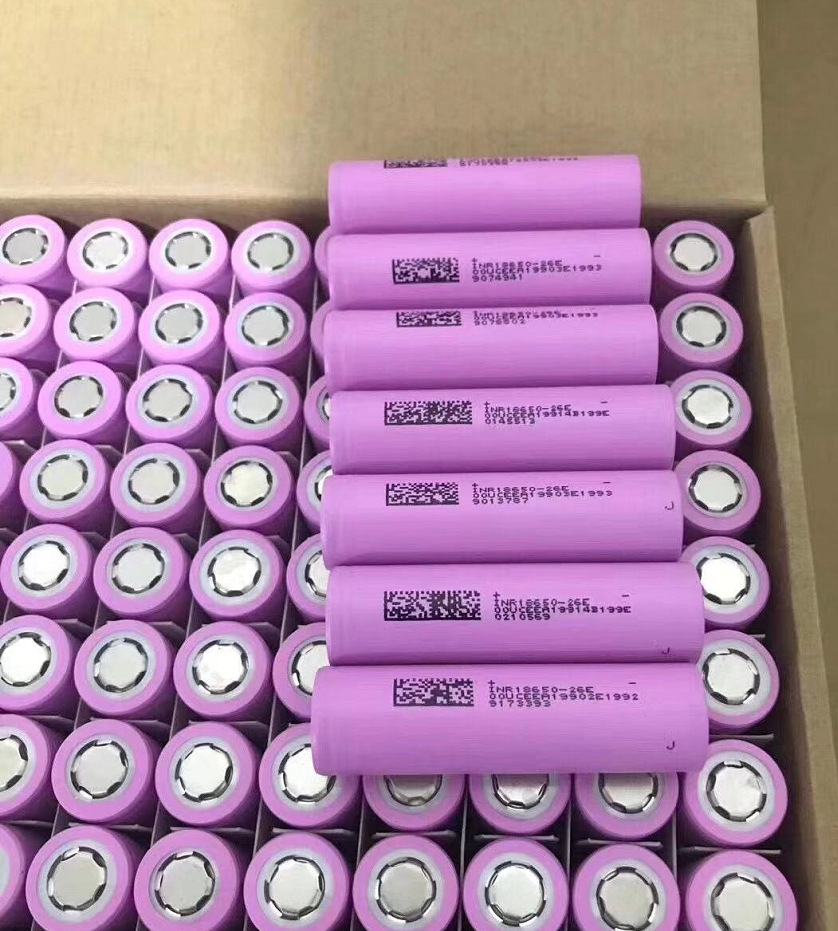
Our product portfolio includes a wide range of Cylindrical Battery Cells, from the standard 18650 format to the higher-capacity 21700 and 32700 sizes. Whether your project requires the high power density of an INR18650-3500 for a speed e-bike or the long cycle life of an IFR32700-6000 for a rental fleet scooter, we provide the technical data sheets and sample cells necessary for your engineering validation.
For technical procurement managers looking to streamline their supply chain, we offer a direct line to our engineering team. We handle custom requirements, from specific discharge rates to tailored safety certifications, ensuring your e-bike project meets market demands without compromise.
If you are ready to move beyond generic battery solutions and require a partner for your specific e-bike application, we invite you to consult our technical specifications or contact our sales engineers directly.
Explore our full range of Cylindrical Battery Cells and discover how our manufacturing expertise can power your next-generation e-bike projects.
View Our Cylindrical Battery Product Line
For technical consultation and factory-direct pricing:
Learn more about partnering with a leading Chinese battery manufacturer: