

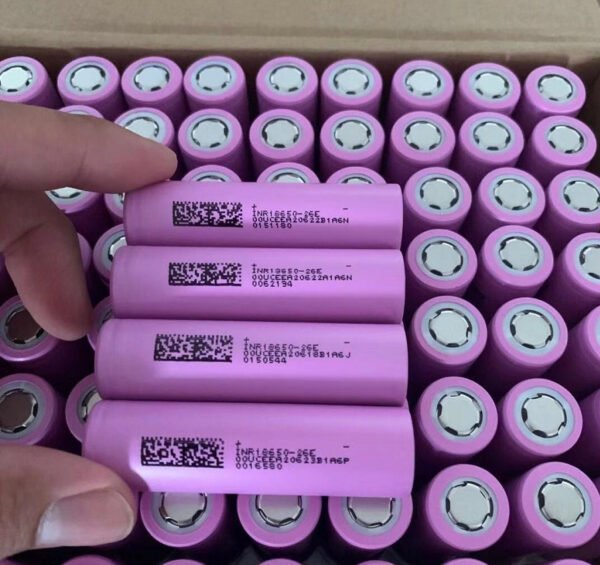
Factory Direct 18650 LFP Cells China Export: No BMS Compatibility Solved for EV Projects
Introduction
The global electric vehicle (EV) market continues its exponential growth, driving unprecedented demand for reliable lithium battery solutions. Among various cell chemistries, Lithium Iron Phosphate (LFP) 18650 cylindrical cells have emerged as the preferred choice for numerous EV applications, particularly in commercial fleets, two-wheelers, and stationary energy storage systems. China’s battery manufacturing sector has become the cornerstone of this supply chain, offering factory-direct solutions that eliminate traditional procurement barriers. This technical analysis examines the critical BMS compatibility challenges and demonstrates how direct manufacturer partnerships resolve these integration complexities for EV projects worldwide.
Understanding 18650 LFP Cell Technical Specifications
The 18650 designation refers to cylindrical cells measuring 18mm in diameter and 65mm in length. LFP chemistry provides distinct advantages over traditional NMC or NCA alternatives, including superior thermal stability, extended cycle life exceeding 3,000-5,000 full cycles, and enhanced safety characteristics due to the stable olivine crystal structure. The nominal voltage of 3.2V per cell requires careful pack configuration design, typically arranged in series-parallel combinations to achieve target voltage and capacity requirements.
Key technical parameters include continuous discharge rates ranging from 1C to 3C depending on application demands, with peak discharge capabilities reaching 5C for high-performance configurations. Operating temperature ranges typically span -20°C to 60°C, though optimal performance occurs between 15°C and 35°C. These specifications directly influence BMS selection and thermal management system design.
BMS Compatibility Challenges in EV Integration
Battery Management System compatibility represents the most critical integration challenge in EV projects. Traditional procurement channels often create information gaps between cell manufacturers and BMS suppliers, resulting in communication protocol mismatches, inaccurate state-of-charge algorithms, and inadequate protection threshold configurations. Common compatibility issues include:
Communication Protocol Mismatches: Different manufacturers implement varying CAN bus protocols, UART configurations, or proprietary communication standards. Without direct manufacturer support, engineering teams spend considerable resources reverse-engineering cell characteristics.
Protection Parameter Calibration: Over-voltage, under-voltage, over-current, and temperature protection thresholds must align precisely with cell specifications. Factory-direct partnerships provide access to detailed cell characterization data, enabling accurate BMS parameter configuration.
Cell Balancing Requirements: LFP cells exhibit flatter voltage curves compared to other lithium chemistries, making state-of-charge estimation more challenging. Direct manufacturer collaboration ensures BMS algorithms account for these unique characteristics.
Factory Direct Advantages for Technical Integration
Partnering directly with Chinese battery manufacturers eliminates intermediary complications while providing comprehensive technical support throughout the integration process. Factory-direct suppliers offer detailed specification sheets, cycle life testing data, impedance characterization, and thermal performance profiles essential for proper BMS configuration.
Technical teams gain access to application engineering support, enabling collaborative problem-solving during prototype development and production scaling phases. This direct communication channel accelerates troubleshooting resolution and reduces time-to-market for EV projects. Additionally, factory-direct relationships facilitate custom cell configurations, including specialized tab designs, capacity variations, and performance optimizations tailored to specific application requirements.
Quality assurance protocols become transparent through direct manufacturer partnerships. Reputable facilities maintain ISO 9001, IATF 16949, and UN 38.3 certifications, ensuring cells meet international safety and performance standards required for automotive applications.
Technical Implementation Considerations
Successful EV project implementation requires systematic attention to several critical factors. Pack design must account for cell-to-cell variation, typically maintaining capacity matching within 3% and internal resistance variation below 5% for optimal performance. Thermal management systems should maintain cell temperature uniformity within 5°C across the entire pack to prevent accelerated degradation.
BMS selection should prioritize features including accurate coulomb counting, temperature monitoring at multiple pack locations, cell balancing capabilities (passive or active depending on application), and robust fault detection algorithms. Integration testing must validate all protection functions under various operating conditions before deployment.
For comprehensive product specifications and technical documentation, visit our cylindrical battery cell catalog. Engineering teams seeking manufacturer partnerships can explore verified battery manufacturers in China through our platform. Direct technical consultation is available through our contact page for project-specific requirements.
Conclusion
The transition to factory-direct 18650 LFP cell procurement represents a strategic advantage for EV projects requiring reliable, cost-effective battery solutions. BMS compatibility challenges, traditionally viewed as significant integration barriers, become manageable through direct manufacturer collaboration providing comprehensive technical data and engineering support. As the global EV market continues expanding, partnerships with qualified Chinese battery manufacturers offer the technical depth, quality assurance, and supply chain reliability necessary for successful project deployment. Engineering teams prioritizing direct manufacturer relationships position themselves for accelerated development cycles, reduced integration risks, and optimized total cost of ownership throughout the product lifecycle.


