
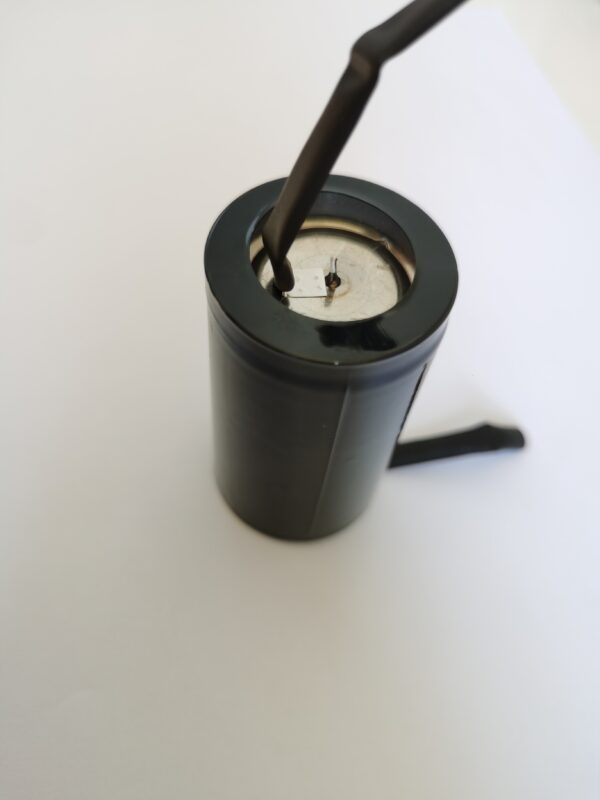
The Ultimate Guide to EaglePicher SLS500 Li-S Deep Sea Battery Alternatives
The Search for a Reliable Alternative
For engineers and procurement specialists working on deep-sea exploration, oil & gas monitoring, or military underwater systems, the EaglePicher SLS500 Lithium-Sulfur (Li-S) Deep Sea Battery has long been a benchmark for high-energy-density, primary (non-rechargeable) power solutions. However, supply chain constraints, lead time issues, or specific voltage requirements often necessitate the search for a high-performance alternative.
Finding a true equivalent is not merely about matching dimensions; it requires a deep understanding of the electrochemical principles behind Lithium-Thionyl Chloride (Li-SOCl₂) and Lithium-Sulfur (Li-S) chemistries. This guide will walk you through the technical specifications you need to verify and introduce a robust alternative solution that meets the rigorous demands of deep-sea applications.
Understanding the Core Technology: Why Lithium?
Before diving into the alternative, it is crucial to understand why Lithium-based primary cells are the only viable option for deep-sea applications.
The Chemistry of Endurance
Primary lithium batteries, specifically those utilizing Lithium metal anodes, offer the highest energy density of any commercial battery chemistry. For deep-sea instruments that may need to operate unattended for 5 to 10 years, this energy density is non-negotiable.
The key advantage lies in the passivation layer. Unlike aqueous batteries, lithium cells utilize non-aqueous organic electrolytes, which are incompressible. This allows them to withstand the crushing pressures of the deep ocean (up to 6000 meters) without rupture.
Key Specifications of the EaglePicher SLS500
The SLS500 is renowned for its specific profile. When sourcing an alternative, you must match these critical parameters:
- Nominal Voltage: 3.5V (Specific to Lithium-Thionyl Chloride chemistry).
- Operating Temperature: Typically -55°C to +85°C (critical for cold deep-sea environments).
- High Pulse Capability: The ability to deliver high current pulses for telemetry or sensor activation, despite being a “voltage-delay” chemistry.
- Hermetic Seal: Absolute resistance to seawater ingress.
The Alternative Solution: High-Performance Primary Lithium Cells
For applications requiring a drop-in replacement or a customized engineering solution for the SLS500, CNS Battery offers a range of primary lithium batteries designed for extreme environments. These cells are engineered to provide the same reliability and energy density required for deep-sea telemetry, sonobuoys, and underwater sensors.
Technical Comparison & Features
| Feature | EaglePicher SLS500 | Alternative Solution (CNS Battery) |
|---|---|---|
| Chemistry | Lithium-Thionyl Chloride (Li-SOCl₂) | Lithium-Thionyl Chloride (Li-SOCl₂) |
| Nominal Voltage | 3.5V | 3.5V (Standard) |
| Energy Density | Very High (>500 Wh/kg) | Ultra-High Energy Density |
| Application | Deep Sea, Military, Oil & Gas | Deep Sea, Military, Oil & Gas |
| Customization | Limited Standard Sizes | Fully Customizable (Size/Shape) |
Why Choose This Alternative?
- Customization for Deep-Sea Housings: Standard cylindrical cells often do not fit the optimized pressure housings of modern AUVs (Autonomous Underwater Vehicles). An alternative provider with advanced R&D capabilities can offer prismatic or custom-shaped cells that maximize the volumetric efficiency within your pressure vessel.
- Voltage Management Expertise: A common challenge with Li-SOCl₂ chemistry is the “voltage delay” — a temporary voltage drop under initial load. A reliable alternative provider will offer integrated technical support or modified cell formulations to mitigate this effect, ensuring your sensors activate correctly on the first pulse.
- Supply Chain Stability: Sourcing from a manufacturer with a robust global supply chain ensures that your deep-sea deployment schedule is not delayed by battery availability.
Applications in the Field
These alternative cells are not just theoretical equivalents; they are deployed in the field. Engineers utilize them in scenarios such as:
- Seismic Data Loggers: Powering instruments on the ocean floor for multi-year geological surveys.
- Subsea Control Modules: Providing fail-safe power for valve actuators in oil fields.
- Scientific Probes: Supplying energy for CTD (Conductivity, Temperature, Depth) sensors in oceanographic research.
The ability to customize the battery management system (BMS) interface or the physical dimensions of the cell stack allows for a seamless integration into existing systems designed for the SLS500 footprint.
Conclusion and Next Steps
When your deep-sea project relies on the stability of Lithium-Sulfur or Lithium-Thionyl Chloride chemistry, settling for a substandard alternative is not an option. While the EaglePicher SLS500 sets a high standard, there are viable, high-performance alternatives available that offer the same chemical robustness with the added flexibility of customization.
If you are facing long lead times or require a specific form factor for your next-generation underwater device, it is time to consult with a specialist.
Explore our range of Primary Lithium Battery solutions designed for extreme environments.
Explore Primary Battery Products
Contact our engineering team for a direct comparison and technical consultation.
