
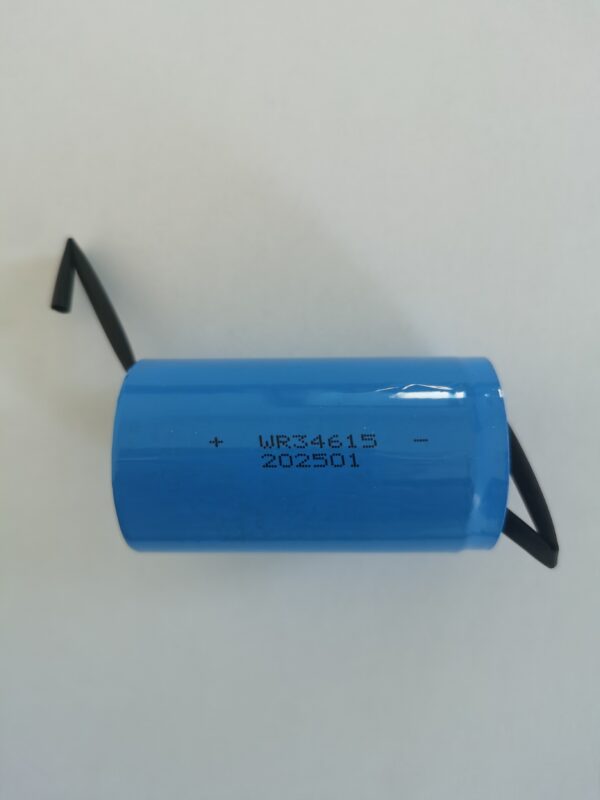
Here is the SEO-optimized article tailored for the B2B market, specifically targeting engineers and technical procurement managers in the mining and heavy industry sectors.
Dust Proof Li-SOCl₂ Battery for Mining Environments: The Ultimate Power Solution
In the harsh, unforgiving world of mining and underground resource extraction, standard power sources often fail within months. The combination of high humidity, pervasive dust, and extreme temperature fluctuations creates an environment where most lithium-ion or alkaline batteries suffer from rapid corrosion, leakage, or catastrophic internal short circuits. For engineers and technical managers, the challenge isn’t just finding a battery; it’s finding a power solution that guarantees 10+ years of maintenance-free operation without risking equipment downtime.
At CNS Battery, we specialize in primary lithium technology designed specifically for these “hostile environments.” Our focus is on the Lithium-Thionyl Chloride (Li-SOCl₂) chemistry, which offers the highest energy density of any commercial battery system available today. This article explores why dust-proof Li-SOCl₂ cells are the definitive choice for mining telemetry, safety sensors, and remote monitoring equipment.
Why Standard Batteries Fail in Mining Conditions
Before diving into the solution, it is critical to understand the failure mechanisms of conventional power sources in dusty environments.
Most consumer-grade or industrial batteries utilize aqueous electrolytes (like those in Lithium-Ion or Lead-Acid batteries). When exposed to the fine particulate matter found in mines, these systems face two primary risks:
- Conductive Dust Bridging: Fine graphite or metallic dust can settle on the battery terminals or casing seams. If the dust is conductive, it creates a leakage path, draining the battery rapidly or causing thermal runaway.
- Moisture Absorption: Mining environments are often humid. Standard seals degrade over time, allowing moisture ingress. This reacts with the electrolyte, producing gas that swells and ruptures the cell.
For B2B clients, this translates to high maintenance costs and frequent site visits to replace failed units—a logistical nightmare in remote mining operations.
The Chemistry of Resilience: Lithium-Thionyl Chloride (Li-SOCl₂)
To solve these problems, CNS Battery utilizes Lithium Metal anodes paired with a Thionyl Chloride (SOCl₂) organic electrolyte. This non-aqueous chemistry is fundamentally different from rechargeable lithium-ion batteries.
Technical Specifications
The following table outlines the core advantages of our Li-SOCl₂ chemistry compared to standard industrial batteries:
| Feature | Standard Lithium-Ion | CNS Battery Li-SOCl₂ | Benefit for Mining |
|---|---|---|---|
| Operating Temperature | -20°C to 60°C | -55°C to +85°C | Survives extreme underground thermal shifts |
| Self-Discharge Rate | 1-2% per month | < 1% per year | 10-20 year shelf life without maintenance |
| Seal Integrity | Standard Laser Welding | Hermetic Glass-to-Metal Seal (GTMS) | Absolute dust and moisture resistance |
| Voltage Stability | Requires BMS | Flat Discharge Curve | Consistent power output until end-of-life |
The Physics of the Hermetic Seal
The key to dust-proofing lies in the manufacturing process. Unlike batteries that use epoxy or rubber seals—which can degrade and allow dust penetration over time—our cells utilize a Glass-to-Metal Seal (GTMS). This process fuses the metal pin directly to the glass insulator at a molecular level, creating a vacuum-tight barrier.
This means that even when submerged in a slurry of water and dust, the internal components of the battery remain isolated. For mining engineers, this eliminates the risk of “dust tracking” across the battery surface, which is a common cause of failure in telemetry devices.
Engineering for Zero Maintenance: Pulse Current Capability
One common objection to Li-SOCl₂ batteries is the perceived limitation on high current pulses. Many mining sensors require a burst of power to transmit data (e.g., LoRaWAN or NB-IoT modules), which standard primary lithium cells struggle with due to passivation.
Our engineering team has solved this through a proprietary cathode structure modification. By optimizing the carbon electrode porosity, we have reduced the internal impedance, allowing our cells to deliver high pulse currents without voltage delay.
Technical Insight: Passivation is a layer of Lithium Chloride that forms on the anode in Li-SOCl₂ cells. While this layer protects the cell during long storage (reducing self-discharge), it must be “broken” during high-current discharge. Our design ensures that the passivation layer reforms instantly after the pulse, maintaining the cell’s integrity and preventing internal corrosion, even in dusty conditions.
Applications in the Mining Industry
The reliability of a dust-proof power source opens up new possibilities for automation and safety in mining. Here are the primary use cases where our technology is deployed:
1. Underground Gas Sensors and Safety Alarms
Safety is paramount. Gas detectors (for Methane, CO, or H2S) must function 24/7. Using a standard battery means frequent recalibration visits, which put personnel at risk. Our Li-SOCl₂ cells power these sensors for the entire lifecycle of the mine infrastructure, eliminating the need for battery swaps.
2. Structural Health Monitoring
Mining excavations require constant monitoring for ground movement. Strain gauges and tilt sensors installed in hard-to-reach areas rely on our batteries. The wide temperature range ensures they function whether in a tropical open-pit mine or a frozen Arctic excavation site.
3. Asset Tracking and Logistics
Tracking heavy machinery and ore carts in dusty environments requires ruggedized trackers. The high energy density of Lithium-Thionyl Chloride allows for smaller form factors, making it easier to ruggedize the entire tracking unit against dust ingress.
Why Choose CNS Battery for Your Next Project?
As a manufacturer with over two decades of experience (established in 1998), CNS Battery understands that B2B procurement is not just about price; it is about total cost of ownership.
We offer customization for Original Equipment Manufacturers (OEMs). Whether you need a specific voltage configuration, a modified pulse profile, or a unique mechanical design to fit into a dust-proof housing, our R&D team can assist.
Our manufacturing facilities in Zhengzhou, China, adhere to strict quality management systems, ensuring that every cell leaving our factory meets the IP68/IP69K standards for dust and water resistance.
Expert Tip: When specifying batteries for mining applications, always request the “Pulse on Load” test data. This shows how the voltage behaves under the specific load profile of your sensor, not just the static open-circuit voltage.
Conclusion: Powering the Future of Mining
In conclusion, selecting a Dust Proof Li-SOCl₂ Battery is not merely a component choice; it is a strategic decision to reduce operational expenditure (OPEX) and enhance safety protocols. By eliminating the maintenance cycle for battery replacement, mining operations can focus on core extraction activities.
If you are an engineer or a procurement manager looking for a power solution that matches the toughness of your mining environment, explore our product range to see how our primary lithium technology can integrate with your systems.
For specific technical inquiries or custom project requirements, please contact our sales team directly. Let us help you design a power source that lasts as long as your equipment.
