

Cylindrical Battery Cell For Golf Cart | CNS BATTERY
Technical Deep-Dive: Why Cylindrical Cells Dominate Golf Cart Power Systems in 2026
The golf cart industry is undergoing a fundamental powertrain transformation. As municipalities and golf courses worldwide mandate zero-emission vehicles, cylindrical battery cells have emerged as the preferred chemistry for next-generation electric golf carts. CNS BATTERY’s cylindrical cell platform delivers the optimal balance of energy density, thermal management, and regulatory compliance required for North American and European markets in 2026.
Core Technical Advantages of Cylindrical Architecture
1. Structural Integrity & Thermal Dissipation
Cylindrical cells utilize a steel can enclosure that provides superior mechanical protection compared to pouch or prismatic formats. The radial geometry enables 360-degree heat dissipation, critical for golf cart applications experiencing continuous discharge cycles across varied terrain. CNS BATTERY’s cells maintain operating temperatures below 45°C even under 3C continuous discharge, extending cycle life to 3,000+ cycles at 80% DOD.
2. Standardized Form Factors for Scalability
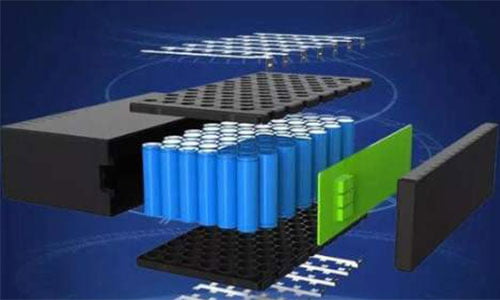
The industry-standard 18650, 21700, and emerging 4680 formats enable modular pack design. Golf cart manufacturers can scale voltage platforms (48V, 72V, 96V) by adjusting series-parallel configurations without redesigning cell-level infrastructure. This modularity reduces engineering overhead and accelerates time-to-market for OEMs targeting cylindrical battery cell solutions.
3. Energy Density Optimization
Advanced NMC 811 and LFP chemistries in cylindrical format achieve 250-280 Wh/kg at the cell level. For a standard 48V golf cart requiring 5-8 kWh capacity, this translates to 40-50% weight reduction versus legacy lead-acid systems, improving vehicle efficiency and reducing wear on suspension components.
Critical Testing Protocols for Golf Cart Applications
Performance Validation
- Cycle Life Testing: IEC 62660-2 protocols verify 2,000+ cycles at 25°C with ≤20% capacity degradation
- Rate Capability: Continuous 1C discharge with 3C peak bursts for hill-climbing scenarios
- Temperature Cycling: -20°C to 60°C operational range per UL 2580 requirements
Safety Certification Matrix
| Standard | Region | Application |
|---|---|---|
| UN 38.3 | Global | Transportation safety |
| UL 2580 | North America | EV battery systems |
| CE + EU Battery Regulation | European Union | Market access 2026+ |
| IEC 62619 | International | Industrial battery safety |
CNS BATTERY’s manufacturing facilities maintain ISO 9001:2015 and IATF 16949 certifications, ensuring traceability from raw material sourcing through final cell assembly. All production batches undergo 100% OCV testing, impedance screening, and X-ray inspection for internal defect detection.
2026 Regulatory Landscape: Geographic Compliance Barriers
European Union: Battery Regulation (EU) 2023/1542
The EU’s new battery law enters full enforcement in 2026, establishing the world’s strictest准入 barriers. Key requirements include:
- Battery Passport: Digital QR-code identification containing chemical composition, carbon footprint, and recycling information for batteries >2kWh
- Carbon Footprint Disclosure: Lifecycle CO₂ emissions must be declared and meet progressively stricter thresholds
- Recycled Content Mandates: Minimum 12% cobalt, 85% lead, and 4% lithium from recycled sources by 2030
CNS BATTERY has pre-compliant documentation systems ready for Battery Passport integration, enabling seamless EU market entry for golf cart OEMs.
United States: UL & DOT Compliance
North American golf cart manufacturers require UL 2580 certification for battery packs, with individual cells needing UN 38.3 transportation approval. The 2026 IATA Dangerous Goods Regulations mandate lithium cells ship at ≤30% State of Charge (SoC), affecting logistics planning for overseas distribution.
Regional Adaptation Strategy
CNS BATTERY maintains separate production lines for EU-bound shipments (CE-marked, Battery Passport-ready) versus North American deliveries (UL-recognized component status). This geographic segmentation ensures customers receive region-compliant products without additional certification delays.
Supply Chain Considerations for Technical Procurement
When evaluating cylindrical cell suppliers for golf cart programs, engineering teams should verify:
- Cell-to-Pack Integration Support: Does the supplier provide BMS compatibility data and mechanical drawings?
- Warranty Terms: Standard industry warranty covers 5 years or 2,000 cycles; premium suppliers offer 8-year options
- Localization Requirements: EU regulations increasingly favor regional manufacturing; China-based suppliers must demonstrate compliant export documentation
CNS BATTERY operates as a verified battery manufacturer in China with established export channels to both EU and US markets, reducing compliance risk for international OEMs.
Conclusion: Strategic Selection Criteria
The transition from lead-acid to lithium cylindrical cells in golf carts is no longer optional—it’s a regulatory and economic imperative. However, not all cylindrical cells deliver equivalent performance in low-speed EV applications. Procurement decisions must balance:
- Technical specifications (energy density, cycle life, thermal performance)
- Regulatory compliance (UN 38.3, UL 2580, EU Battery Regulation)
- Supply chain reliability (lead times, quality consistency, after-sales support)
CNS BATTERY’s cylindrical cell platform addresses all three dimensions, with dedicated engineering support for golf cart pack integration. Technical teams seeking detailed specifications, compliance documentation, or sample evaluation should initiate contact through our official communication channel.
As 2026 compliance deadlines approach, early supplier qualification becomes critical. Golf cart manufacturers who secure compliant cylindrical cell supply chains now will avoid costly redesigns and market access delays in the coming regulatory transition period.
For engineering inquiries regarding cylindrical battery cell integration in golf cart applications, contact CNS BATTERY’s technical sales team. All products ship with full certification packages including UN 38.3 test reports, MSDS documentation, and region-specific compliance declarations.


