

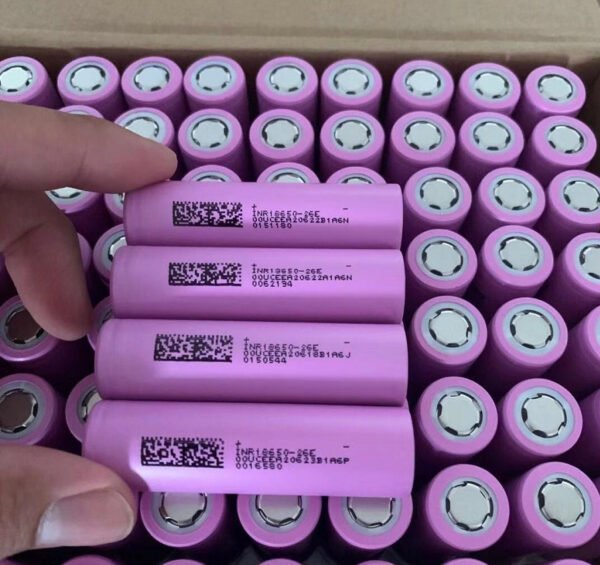
Cylindrical Battery Cell For Data Center UPS | CNS BATTERY
Powering Critical Infrastructure with Advanced Lithium Technology
In today’s digital economy, data center uptime is non-negotiable. Uninterruptible Power Supply (UPS) systems serve as the backbone of continuous operations, and the choice of battery technology directly impacts reliability, efficiency, and total cost of ownership. Cylindrical lithium battery cells have emerged as a superior solution for modern data center UPS applications, offering exceptional thermal stability, scalability, and longevity compared to traditional VRLA batteries.
Why Cylindrical Cells Excel in UPS Applications
1. Superior Thermal Management
Cylindrical battery cells feature an optimized surface-area-to-volume ratio that enables efficient heat dissipation. The steel casing provides robust mechanical protection while facilitating uniform thermal distribution across the cell. This design characteristic is critical for UPS systems that must operate reliably under varying load conditions and ambient temperatures. Unlike prismatic or pouch cells, cylindrical formats minimize thermal runaway risks through their inherent structural integrity.
2. Extended Cycle Life and Reliability
Modern lithium iron phosphate (LiFePO4) cylindrical cells deliver 3,000 to 5,000+ full discharge cycles at 80% depth of discharge. For data center UPS applications typically operating in float charge mode with occasional discharge events, this translates to 10-15 years of service life. The mature manufacturing processes ensure consistent quality across production batches, reducing failure rates and maintenance requirements.
3. Scalability and Modular Design
Cylindrical cells enable flexible pack configurations through series and parallel arrangements. This modularity allows UPS manufacturers to customize capacity and voltage requirements for different data center scales—from edge computing facilities to hyperscale operations. The standardized cell dimensions simplify inventory management and replacement procedures.
Technical Specifications for Data Center Integration
When evaluating cylindrical battery cells for UPS deployment, engineering teams should prioritize the following parameters:
- Nominal Voltage: 3.2V (LiFePO4 chemistry) per cell
- Capacity Range: 2.5Ah to 50Ah depending on application requirements
- Operating Temperature: -20°C to 60°C with optimal performance at 25°C
- Maximum Continuous Discharge: 1C to 3C rates for backup power delivery
- Safety Certifications: UN38.3, IEC62619, UL1973 compliance mandatory
The Battery Management System (BMS) integration is equally critical. Advanced BMS architectures monitor individual cell voltage, temperature, and state of charge, ensuring balanced operation and early fault detection. This proactive approach prevents cascading failures that could compromise UPS availability.
Economic Advantages Over Traditional Solutions
While initial capital expenditure for lithium-based UPS systems exceeds lead-acid alternatives, the total cost of ownership favors cylindrical lithium cells over the system lifecycle. Key economic benefits include:
- Reduced Floor Space: Higher energy density allows 40-60% footprint reduction
- Lower Cooling Requirements: Operating efficiency exceeds 95%, minimizing HVAC loads
- Minimal Maintenance: No periodic water topping or equalization charges required
- Extended Warranty Periods: 5-10 year warranties versus 2-3 years for VRLA
For technical procurement professionals conducting ROI analysis, the break-even point typically occurs within 3-4 years of operation, making cylindrical lithium batteries the financially prudent choice for new installations and retrofit projects.
Quality Assurance and Manufacturing Excellence
Selecting a reputable battery manufacturer is paramount for mission-critical applications. Established manufacturers implement rigorous quality control protocols including incoming material inspection, in-process testing, and final validation against international standards. Traceability systems track each cell from raw material sourcing through final shipment, ensuring accountability and consistency.
CNS BATTERY specializes in cylindrical battery cell production for industrial applications, maintaining ISO9001 certified manufacturing facilities with automated production lines. Their engineering team provides technical support throughout the project lifecycle, from initial specification review to commissioning assistance. For detailed product specifications and technical documentation, visit Cylindrical Battery Cell Products.
Implementation Best Practices
Successful UPS deployment requires careful attention to installation and commissioning procedures:
- Environmental Control: Maintain ambient temperatures between 20-25°C for optimal longevity
- Electrical Isolation: Implement proper DC disconnect mechanisms for safety compliance
- Monitoring Integration: Connect BMS communication ports to data center infrastructure management systems
- Periodic Testing: Conduct quarterly capacity verification and annual full discharge tests
Future-Proofing Your Power Infrastructure
As data centers evolve toward higher power densities and sustainability targets, cylindrical lithium battery technology positions organizations for long-term success. The compatibility with renewable energy integration and demand response programs adds strategic value beyond backup power functionality.
For engineering teams evaluating battery suppliers or seeking technical consultation on UPS battery integration, CNS BATTERY’s manufacturer resources provide comprehensive industry insights. Direct communication with technical specialists ensures project requirements are precisely matched to product capabilities.
Conclusion
Cylindrical battery cells represent the optimal balance of performance, safety, and economics for data center UPS applications. Their proven track record in critical infrastructure, combined with continuous technological improvements, makes them the preferred choice for forward-thinking organizations. Investing in quality lithium battery systems today safeguards operational continuity while positioning facilities for future energy transitions.
To discuss your specific UPS battery requirements or request technical documentation, contact CNS BATTERY for personalized engineering support.

