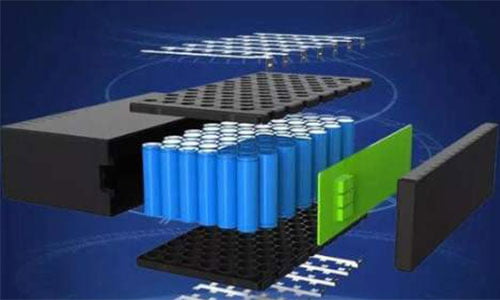
The Ultimate Power Solution: Cylindrical Battery Cells for Commercial Lawn Mowers
In the demanding world of commercial landscaping, downtime is the enemy. When you’re managing vast acres of turf, the last thing you need is your electric mower losing power halfway through a job or suffering from thermal throttling on a hot summer day. While the shift from gas to electric is undeniable for its environmental and noise benefits, the true bottleneck for B2B operators has always been energy density and durability.
This is where cylindrical battery technology, specifically the evolution from 18650 to 21700 and 32700 formats, becomes the game-changer for commercial lawn mower manufacturers and fleet operators. Unlike consumer-grade tools, commercial mowers require cells that can withstand high continuous discharge, rapid charging cycles, and maintain structural integrity over thousands of hours.
Why Cylindrical Cells Outperform in High-Load Scenarios
When designing or sourcing batteries for commercial mowers, engineers often debate between pouch, prismatic, and cylindrical formats. Cylindrical cells consistently win for high-power applications due to their superior thermal management and mechanical robustness.
1. Superior Thermal Runaway Management
Commercial mowers generate significant heat during operation. Cylindrical cells, due to their geometry, have a higher surface-area-to-volume ratio compared to pouch or prismatic cells. This allows for more efficient heat dissipation, preventing hotspots that can lead to cell degradation or failure. For a mower operating in 35°C+ environments, this is not just a feature; it’s a safety requirement.
2. Mechanical Strength and Vibration Resistance
Lawn mowers operate on uneven terrain. The rigid steel or aluminum casing of a cylindrical cell provides unmatched resistance to vibration and physical deformation. Unlike pouch cells, which can suffer from micro-tears in the foil packaging due to constant shaking, cylindrical cells maintain their internal integrity, ensuring a longer cycle life.
3. Energy Density and Scalability
Modern cylindrical formats like the 21700 and 32700 offer significantly higher energy density than the older 18650 standard. This means you can achieve the same runtime with fewer cells, reducing the overall weight and complexity of the Battery Management System (BMS).
Technical Specifications: Matching the Cell to the Mower
Not all cylindrical cells are created equal. For commercial applications, you need to look beyond just voltage and capacity. Here is a breakdown of the specifications relevant to commercial mowers.
The 18650 vs. 21700 vs. 32700 Debate
- 18650 (Legacy/High Power): While smaller, these cells are still relevant for high-discharge applications. Models like the INR18650-2500 or -3000 are often used in high-torque scenarios due to their proven power profiles. However, for mowers requiring long runtime, the number of cells required makes the pack heavy and complex.
- 21700 (The Sweet Spot): This is the current industry standard for new commercial designs. With a diameter of 21mm and length of 70mm, these cells offer a 40-50% increase in energy density over 18650. The INR21700-4500 or -5000 provides the perfect balance of capacity (4500mAh-5000mAh) and discharge capability, ideal for mid-sized commercial mowers that need to run for 4-6 hours on a single charge.
- 32700 (Heavy Duty/Long Runtime): For large-scale commercial zero-turn mowers or ride-ons, the 32700 format is emerging as the powerhouse. With capacities reaching 6000mAh and higher, these cells drastically reduce the cell count needed for a high-voltage pack (e.g., 48V or 72V systems), simplifying the welding process and increasing overall pack reliability.
Key Parameters for Mower Applications
- Continuous Discharge Current: Commercial mowers often require sustained currents of 20A-30A. You need cells rated for at least 2C-3C continuous discharge (e.g., a 5Ah cell should handle 10A-15A continuously).
- Cycle Life: Look for cells rated for 2000+ cycles at 80% Depth of Discharge (DOD). This ensures the battery lasts through multiple mowing seasons.
- Operating Temperature: Ensure the cells are rated for a wide temperature range (-20°C to 60°C) to handle both cold mornings and hot afternoons.
The CNS BATTERY Advantage for OEMs and Distributors
As a leading lithium battery manufacturer in China, CNS BATTERY specializes in providing cylindrical cells that meet the rigorous demands of commercial outdoor power equipment. We understand that B2B clients are not just buying cells; they are buying a supply chain partnership that guarantees consistency and performance.
1. Industrial-Grade Quality Control
Our manufacturing process is automated to eliminate human error. Every batch of Cylindrical Battery Cells undergoes 100% inspection for capacity, internal resistance, and voltage consistency. For a commercial mower manufacturer, this consistency means predictable performance across every unit shipped to your customers.
2. Customization for Specific Power Profiles
We don’t just sell standard cells; we engineer solutions. Whether you need a specific PCM (Protection Circuit Module) integrated into the cell holder, custom tab welding for your specific chassis design, or a proprietary BMS communication protocol, our R&D team works directly with your engineering department.
For instance, our INR21700 series is specifically optimized for high-drain tools. We utilize advanced cathode materials that reduce impedance, allowing the cell to deliver high current without significant voltage sag—a critical factor when the mower hits thick, wet grass.
3. Global Supply Chain Reliability
We recognize that commercial landscaping is a global industry. Whether your market is North America, Europe, or Australia, we ensure our cells meet international safety certifications (UN38.3, MSDS, CE, RoHS). Our logistics partners ensure timely delivery, and our technical support team is available to troubleshoot any field issues.
Conclusion: Powering the Future of Commercial Landscaping
Choosing the right cylindrical battery cell is the single most important decision in the design of a commercial electric lawn mower. It dictates the runtime, the weight of the machine, and ultimately, the satisfaction of the end-user who relies on it to make a living.
By leveraging the latest cylindrical technology—specifically the high-capacity 21700 and 32700 formats—you can build or source mowers that outperform gas counterparts in terms of torque and uptime, while eliminating fuel costs and emissions.
If you are an OEM manufacturer or a distributor looking to source high-quality, reliable cylindrical cells for your next generation of commercial mowers, it is time to partner with a manufacturer that understands the unique stresses of the turf.
Contact CNS BATTERY today to discuss your specific power requirements and discover how our cylindrical cells can revolutionize your product line.
- Explore our full range of Cylindrical Battery Cells: https://cnsbattery.com/products-3/cylindrical-battery-cell/
- Learn more about partnering with a top Battery Manufacturer in China: https://cnsbattery.com/battery-manufacturers-in-china/
- Get in touch with our sales engineering team: https://cnsbattery.com/contact-2/