
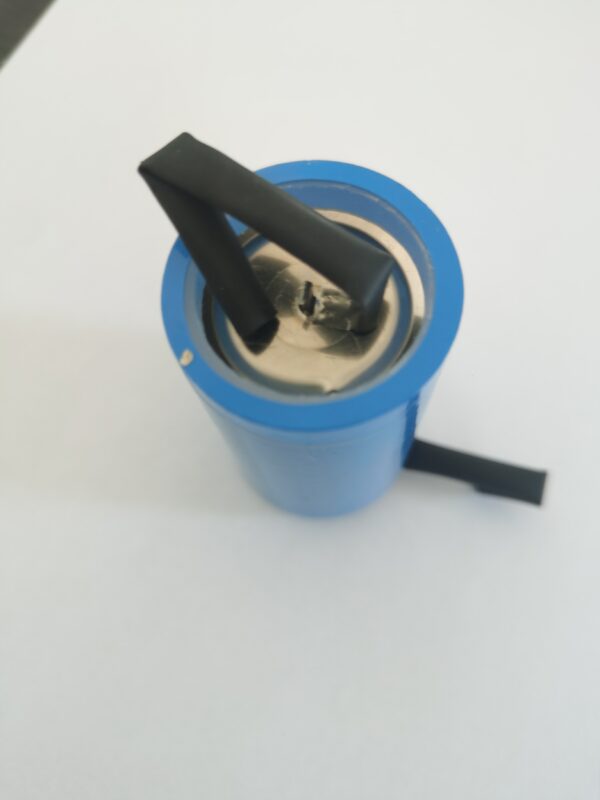
Custom Lithium Battery for IoT Devices: Mastering OEM Design for Extreme Environments
In the rapidly expanding Internet of Things (IoT) landscape, the demand for reliable, long-lasting power sources is non-negotiable. As an industry expert, I often encounter engineers and procurement managers facing a critical bottleneck: standard off-the-shelf batteries simply cannot withstand the thermal extremes and physical constraints of modern industrial IoT (IIoT) applications. Whether it is a remote sensor in the Arctic or a medical implant, the failure of a power source equates to system failure.
At CNS BATTERY, we view every cell as a masterpiece of craftsmanship. Our approach to Custom Lithium Battery solutions for IoT devices goes beyond mere assembly; it is a meticulous engineering process designed to meet the specific voltage, capacity, and environmental requirements of your project. We specialize in OEM Design & Manufacturing, ensuring that from the initial concept to the final product, your battery is not just a component, but the backbone of your device’s reliability.
The Science of Stability: Lithium Metal vs. Standard Chemistries
When discussing longevity and stability in extreme conditions, the choice of chemistry is paramount. Standard lithium-ion batteries, while ubiquitous, often falter when pushed to their limits. For mission-critical IoT applications, Lithium Metal (Primary) Batteries offer a distinct advantage.
Why Lithium Metal?
Unlike secondary (rechargeable) cells, primary lithium batteries utilize metallic lithium as the anode. This chemistry provides an exceptionally high energy density, often exceeding 2,400 Wh/L. More importantly for IoT, they offer a remarkably flat discharge curve, meaning the voltage remains stable for over 90% of the battery’s life. This eliminates the need for complex voltage regulation circuits in your device, saving precious space and cost.
Furthermore, the solid electrolyte interface (SEI) formed in lithium metal cells is highly stable, contributing to a shelf life of up to 10-15 years with minimal self-discharge. For a device buried underground or placed on a utility pole, this translates to “fit and forget” reliability.
Precision Engineering: From Concept to Cell
Designing a custom battery for IoT is not a one-size-fits-all process. It requires a deep understanding of the application’s physical and electrical constraints. Below is a breakdown of our technical workflow, ensuring your Custom Lithium Battery meets the exacting standards required for global deployment.
| Phase | Key Technical Considerations | CNS BATTERY Capability |
|---|---|---|
| Design Phase | Shape & Size: Matching the device’s footprint (Prismatic, Coin, or Cylindrical). Voltage & Capacity: Matching the load profile and lifespan requirements. |
Advanced 3D CAD modeling and simulation. We offer Prismatic, Pouch, and Cylindrical cell formats. |
| Material Selection | Cathode Material: Selection based on temperature range (e.g., MnO2 for standard, SOCl2 for extreme). Electrolyte: Formulated for specific thermal windows. |
Proprietary electrolyte formulations capable of operating from -60°C to +85°C. |
| Testing & Validation | Environmental Stress: Vibration, shock, and thermal cycling. Safety: Overcharge, short circuit, and crush testing. |
In-house testing labs adhering to UN38.3, IEC 60086, and UL standards. |
The Challenge of Thermal Management
One of the most frequent technical hurdles in IoT design is thermal management. Many IoT devices are sealed units, trapping heat generated by the electronics. Conversely, outdoor devices face freezing temperatures.
Our OEM Design process incorporates thermal modeling to predict how the battery will behave within the specific housing. For instance, in high-temperature environments, we utilize bobbin-style constructions which are less prone to thermal runaway compared to jelly-roll designs. This level of customization ensures that the battery does not become the weak link in your thermal management strategy.
Global Standards and Regional Compliance
As a global supplier, we understand that “universal” does not mean “one standard fits all.” Your Custom Lithium Battery must comply with the specific regulations of the region where your IoT device will be deployed. This is where our Advanced Technology and Quality Management systems provide a distinct competitive edge.
Europe (EU) Compliance:
For the European market, adherence to the RoHS (Restriction of Hazardous Substances) directive is mandatory. Our manufacturing processes are strictly RoHS compliant, ensuring your device can be legally sold within the EU. Furthermore, we assist with REACH compliance, providing full material declarations to ensure transparency regarding chemical usage.
North America (USA) Standards:
In the United States, safety is the primary concern. Our cells are rigorously tested to meet UL (Underwriters Laboratories) standards. Additionally, for logistics and shipping, we ensure full compliance with UN38.3 regulations for the transport of dangerous goods by air, sea, and land. This means your IoT Devices can be shipped globally without logistical nightmares.
Quality Management:
We operate under an ISO 9001 certified Quality Management system. Every batch of Lithium Metal cells undergoes 100% inspection for leakage, voltage, and dimensions. This rigorous approach minimizes field failures, protecting your brand reputation.
Partnering for Success
Designing a Custom Lithium Battery for IoT is a complex task that requires a partner who understands both the chemistry and the application. Whether you are developing a smart meter for the European grid or a ruggedized sensor for the American oil fields, CNS BATTERY has the R&D Capability to bring your vision to life.
We invite engineers and procurement managers to leverage our expertise in OEM Design & Manufacturing. Do not let power constraints limit your innovation. Explore our Product Center to see how our standard offerings can be a starting point, or contact us directly for a fully bespoke solution.
Ready to engineer a power solution that matches your ambition?
Contact our team of experts today to discuss your specific requirements and discover how we can turn your power challenges into advantages.
Contact Us Now
