
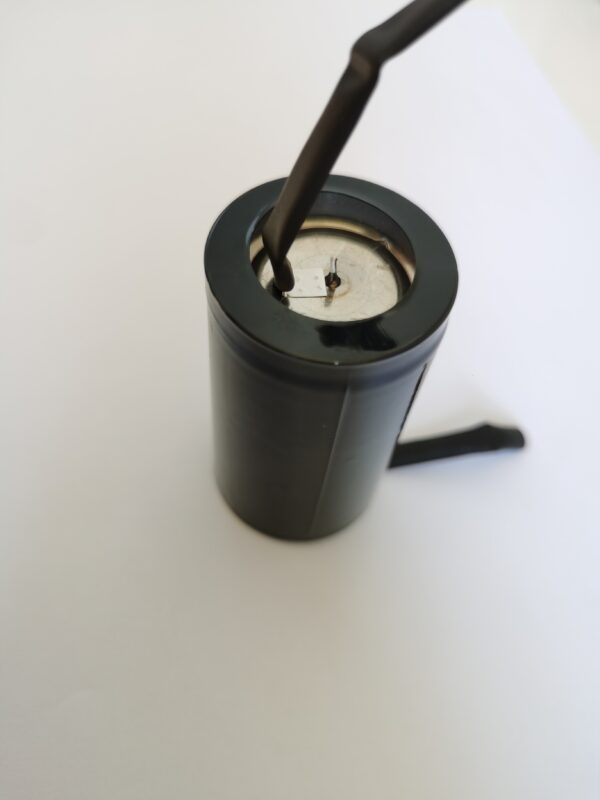
Here is the SEO-optimized article tailored for your requirements.
The Ultimate Guide to Custom Anti-Shock Lithium Batteries for Industrial Applications
In the harsh reality of industrial automation and remote monitoring, standard batteries often fail. When your equipment operates in high-vibration environments—be it heavy machinery, oil & gas drilling, or railway logistics—a standard power source simply cannot survive. The result is frequent maintenance, data loss, and system downtime.
This is where Custom Anti-Shock Lithium Batteries become a mission-critical component. Unlike consumer-grade cells, these specialized power units are engineered to withstand extreme physical stress while maintaining a stable voltage output for decades. This guide explores the technology behind these rugged solutions, the engineering required for true vibration resistance, and how to select a partner capable of delivering reliability in the harshest conditions.
Understanding Primary Lithium Battery Technology
Before diving into the mechanics of shock resistance, it is essential to understand why Primary Lithium Batteries (non-rechargeable lithium-metal cells) are the preferred choice for industrial applications over their secondary (rechargeable) counterparts.
The Chemistry of Reliability
Primary lithium batteries utilize lithium metal as the anode. This chemistry provides a nominal voltage of 3.6V, significantly higher than alkaline (1.5V) or nickel-based (1.2V) batteries. More importantly for industrial use, they possess an incredibly low self-discharge rate (less than 1% per year), allowing them to operate reliably for 10 to 20 years without replacement.
Technical Note: The specific energy density of lithium-thionyl chloride (LiSOCl₂) or lithium-manganese dioxide (LiMnO₂) chemistries allows for compact designs that pack a massive energy punch into a small footprint.
Why Primary Beats Secondary in Harsh Environments
While rechargeable batteries are great for consumer electronics, they often fall short in industrial settings:
- Temperature Sensitivity: Rechargeable batteries degrade rapidly in extreme heat or cold.
- Cycle Life: Frequent charging cycles lead to capacity fade.
- Safety: Lithium-ion cells are more prone to thermal runaway if damaged.
Primary lithium cells, however, are inherently stable. They do not suffer from the memory effect and are far less susceptible to damage caused by deep discharge or physical shock.
The Engineering Behind “Anti-Shock” Design
“Anti-Shock” is not just a marketing term; it is a specific engineering discipline. A standard cylindrical cell rattling around inside a battery pack during vibration will eventually fracture its internal structure, leading to an open circuit or short.
To create a Vibration Resistant Lithium Battery, manufacturers must address three key areas:
1. Cell Immobilization (The “Potting” Process)
The most critical step is preventing the cell from moving. This is achieved through a process called potting.
- Epoxy Resins: High-viscosity, shock-absorbing epoxies are poured around the cells.
- Conformal Coating: The resin fills every microscopic air gap, turning the entire battery assembly into a solid monolithic block.
- Result: When external vibration occurs, the energy is dissipated through the resin rather than being transferred to the brittle internal layers of the lithium cell.
2. Robust Mechanical Design
The casing must be as tough as the chemistry inside.
- Metallic Housings: Stainless steel or aluminum alloy casings provide superior crush resistance compared to plastic.
- Reinforced Corners: Strategic ribbing and corner reinforcements prevent deformation during impact.
- Secure Terminals: Vibration-resistant soldering or welding techniques ensure the connection points do not fatigue and break.
3. Smart Circuit Integration (PCBA)
While the cell itself is primary (non-rechargeable), the Battery Management System (BMS) or Protection Circuit Module (PCM) must also survive the shock.
- Flexible PCBs: In some high-flex applications, rigid-flex PCBs are used to absorb vibration.
- Underfill Technology: Electronic components on the circuit board are coated with protective gel to prevent solder joint cracking.
Key Specifications for Industrial Grade Batteries
When sourcing a custom solution, engineers must verify specific parameters to ensure the battery meets the required standards. Below is a comparison of standard features versus industrial-grade requirements.
| Feature | Standard Lithium Battery | Custom Anti-Shock Lithium Battery |
|---|---|---|
| Construction | Loose cells in a plastic holder | Potted cells in a metal/alloy case |
| Vibration Resistance | < 10 Grms | > 30 Grms (Customizable up to 50+) |
| Operating Temp | -20°C to +60°C | -40°C to +85°C |
| Impact Protection | Basic plastic shell | Reinforced corners & shock-absorbing foam |
| Lifespan | 3-5 years (approx.) | 10-20 years (depending on load) |
Applications: Where Standard Batteries Fail
Custom Anti-Shock Lithium Batteries are not a “nice-to-have”; they are a “must-have” for specific sectors where maintenance is difficult or impossible.
1. Smart Metering and AMR (Automatic Meter Reading)
Utility meters (water, gas, electricity) are often buried underground or mounted on poles. They experience constant low-frequency vibration from traffic and weather. A potted lithium solution ensures the meter transmits data accurately for two decades without a service call.
2. Industrial IoT Sensors
Sensors mounted on compressors, pumps, or conveyor belts are subjected to relentless vibration. If the battery fails, the sensor goes dark, leading to potential catastrophic equipment failure due to lack of predictive maintenance data.
3. Automotive and Rail Telematics
Tracking assets via GPS in moving trucks or railcars subjects the battery to severe shock. The Anti-Shock design ensures the tracker survives the journey, even if the cargo is rough.
4. Oil & Gas and Mining
In downhole drilling tools or remote seismic sensors, batteries must withstand both high G-forces and extreme temperatures. Standard cells would short-circuit almost immediately.
Why Choose a Professional ODM Partner?
While off-the-shelf batteries are readily available, they rarely fit the exact mechanical constraints of custom industrial hardware. This is where an ODM (Original Design Manufacturer) approach is superior.
A professional ODM partner offers:
- Custom Form Factors: Designing the battery to fit the exact cavity of your device, not the other way around.
- Tailored Chemistry: Selecting the precise lithium chemistry (LiSOCl₂, LiMnO₂, etc.) based on your voltage and pulse power requirements.
- Certification Support: Assisting with UL, IEC, or UN38.3 certifications required for shipping and safety compliance.
By partnering with an expert, you move from a “component buyer” to a “solution architect,” ensuring your product’s power source is optimized for its specific operational environment.
Conclusion
In the world of industrial electronics, power failure is not an option. Standard batteries are a gamble in high-vibration environments; Custom Anti-Shock Lithium Batteries are the insurance policy.
By understanding the technology behind primary lithium cells and the specific engineering required for vibration resistance—potting, rugged casings, and robust circuitry—engineers can specify a power source that guarantees longevity and reliability. Whether you are designing a smart city sensor or a heavy-duty industrial tool, investing in a custom ODM solution ensures your device performs flawlessly, year after year, regardless of the physical stress it endures.
Ready to engineer a power solution that survives the toughest conditions? Don’t let a weak battery design compromise your next project. Contact our engineering team today for a consultation on custom Anti-Shock Lithium Battery solutions. Explore our full range of ruggedized power products here.
