

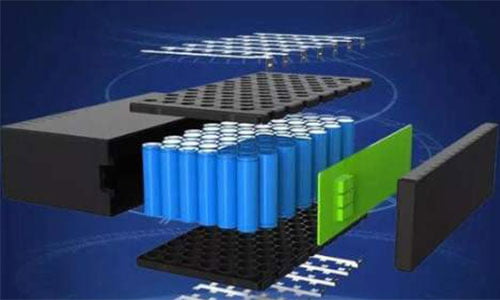
Complete Zero Swelling Issues Solution for ESS Using High-Quality 40135 NCM Cells Ideal for Manufacturers
In the rapidly evolving landscape of Energy Storage Systems (ESS), reliability is the currency of trust. For system integrators and manufacturers, few challenges are as critical as battery swelling. Swelling not only compromises structural integrity but also poses significant safety risks, leading to costly recalls and reputational damage. As we advance into 2026, the industry demand for high-energy density without compromising safety has never been higher. The solution lies in a strategic shift toward optimized cell chemistry and form factor. This article explores a comprehensive zero-swelling solution utilizing high-quality 40135 NCM (Nickel Cobalt Manganese) cylindrical cells, designed specifically for manufacturers seeking scalability and safety.
Understanding the Root Cause of NCM Swelling
To engineer a solution, one must first understand the problem. Swelling in NCM cells is primarily driven by gas generation during electrochemical reactions. In traditional pouch or prismatic cells, the laminated structure offers little resistance to internal pressure buildup caused by electrolyte decomposition or SEI (Solid Electrolyte Interphase) layer instability. This is exacerbated in high-nickel NCM chemistries, which are favored for their energy density but are chemically more reactive.
For ESS applications, where cycle life often exceeds 6,000 cycles, the cumulative effect of micro-swelling can lead to delamination, increased internal resistance, and thermal runaway risks. Engineers must address this at the cell level rather than merely managing it at the pack level. The 40135 cylindrical form factor offers a distinct mechanical advantage here. Unlike pouch cells, the rigid steel casing of a cylindrical cell provides inherent resistance to expansion, physically constraining the electrode stack and maintaining consistent pressure on the jelly roll.
The 40135 Form Factor: A Mechanical Advantage
The 40135 specification (40mm diameter, 135mm height) represents a new standard in large cylindrical cells, bridging the gap between the ubiquitous 21700 and the massive 4680 formats. For ESS manufacturers, this size is optimal for several reasons:
- Thermal Management: The cylindrical geometry allows for superior surface-area-to-volume ratios compared to prismatic cells. This facilitates more efficient cooling, reducing the thermal stress that accelerates gas generation.
- Structural Integrity: The steel can withstand higher internal pressures without deforming. This mechanical constraint is the first line of defense against visible swelling.
- Module Flexibility: The uniform shape simplifies pack assembly, allowing for innovative cooling channel designs that further mitigate hot spots, a primary contributor to localized swelling.
When sourcing these cells, it is crucial to partner with suppliers who specialize in cylindrical technology. You can explore detailed specifications and technical sheets for advanced cylindrical solutions at https://cnsbattery.com/products-3/cylindrical-battery-cell/.
Engineering a Zero-Swelling Architecture
Achieving a “zero-swelling” claim requires a holistic approach beyond just the cell casing. It involves a triad of material science, manufacturing precision, and system intelligence.
1. Advanced Electrolyte Formulations
The electrolyte is the medium where gas generation often begins. High-quality 40135 NCM cells utilize additive-enhanced electrolytes that stabilize the cathode-electrolyte interface. These additives scavenge free radicals and suppress gas evolution during high-voltage charging, which is common in ESS operations.
2. Precision Winding and Compression
During manufacturing, the tension of the winding process is critical. Uneven tension leads to voids where gas can accumulate. Premium manufacturers employ automated winding systems that ensure consistent compression of the electrode stack. This physical density leaves no room for expansion, effectively neutralizing swelling before it starts.
3. Intelligent BMS Integration
A robust Battery Management System (BMS) is essential. By monitoring individual cell voltage and temperature with high precision, the BMS can prevent overcharging and deep discharging, the two operational states most likely to trigger electrolyte decomposition. For manufacturers integrating these cells, ensuring compatibility with advanced BMS protocols is key to long-term stability.
Why Manufacturers Are Switching to Specialized Chinese Supply Chains
The shift toward large cylindrical cells for ESS is not just technical; it is economic. China has emerged as the global hub for battery innovation, offering supply chains that can scale rapidly without sacrificing quality. However, not all manufacturers are equal. The key is to identify partners with a proven track record in cylindrical cell production specifically for stationary storage.
Working with established battery manufacturers in China provides access to cutting-edge R&D and cost-effective production lines. These partners often have the capacity to customize cell specifications, such as adjusting the NCM ratio to balance energy density with thermal stability. For technical purchasers looking to vet potential partners, a comprehensive list of verified battery manufacturers in China can be found at https://cnsbattery.com/battery-manufacturers-in-china/. This resource helps streamline the procurement process, ensuring that you are engaging with facilities that meet international safety and quality standards.
Implementation Strategy for System Integrators
For engineers designing ESS units around 40135 NCM cells, the implementation strategy should focus on modularity. The cylindrical format allows for “brick-like” module construction, which simplifies maintenance and replacement. Furthermore, the inherent safety of the steel casing reduces the need for excessive external containment, lowering the overall system weight and cost.
It is also recommended to conduct rigorous cycle testing under elevated temperatures to validate the zero-swelling claims before full-scale deployment. Partnering with a supplier that offers technical support during this phase is invaluable. If you require direct consultation on cell integration, testing protocols, or custom pack design, you can reach out to the technical team directly via https://cnsbattery.com/contact-2/.
Conclusion
The future of ESS lies in balancing high energy density with uncompromising safety. Swelling remains a persistent challenge in lithium-ion technology, but it is not unsolvable. By leveraging the mechanical strength of the 40135 cylindrical form factor combined with high-quality NCM chemistry and advanced manufacturing processes, manufacturers can deliver systems that stand the test of time.
For overseas engineers and procurement specialists, the opportunity is clear. The technology is mature, the supply chain is robust, and the benefits are measurable. Embracing this solution not only mitigates risk but also positions your products as leaders in reliability. As the industry moves forward, the choice of cell format and supplier will define the success of your energy storage projects. Choose wisely, engineer rigorously, and build for the future.

