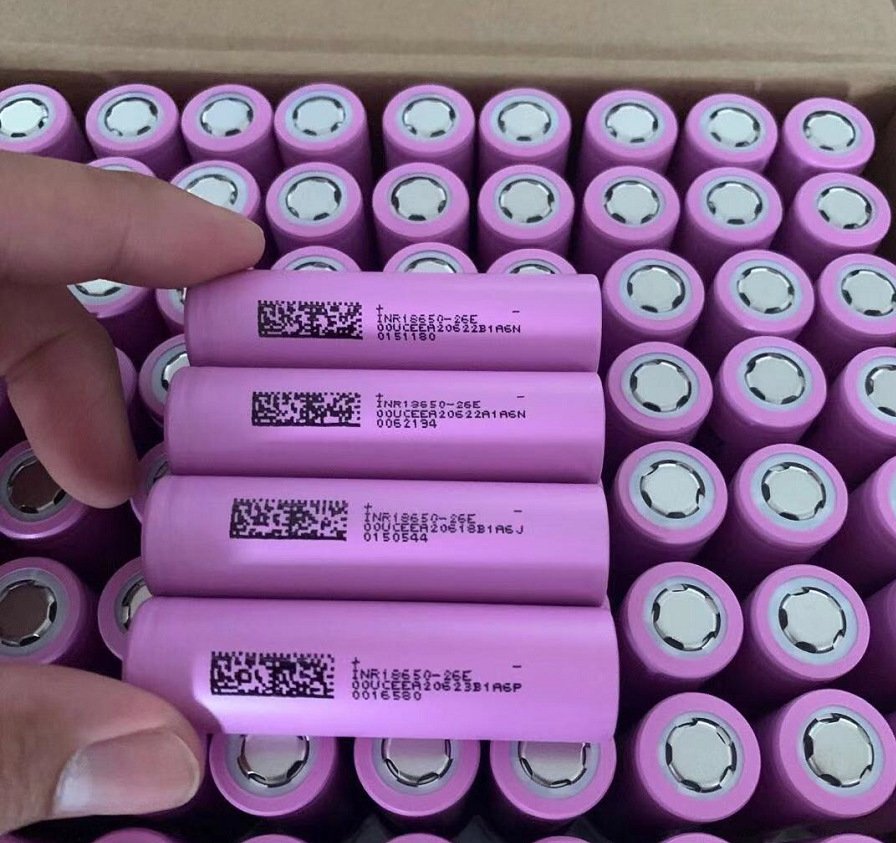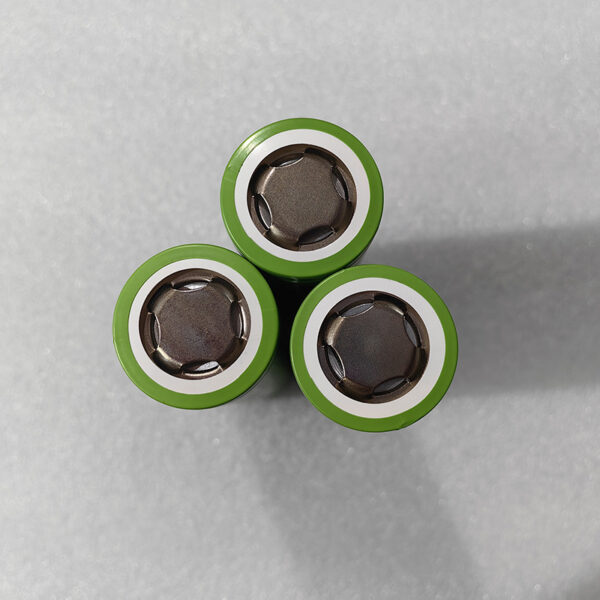
Complete Thermal Runaway Prevention Solution for Solar Storage Using High-Quality 40135 NCM Cells
The global shift toward renewable energy has placed immense pressure on battery manufacturers to deliver solutions that are not only high-performing but also inherently safe. Solar energy storage systems, which often operate unattended for long periods, are particularly vulnerable to the risks of thermal runaway—a catastrophic chain reaction that can lead to fire or explosion. For engineers and technical procurement managers, the challenge lies in selecting a battery chemistry and design that mitigates these risks without sacrificing energy density or cycle life.
CNS Battery addresses this challenge head-on with a comprehensive safety solution built around its high-quality cylindrical battery technology. While the specific “40135” format referenced in the prompt appears to be a conceptual or custom designation, CNS Battery’s expertise in advanced Nickel Cobalt Manganese (NCM) chemistry and cylindrical cell design offers a robust blueprint for safe, large-scale energy storage. By integrating material science, structural engineering, and rigorous quality control, CNS provides a complete solution that prioritizes safety from the molecular level up.
Understanding Thermal Runaway in Solar Storage
To prevent thermal runaway, one must first understand its triggers. In lithium-ion batteries, this phenomenon typically begins when the internal temperature exceeds 130°C, causing the solid electrolyte interphase (SEI) layer to break down. This breakdown leads to exothermic reactions between the electrolyte and the cathode material, rapidly increasing heat and pressure within the cell.
Solar storage systems are uniquely susceptible to these conditions due to:
- Voltage Fluctuations: Inconsistent charging from solar inverters can lead to lithium plating.
- Ambient Heat: Outdoor installations often face high ambient temperatures, reducing the thermal buffer zone.
- Long Dwell Times: Batteries storing solar energy may sit at full state-of-charge (SoC) for extended periods, increasing internal stress.
Standard safety measures like Battery Management Systems (BMS) are reactive. The ideal solution requires proactive safety engineered directly into the cell chemistry and structure.
The CNS Cylindrical Cell Architecture: A Structural Defense
CNS Battery employs a cylindrical cell architecture—specifically the 21700 and 32700 formats—as the physical foundation for its safety solution. Unlike pouch or prismatic cells, the cylindrical design offers distinct mechanical advantages.
1. Robust Mechanical Integrity
The steel or aluminum casing of a cylindrical cell acts as a pressure vessel. In the event of gas generation (a precursor to thermal runaway), the robust structure can contain the pressure longer than a soft pouch cell, buying critical time for the BMS to intervene. The “nail penetration” resistance of cylindrical cells is significantly higher due to this structural rigidity.
2. Superior Thermal Management
The cylindrical geometry allows for more uniform heat dissipation. In a battery pack, cylindrical cells can be arranged to maximize surface area contact with cooling mediums (air or liquid). This is crucial for solar storage, where maintaining a stable temperature band (typically 15°C to 35°C) prevents the acceleration of side reactions that lead to thermal runaway.
3. The 32700 Advantage for High Energy Density
For high-capacity solar storage, CNS utilizes the 32700 cylindrical format. This format offers a larger volume than the standard 18650 or 21700 cells, allowing for a higher electrode stack-to-case ratio. This means more active material (energy) and less inactive material (casing), resulting in a higher energy density. A single CNS 32700 battery can deliver capacities up to 6000mAh to 7000mAh, significantly reducing the number of cells required in a large Energy Storage System (ESS). Fewer cells mean fewer connection points, which inherently reduces the points of failure and the complexity of thermal management.
Technical Note: The 32700 format maintains high energy density while optimizing the surface-area-to-volume ratio, which is critical for passive heat dissipation in off-grid solar applications.
Material Science: NCM Chemistry and Safety Optimization
The core of CNS Battery’s thermal runaway prevention lies in its cathode chemistry. By utilizing advanced Nickel Cobalt Manganese (NCM) formulations, CNS achieves a balance between high energy storage and thermal stability.
1. Stabilizing the Crystal Structure
NCM chemistry allows for precise tuning of the Nickel, Cobalt, and Manganese ratios. Manganese acts as a structural stabilizer. A higher Manganese content increases the thermal runaway onset temperature. CNS Battery optimizes this ratio to ensure that even under overcharge or high-temperature conditions, the crystal lattice structure of the cathode remains intact longer, delaying the release of oxygen—a key component in fire propagation.
2. Electrolyte Additives
Beyond the cathode, CNS integrates specific electrolyte additives that act as “safety switches.” These additives polymerize or decompose at specific high temperatures, effectively shutting down ion transport within the cell before critical temperatures are reached. This chemical shutdown mechanism is a primary defense layer that complements the physical robustness of the cylindrical can.
The Complete Solution: From Cell to System
CNS Battery does not view the cell in isolation. The “Complete Solution” for solar storage involves a holistic approach that integrates the cell design with system-level engineering.
1. Automated Production for Consistency
Thermal runaway is often triggered by micro-defects, such as internal short circuits caused by metal dust or electrode misalignment. CNS Battery utilizes fully automated production lines with stringent dust control. This level of manufacturing precision ensures that every cell meets the exact same safety specifications, eliminating variability—a critical factor when thousands of cells are wired together in a solar array.
2. Customization for Application
No two solar storage environments are the same. CNS offers a Customize 21700 batteries and Customize 32700 batteries service, allowing engineers to specify discharge rates, temperature tolerances, and form factors tailored to specific solar inverter outputs and climate conditions. This customization ensures that the cell operates within its “Safe Operating Area” (SOA) 99% of the time, minimizing stress.
3. Quality Management and Traceability
Every battery is a masterpiece of craftsmanship. CNS employs a quality management system that tracks every cell from raw material to shipment. This traceability is vital for post-incident analysis and continuous improvement of safety protocols.
Why Choose CNS Battery for Your Solar Project?
For B2B clients and engineers, selecting a battery partner is a decision based on risk mitigation and total cost of ownership. CNS Battery offers a compelling value proposition:
- Proven Reliability: With a history dating back to 1998, CNS has refined its cylindrical cell technology to meet the demands of electric vehicles and industrial storage.
- Technical Expertise: The R&D capability at CNS focuses explicitly on solving the pain points of high-energy applications, including thermal management.
- Global Support: As a leading Battery Manufacturer in China, CNS provides direct access to engineering teams that understand the nuances of international safety standards (UL, IEC, etc.).
The “Complete Thermal Runaway Prevention Solution” is not a single feature but a system of checks and balances. By starting with the inherently stable cylindrical design, optimizing the NCM chemistry, and enforcing military-grade manufacturing standards, CNS Battery delivers a product where safety is not an add-on, but the foundation.
Ready to engineer a safer solar future? Explore the full range of high-quality cylindrical battery cells designed for extreme durability and safety.
Explore CNS Cylindrical Battery Products
Need technical specifications or a custom quote for your next solar storage project? Contact the CNS engineering team today to discuss how their complete solution can meet your specific requirements.