

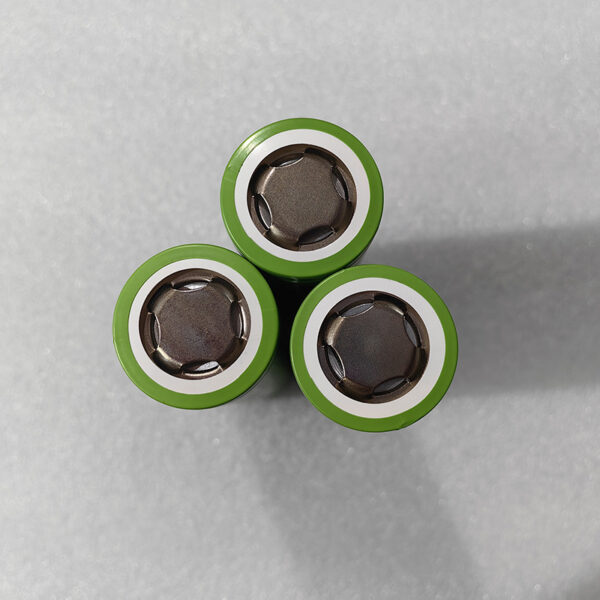
Complete Thermal Runaway Prevention Solution for Power Tools Using High-Quality 18650 LFP Cells
Introduction
In the high-stakes world of power tool manufacturing, the battery isn’t just a component; it’s the engine. For global B2B stakeholders, the transition to Lithium Iron Phosphate (LFP) chemistry, specifically in the 18650 format, is no longer a trend but a necessity. However, the shift requires more than just swapping cells; it demands a holistic approach to Thermal Runaway Prevention.
At CNS Battery, we understand that for international buyers and OEMs, a “Complete Solution” means engineering integrity from the atomic level to the final pack. This article explores how high-quality 18650 LFP cells, engineered with advanced safety protocols, are redefining reliability in the power tool industry.
The Power Tool Dilemma: Why Standard Lithium-Ion Fails
Power tools operate in extreme conditions. High discharge rates, physical vibration, and exposure to the elements create a harsh environment that standard Lithium-ion chemistries often cannot withstand. The primary risk is Thermal Runaway—a self-sustaining reaction that leads to fire or explosion.
Standard NMC (Nickel Manganese Cobalt) cells, while energy-dense, are thermally unstable. When a power tool motor jams or the battery is subjected to a short circuit, the heat generated can exceed 150°C, triggering the breakdown of the cathode and the release of oxygen. This oxygen feeds the fire, creating a catastrophic failure.
The Core Challenge: How do we deliver the high power output required by modern cordless tools while eliminating the risk of thermal runaway?
The LFP Advantage: Intrinsic Chemical Safety
The answer lies in the chemistry of Lithium Iron Phosphate (LFP). Unlike NMC, LFP cells possess a unique olivine crystal structure that provides “intrinsic safety.” This means the safety is built into the material itself, not just added on via external circuits.
Key Technical Benefits of LFP for Power Tools
- Thermal Stability: LFP cells have a decomposition temperature exceeding 500°C. This is significantly higher than NMC cells, which begin to decompose around 150°C–200°C. In practical terms, this means an LFP cell can absorb massive amounts of abuse (overcharge, short circuit, high ambient heat) without entering thermal runaway.
- Oxygen-Free Structure: The strong P-O (Phosphorus-Oxygen) covalent bonds in the olivine structure prevent the release of oxygen during thermal events. Without free oxygen, there is no fuel for a fire, even if the cell casing is breached.
- Long Cycle Life: Power tool users expect longevity. LFP cells typically offer 2000+ charge cycles while maintaining 80% capacity. This durability reduces the total cost of ownership for the end-user and minimizes warranty claims for the manufacturer.
Engineering a Complete Prevention Solution
While the chemistry is the foundation, a “Complete Solution” requires a multi-layered defense strategy. At CNS Battery, we integrate the following layers to ensure absolute safety for our global partners.
Layer 1: Cell-Level Engineering
We don’t just sell cells; we engineer them for specific applications. Our INR18650-2500 and INR18650-3000 models are specifically designed for high-rate discharge applications like power tools.
- Advanced Electrolyte Formulation: We utilize electrolytes with high flash points and flame-retardant additives. These additives act as “emergency brakes” by increasing the viscosity of the electrolyte or forming a protective film on the electrodes when temperatures rise.
- Robust Mechanical Design: The 18650 format is renowned for its mechanical strength. We reinforce the cell casing with high-tensile steel and incorporate a precision Pressure Relief Valve (PRV). If internal pressure builds due to any anomaly, the PRV vents gas safely to the atmosphere before the cell can rupture.
Layer 2: Battery Management System (BMS) Integration
A cell is only as safe as the system managing it. Our recommended BMS solutions for power tools include:
- Cell Balancing: Ensures no single cell is overcharged, which is a primary cause of thermal runaway initiation.
- Temperature Monitoring: Real-time thermistors monitor the core temperature of the battery pack. If temperatures approach critical levels (e.g., 60°C), the BMS will cut off the current flow.
- Short Circuit Protection: Responds within microseconds to prevent massive current surges.
Layer 3: Module & Pack Design
The arrangement of cells within the tool is critical for heat dissipation.
- Thermal Interface Materials (TIM): We recommend the use of conductive pads or gels between cells to spread heat evenly across the pack, preventing “hot spots.”
- Ventilation Channels: Designing the housing with airflow channels allows heat to escape from the electronics and cells during heavy use.
Case Study: Heavy-Duty Cordless Drills
To illustrate the effectiveness of this solution, consider the application in Heavy-Duty Cordless Drills.
The Scenario: A professional contractor is using a 20V drill to bore through concrete. The drill bit jams, causing the motor to stall. This creates a massive current draw (potentially 30C-50C) in a fraction of a second.
The Standard Cell Response: The sudden current surge causes rapid heating. If the cell is NMC, the separator may melt, causing an internal short circuit. The temperature spikes past 200°C, releasing oxygen and igniting the electrolyte. The tool catches fire.
The CNS LFP Cell Response: The CNS INR18650-3000 cell is designed for high power. Even under the stress of a stalled motor, the LFP chemistry remains stable. The strong crystal structure prevents oxygen release. The integrated safety vent activates if pressure builds, safely releasing gas. The tool simply stops, protecting the user and the tool. Once the obstruction is cleared, the tool restarts without damage to the battery.
Why Global Buyers Choose CNS Battery
For international procurement managers and OEMs, selecting a battery partner is a strategic decision. Here is why our 18650 LFP solutions stand out in the global market.
1. Uncompromised Quality Control
We operate under strict ISO 9001 standards. Every Cylindrical Battery Cell undergoes 100% inspection for leakage, voltage, and internal resistance. We guarantee consistency, batch after batch, which is essential for maintaining your brand’s reputation.
2. Global Compliance Expertise
Navigating international regulations (UN38.3, IEC 62133, UL) is complex. Our technical team provides full documentation and testing support to ensure your product clears customs and meets safety standards in North America, Europe, and Asia.
3. Customization Capabilities
While the 18650 format is standard, your application is unique. We offer customization in:
- Tab welding: Pre-welded tabs for faster assembly.
- Discharge rates: Optimizing for high-torque vs. long runtime.
- Form factor: While 18650 is standard, we also offer 21700 options for next-generation high-density tools.
Conclusion: Investing in Safety
In the power tool industry, safety is not a feature; it is the foundation. By choosing High-Quality 18650 LFP Cells, manufacturers are not just buying energy storage; they are buying insurance against liability, warranty costs, and brand damage.
The complete thermal runaway prevention solution starts with the right chemistry and is perfected through rigorous engineering. As a leading Battery Manufacturer in China, CNS Battery is committed to providing global partners with the safest, most reliable power sources on the market.
Ready to upgrade your power tool line with a safer battery solution?
Contact our international sales team today to request samples and discuss how our 18650 LFP technology can solve your specific engineering challenges.
- Explore our full range of Cylindrical Battery Cells: https://cnsbattery.com/products-3/cylindrical-battery-cell/
- Learn more about our manufacturing capabilities: https://cnsbattery.com/battery-manufacturers-in-china/
- Get in touch for a consultation: https://cnsbattery.com/contact-2/


