Complete High Energy Density Solution for Power Tools Using High-Quality 46135 Cylindrical Lithium Cell Cells vs Competitors
The professional power tool industry is undergoing a significant transformation. As demand grows for cordless equipment that matches the performance of corded counterparts, the pressure on battery technology intensifies. For original equipment manufacturers (OEMs) and procurement specialists, the core challenge lies in balancing energy density, discharge rates, and thermal management within a compact form factor. While traditional 18650 and 21700 cells have served the market well, the emergence of large-format cylindrical cells, specifically the 46135 Cylindrical Lithium Cell, represents a pivotal shift in high-energy applications. This article analyzes the technical and commercial advantages of adopting a 46135-based solution compared to competitor offerings, focusing on practical implementation for B2B stakeholders.
The Technical Edge of the 46135 Form Factor
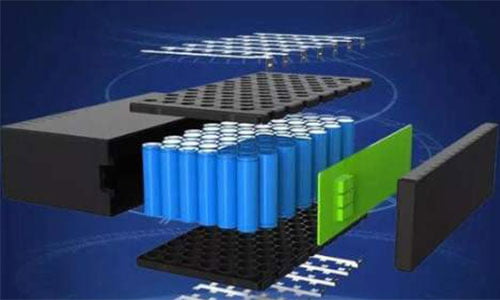
The 46135 cell (46mm diameter, 135mm height) is engineered to address the limitations of smaller cylindrical cells in high-drain applications. In professional power tools such as rotary hammers, high-torque drills, and garden equipment, the primary bottleneck is often the number of cells required to achieve sufficient voltage and capacity. A pack built with smaller cells requires complex busbar connections, increased spot welding points, and a more sophisticated Battery Management System (BMS) to monitor numerous parallel groups.
By utilizing the 46135 form factor, manufacturers can significantly reduce the cell count per pack while maintaining or increasing total energy capacity. This large-format design offers a superior surface-area-to-volume ratio compared to smaller cells, facilitating more efficient heat dissipation during high-current discharge cycles. For B2B buyers, this translates to longer tool runtime, reduced thermal throttling, and enhanced overall durability. The structural integrity of the 46135 casing also withstands higher internal pressures, a critical safety feature during rapid discharge scenarios common in industrial settings.
For detailed specifications on cylindrical cell capabilities, interested parties can review the technical data available at CNS Battery Cylindrical Cell Products.
Competitive Landscape: 46135 vs. Traditional Packs
When evaluating competitor solutions, most legacy systems rely on packs composed of 20 to 40 smaller cells (e.g., 18650 or 21700). While these supply chains are mature, they introduce inefficiencies. The internal resistance of a pack increases with the number of connection points. In contrast, a 46135-based solution simplifies the pack architecture. Fewer cells mean fewer welds, lowering the probability of connection failure and reducing manufacturing labor costs.
Compared to other large-format competitors like the 4680, the 46135 is often optimized specifically for the vertical space constraints of handheld power tools. The aspect ratio allows for better integration into tool handles or base packs without compromising ergonomics. Furthermore, high-quality 46135 cells typically utilize advanced cathode chemistries (such as high-nickel NCM) that deliver higher specific energy. This ensures that the tool remains lightweight—a crucial factor for user fatigue—while providing the wattage necessary for demanding tasks.
Procurement Essentials: Compliance and Supply Chain Stability
For overseas distributors and manufacturers, technical performance is only half the equation. Regulatory compliance and supply chain reliability are paramount. When sourcing lithium cells from China, verifying adherence to international safety standards is non-negotiable. A robust supplier must provide cells that comply with UN38.3 for transportation, IEC 62133 for safety, and CE/UL certifications where applicable.
Partnering with established manufacturers mitigates the risk of inconsistent cell grading, which can lead to pack imbalance and premature failure. Reputable suppliers maintain strict quality control protocols, ensuring that capacity and internal resistance variations within a batch are minimal. This consistency is vital for assembling reliable battery packs that maintain performance over hundreds of charge cycles.
To understand the landscape of verified suppliers and manufacturing standards, B2B buyers should refer to resources like Battery Manufacturers in China. This ensures that procurement decisions are based on verified industrial capacity rather than marketing claims.
Implementation and Partnership
Transitioning to a 46135 solution requires collaboration between the cell supplier and the pack integrator. Key considerations include adapting the BMS to handle the specific voltage curves of large-format cells and redesigning pack housings to accommodate the new dimensions. However, the long-term ROI is evident through reduced assembly time, lower warranty claims due to improved thermal stability, and a superior end-user experience.
It is essential to engage with suppliers who offer technical support beyond mere transaction. This includes providing samples for testing, sharing cycle life data, and assisting with customs documentation for international shipping. A partner that understands the nuances of the power tool market can accelerate time-to-market for new products.
Conclusion
The shift towards high-energy density solutions in power tools is inevitable. The 46135 Cylindrical Lithium Cell offers a compelling alternative to traditional multi-cell packs, delivering higher capacity, better thermal management, and simplified manufacturing. For businesses looking to upgrade their product lines, the focus should be on securing high-quality cells from compliant, transparent manufacturers.
By prioritizing technical specifications and supply chain integrity, companies can leverage the 46135 format to gain a competitive edge. For further inquiries regarding cell samples, customization options, or partnership opportunities, please visit CNS Battery Contact Page to initiate a dialogue with our engineering team. Embracing this technology today positions your brand at the forefront of the cordless power tool revolution tomorrow.