Complete Fast Charging Without Heat Solution for Electric Motorcycle Using High-Quality 18650 LFP Cells OEM Custom Solutions
The rapid expansion of the electric mobility sector has placed immense pressure on battery technology, particularly for electric motorcycles where weight, safety, and charging speed are critical parameters. One of the most persistent engineering challenges in high-power applications is thermal management during fast charging. Excessive heat generation not only degrades cell longevity but also poses significant safety risks. This article explores a comprehensive solution utilizing high-quality 18650 LFP (Lithium Iron Phosphate) cells, designed to minimize thermal rise while enabling rapid energy replenishment through OEM custom solutions.
The Intrinsic Safety of 18650 LFP Chemistry
To understand the thermal advantage, one must first analyze the electrochemical stability of Lithium Iron Phosphate. Unlike Nickel Cobalt Manganese (NCM) chemistries, LFP cells possess a stronger P-O bond in their crystal structure. This bond requires significantly more energy to break, making the chemistry inherently more resistant to thermal runaway. In the context of an electric motorcycle, where vibration and ambient temperature fluctuations are common, this stability is paramount.
High-quality 18650 LFP cells typically operate at a nominal voltage of 3.2V. While this requires a higher series count (S-count) to achieve standard motorcycle pack voltages (e.g., 48V, 60V, or 72V) compared to 3.7V NCM cells, the trade-off yields superior cycle life and thermal performance. For engineers evaluating cell selection, the lower internal resistance of premium 18650 LFP variants is the key metric. Lower resistance directly correlates to reduced Joule heating ($P = I^2R$) during high-current charging phases. For detailed specifications on available cylindrical configurations, technical teams can review the options at https://cnsbattery.com/products-3/cylindrical-battery-cell/.
Engineering “Without Heat”: Thermal Management Systems
While physics dictates that no charging process is entirely exothermic-free, the goal of a “Without Heat” solution is to reduce temperature rise to negligible levels through system-level engineering. This is achieved via a multi-layered approach:
- Cell Level Optimization: Utilizing A-grade 18650 cells with consistent impedance matching ensures that no single cell becomes a hotspot within the pack. Variance in internal resistance is kept below 3% to prevent uneven heat distribution.
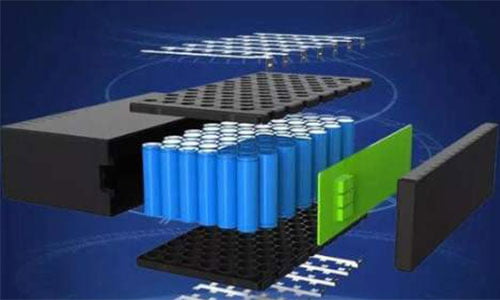
- Pack Structure Design: Effective thermal dissipation requires more than just cell selection. Advanced pack designs incorporate aluminum alloy housings that act as heat sinks. In high-performance motorcycle applications, phase change materials (PCMs) or air-cooling channels are integrated between cell clusters to absorb and dissipate transient heat spikes during fast charging.
- BMS Intelligence: The Battery Management System (BMS) is the brain of the thermal solution. A sophisticated BMS monitors individual cell temperatures in real-time. If a threshold is approached, the system dynamically adjusts the charging current (CC/CV transition) to prevent heat accumulation. This active regulation ensures the pack remains within the optimal 25°C to 45°C window, even during 2C or 3C charging rates.
Fast Charging Protocols and OEM Customization
Implementing fast charging safely requires a tailored protocol. Standard charging curves often push voltage limits too aggressively, causing lithium plating on the anode, which generates heat and reduces capacity. Our OEM custom solutions utilize a stepped charging algorithm. This method modulates the current based on the state of charge (SOC) and cell temperature, maximizing speed without compromising the chemical integrity of the LFP cathode.
For original equipment manufacturers (OEMs) and technical purchasers, customization is not merely about capacity. It involves designing the physical form factor to fit specific motorcycle chassis constraints while ensuring optimal thermal airflow. Whether the requirement is a downtube battery for a lightweight e-motorcycle or a high-capacity pack for delivery scooters, the engineering team must align cell arrangement with the vehicle’s cooling capabilities.
Partnering with experienced manufacturers is crucial for navigating these technical complexities. China has become a hub for advanced battery manufacturing, offering scalable solutions that meet international safety standards such as UN38.3 and IEC 62133. To understand the landscape of reliable production partners capable of delivering these specialized LFP solutions, industry professionals can refer to https://cnsbattery.com/battery-manufacturers-in-china/.
Conclusion: Integrating Safety and Performance
The demand for electric motorcycles that can charge quickly without suffering from thermal degradation is driving innovation in the 18650 LFP sector. By combining the intrinsic safety of LFP chemistry with advanced thermal management structures and intelligent BMS protocols, it is possible to achieve near-zero perceptible heat rise during charging cycles. This ensures not only the safety of the rider but also the long-term economic viability of the fleet through extended cycle life.
For engineering teams seeking to integrate these high-performance battery solutions into their next-generation electric motorcycles, collaboration with a technically proficient partner is essential. We invite technical directors and procurement specialists to discuss specific project requirements, including custom pack design and cell sourcing. Please reach out to our engineering team via https://cnsbattery.com/contact-2/ to initiate a consultation on your OEM battery needs. Through rigorous testing and custom engineering, we deliver power solutions that redefine safety and efficiency in electric mobility.