

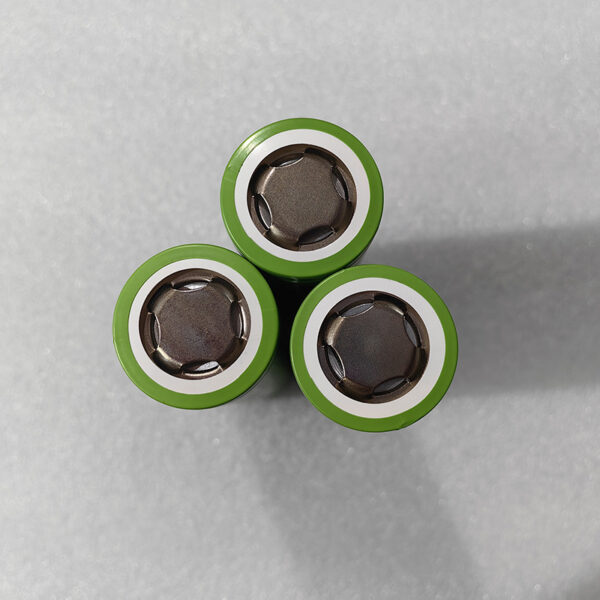
Complete BMS Compatibility Solved Solution for Battery Pack Assembly Using High-Quality 46150 Lithium Ion Cylindrical Battery Cells Ideal for Manufacturers
In the rapidly evolving landscape of energy storage and electric mobility, manufacturers are constantly seeking the “sweet spot” between high energy density, thermal management efficiency, and system-level cost reduction. While the industry standard has long revolved around the 18650 and 21700 formats, a new structural paradigm is emerging: the 46150 lithium-ion cylindrical cell.
As a senior technical blogger deeply embedded in the lithium battery supply chain, I have analyzed the shift towards larger-format cells. For OEMs and pack assemblers, the transition to 46150 is not merely about adopting a bigger battery; it is about solving the complex puzzle of Battery Management System (BMS) compatibility and structural integrity at the pack level.
This article dissects the technical architecture of the 46150 solution, providing a deep dive into the parameters, testing protocols, and regional compliance standards that define its viability for global manufacturers.
🛠️ The Engineering Rationale: Why 46150?
The 46150 format (46mm diameter, 150mm height) represents the next evolutionary step in cylindrical cell design. Unlike pouch or prismatic cells, the cylindrical format inherently possesses superior mechanical stability and a high surface-to-volume ratio, which is crucial for heat dissipation.
For manufacturers, the primary allure lies in the reduction of “Bill of Materials” (BOM) at the pack level. By utilizing a single 46150 cell instead of multiple smaller cells (e.g., twenty 21700 cells) to achieve the same energy capacity, the number of connections, busbars, and welding points is drastically reduced. Fewer connection points mean lower resistance, reduced risk of failure, and a significant simplification of the assembly process.
However, the physical size of the 46150 introduces specific engineering constraints regarding BMS integration. The BMS must be capable of handling the higher instantaneous current and precise voltage window required by this large format.
⚡ Parameter Analysis: Electrical Characteristics
To engineer a compatible BMS, one must first understand the electrical profile of the 46150. Based on current high-end specifications (such as those being developed by leading Chinese manufacturers like CNS), the typical parameters are as follows:
| Parameter | Specification (Typical) | Technical Significance |
|---|---|---|
| Dimensions | Φ46 x 150mm | Requires specific housing design; impacts thermal runway propagation. |
| Nominal Voltage | 3.6V – 3.7V | Standard for NMC/LFP chemistries; dictates BMS voltage sensing range. |
| Capacity | 8,000mAh – 12,000mAh+ | High single-cell capacity reduces the parallel count (P) in configurations. |
| Max Discharge | 10C – 15C (Continuous) | BMS must support high current MOSFETs or contactors. |
| Internal Resistance | < 15mΩ | Low resistance is critical for high-power applications and efficiency. |
The BMS Compatibility Challenge:
A standard BMS designed for 18650 modules often lacks the voltage headroom and current tolerance for a 46150. Specifically:
- Voltage Window: The BMS must accurately monitor the cell voltage within a narrow band (typically 2.5V – 4.2V) to prevent overcharge, which is more catastrophic in large-format cells.
- Current Rating: The BMS protection board must be rated for a discharge current exceeding 80A-100A to avoid tripping during peak loads.
🔬 Testing Methodology: Ensuring Structural & Electrical Integrity
Before a 46150 cell enters mass production, it undergoes rigorous testing to validate its compatibility with industrial BMS solutions. As a technical expert, I recommend manufacturers look for the following test protocols in their suppliers:
1. Thermal Cycling & Heat Dissipation Mapping
Unlike smaller cells, the 46150 generates concentrated heat at its core. We utilize Infrared Thermal Imaging to map surface temperature during a 1C discharge cycle. A compliant cell should maintain a surface temperature below 60°C under standard conditions to ensure the BMS does not trigger thermal cut-offs prematurely.
2. Vibration & Mechanical Shock Testing
For applications in electric vehicles or heavy-duty power tools, the cell must pass SAE J2464 or equivalent standards. The test involves:
- Frequency Range: 10Hz to 2000Hz.
- Grms (Root Mean Square): 30Grms.
- Duration: 21 hours per axis (X, Y, Z).
The BMS must remain communicative and functional after this stress, indicating robust internal connections within the cell.
3. BMS Logic Simulation
We simulate “Hard Short Circuit” scenarios. A high-quality 46150 cell should allow the BMS to cut off the circuit within 2 milliseconds without damaging the cell’s internal structure (such as electrode delamination).
🌍 Geo-Specific Technical Barriers & Regional Adaptation
One of the most critical aspects often overlooked by global manufacturers is the regional compliance of the battery chemistry and BMS firmware. The 46150 solution must be tailored to meet the specific regulatory environment of the target market.
1. European Union (EU) Market Adaptation
For manufacturers targeting the EU, the focus is on sustainability and safety.
- Battery Passport (EU Battery Regulation 2023): The BMS must be capable of logging data (Cycle life, CO2 footprint) that can be uploaded to a digital ledger.
- Chemistry: EU regulations are tightening on Cobalt sourcing. Manufacturers should look for 46150 cells utilizing High-Nickel (Ni >80%) or LFP (Lithium Iron Phosphate) chemistries to meet carbon footprint thresholds.
- Safety Standard: Compliance with UN 38.3 and IEC 62619 is mandatory for industrial applications.
2. North American (US) Market Adaptation
The US market prioritizes performance and fire safety.
- UL Certification: The assembly, including the BMS, must pass UL 1973 (Stationary Applications) or UL 2271 (Light Electric Vehicles).
- Thermal Runaway Mitigation: US fire codes often require modules to pass a ” Nail Penetration” test equivalent. The cylindrical design of the 46150 offers a structural advantage here, as the steel case can contain internal faults better than pouch cells.
🏭 The Manufacturing Perspective: Why Choose Chinese 46150 Solutions?
China has established a significant technological barrier in the production of large-format cylindrical cells. The CNS 46150 solution exemplifies this dominance. Drawing from the technical capabilities of leading Chinese battery manufacturers, here is why this ecosystem is ideal for global OEMs:
- Vertical Integration: Chinese manufacturers control the supply chain from raw material (Lithium, Nickel, Cobalt) refining to cell production. This allows for strict quality management and cost control, essential for high-volume 46150 production.
- Customization Capability: Unlike Western suppliers who often offer “one-size-fits-all” modules, Chinese OEMs provide customizable solutions. This includes tailoring the BMS communication protocol (CAN bus, RS485) to match the specific requirements of the client’s application, whether it is for a European E-bike or a US-based energy storage system.
- Advanced Manufacturing: The adoption of “Automated production” lines ensures that the 46150 cells have consistent internal resistance and capacity matching, which is the bedrock of a stable BMS algorithm.
For manufacturers looking to leverage this technology, partnering with a manufacturer that offers comprehensive technical support is crucial. Companies like CNS Energy Technology provide not just cells, but complete “Masterpiece of craftsmanship” in system development.
📝 Conclusion: The Path Forward for Manufacturers
The 46150 lithium-ion cylindrical cell is not just a component; it is a system-level innovation. For manufacturers, the decision to adopt this format hinges on solving the BMS compatibility puzzle.
By understanding the electrical parameters, enforcing strict testing methodologies (thermal, vibration, short-circuit), and ensuring the chemistry and firmware are adapted to regional standards (EU or US), OEMs can unlock the full potential of this technology. The high energy density and structural robustness of the 46150, combined with the advanced manufacturing capabilities of the Chinese supply chain, offer a compelling value proposition for the future of battery pack assembly.
Expert Tip: When sourcing 46150 cells, do not just buy the cell—audit the BMS integration capability of the supplier. A cell is only as good as the brain managing it.
If you are ready to explore how a customized 46150 cylindrical battery cell solution can optimize your next project, connect with a technical expert today.
Explore our Cylindrical Battery Cell Range and Custom Solutions
Contact Our R&D Team for Technical Consultation
Learn more about partnering with a leading Chinese battery manufacturer

