

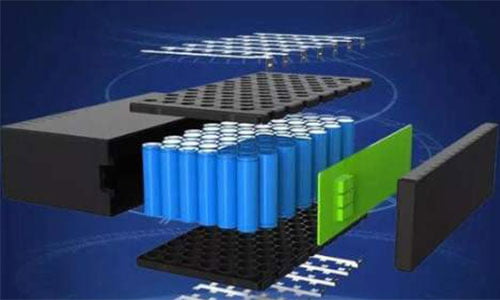
Cold Climate Resistant Cylindrical Battery | CNS BATTERY
In the realm of advanced energy storage, few challenges are as persistent as low-temperature performance. Standard lithium-ion chemistry suffers from increased internal resistance and reduced ionic conductivity when exposed to freezing conditions, leading to capacity loss and potential safety risks. For engineers and technical purchasers designing systems for northern Europe, Canada, or high-altitude applications, selecting a Cold Climate Resistant Cylindrical Battery is not merely an option—it is a critical requirement. CNS BATTERY addresses this gap with specialized cylindrical cells engineered to maintain efficiency and safety in extreme environments.
Technical Principles of Low-Temperature Resilience
To understand the value proposition of CNS BATTERY’s cold-resistant cells, one must first examine the electrochemical limitations of standard lithium-ion technology. At temperatures below 0°C, the viscosity of the electrolyte increases, slowing the migration of lithium ions between the cathode and anode. Furthermore, the Solid Electrolyte Interphase (SEI) film becomes more resistive, causing voltage depression during discharge and lithium plating during charging, which can lead to internal short circuits.
CNS BATTERY overcomes these barriers through proprietary electrolyte formulations and anode optimization. By incorporating low-viscosity solvents and functional additives, the electrolyte remains fluid at significantly lower temperatures, ensuring consistent ionic mobility. Additionally, the anode material is treated to stabilize the SEI film, preventing cracking and regeneration cycles that consume active lithium. This foundational technology allows our cylindrical cells to deliver reliable power where conventional cells would fail.
Parameter Advantages and Performance Metrics
For technical procurement teams, data drives decision-making. The Cold Climate Resistant Cylindrical Battery from CNS BATTERY is validated against rigorous performance metrics. Key advantages include:
- Discharge Capacity Retention: While standard cells may retain only 50-60% of their capacity at -20°C, CNS BATTERY’s low-temperature cylindrical cells maintain over 80% discharge capacity at -20°C and remain functional down to -40°C.
- Low-Temperature Charging: Specialized algorithms and cell chemistry allow for safe charging at temperatures as low as -10°C without risking lithium plating, a common failure mode in standard cells.
- Cycle Life Stability: In cold-cycle testing, these cells demonstrate minimal degradation over 500+ cycles, ensuring long-term reliability for outdoor energy storage systems (ESS) and electric mobility applications.
These parameters are not theoretical; they are the result of iterative R&D focused on real-world deployment scenarios. You can explore the detailed specifications of our cylindrical battery cell technology at https://cnsbattery.com/products-3/cylindrical-battery-cell/.
Testing Methodologies and Validation
Validation is the cornerstone of trust in battery technology. CNS BATTERY adheres to international testing standards to verify low-temperature claims. Our testing protocols include:
- IEC 62133-2 Compliance: This international standard specifies safety requirements for portable sealed secondary cells. Our cold-temperature testing extends beyond the baseline, subjecting cells to thermal cycling between -40°C and +60°C to verify structural integrity.
- UN38.3 Transport Safety: Essential for global logistics, UN38.3 testing ensures the cells can withstand altitude simulation, thermal shocks, and vibration without leakage or rupture.
- Dynamic Stress Testing (DST): Simulating real-world load profiles in freezing conditions to measure voltage stability and internal resistance growth.
For engineers requiring specific test reports or customization for regional standards, our technical team is accessible via https://cnsbattery.com/contact-2/.
Regional Compliance and Geo-Adaptability
In 2026, the regulatory landscape for batteries has become more stringent, particularly in key markets like the European Union and the United States. A Cold Climate Resistant Cylindrical Battery must not only perform well but also comply with local legal frameworks to ensure market access.
European Union: The Battery Regulation Era
The EU Battery Regulation entered its substantive enforcement phase in 2026, introducing the concept of the “Battery Passport.” This requires detailed digital documentation regarding chemical composition, carbon footprint, and recyclability. CNS BATTERY’s manufacturing processes are aligned with these requirements, ensuring that our cylindrical cells meet the CE marking directives and the upcoming Battery Passport data standards. This compliance reduces friction for integrators exporting equipment to Germany, France, and the Nordic regions.
United States: UL and DOT Standards
For the North American market, safety certification is paramount. CNS BATTERY cells are designed to meet UL 1642 (cells) and UL 2054 (battery packs) standards. Furthermore, with the 2025-2026 updates to IATA Dangerous Goods Regulations (DGR), lithium batteries must often be shipped at a State of Charge (SoC) not exceeding 30%. CNS BATTERY’s logistics framework adheres to these transport regulations, ensuring seamless delivery to US-based projects without customs delays.
Manufacturing Excellence
Achieving this level of compliance requires robust manufacturing controls. As one of the leading battery manufacturers in China, CNS BATTERY leverages automated production lines and strict quality control systems to ensure consistency across batches. This manufacturing depth allows us to scale production while maintaining the high standards required for EU and US market entry. Learn more about our manufacturing capabilities and quality assurance at https://cnsbattery.com/battery-manufacturers-in-china/.
Conclusion
Selecting the right power source for cold climate applications involves balancing electrochemical performance with regulatory compliance. CNS BATTERY’s Cold Climate Resistant Cylindrical Battery offers a technically superior solution backed by rigorous testing and global certification alignment. Whether deploying energy storage in Scandinavia or powering equipment in North America, our cells provide the reliability engineers demand. By integrating advanced low-temperature chemistry with strict adherence to 2026 global compliance standards, CNS BATTERY ensures your projects remain powered, safe, and compliant regardless of the environment.


