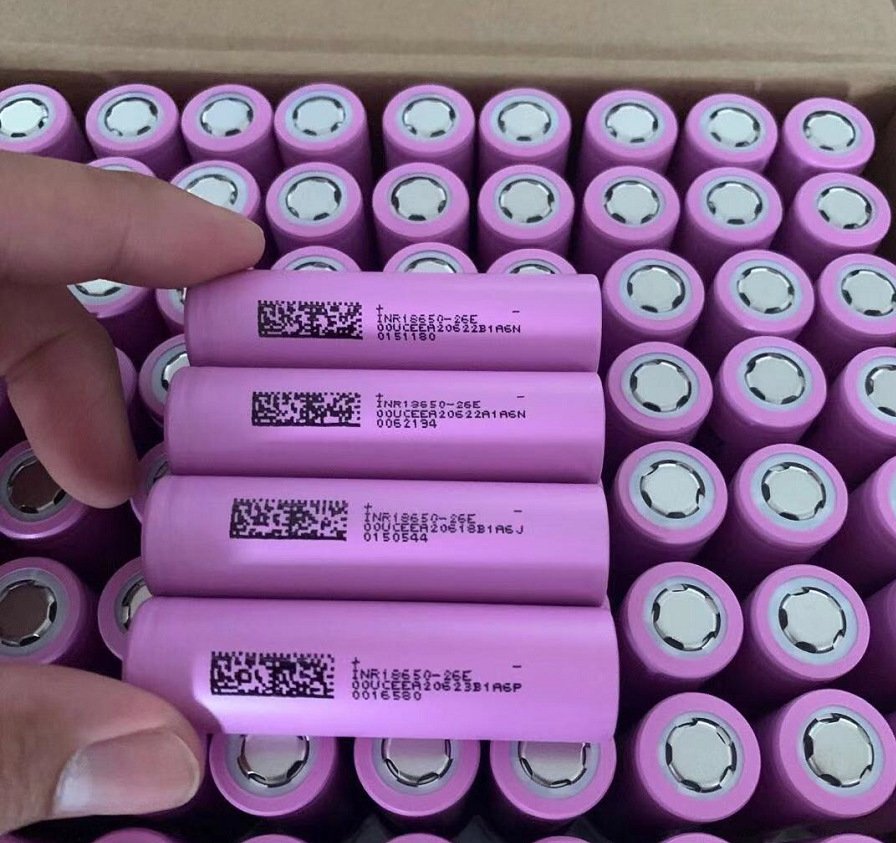
Unlock High-Performance 32135 Li-ion Cells: The Ultimate Solution for E-bike OEMs
In the rapidly evolving landscape of electric mobility, the demand for high-capacity, reliable, and efficient energy storage solutions has never been greater. For Original Equipment Manufacturers (OEMs) specializing in Electric Bikes (E-bikes), the choice of battery cell is not merely a component selection; it is the cornerstone of product performance, longevity, and user satisfaction. Among the myriad of cylindrical cell options available, the 32135 Li-ion cell stands out as a technological marvel, offering a perfect balance between the compact 21700 format and the high-density 32700 format. This article delves into the technical intricacies, performance metrics, and OEM customization advantages of the 32135 Li-ion cell, positioning it as the superior choice for next-generation E-bike applications.
Technical Deep Dive: Anatomy of the 32135 Cell
To understand the superiority of the 32135 format, one must first analyze its physical and chemical architecture. The nomenclature “32135” follows the standard IEC 61960-3 naming convention for cylindrical lithium-ion batteries, where the first two digits represent the diameter in millimeters, and the subsequent digits represent the height in tenths of a millimeter.
Dimensional Analysis
The 32135 cell measures 32mm in diameter and 135mm in length. This specific geometry offers a significant advantage over the more common 18650 and 21700 formats. The increased volume allows for a larger active material loading, directly translating to higher capacity. However, unlike the 32700 format, the 135mm length is often more compatible with standard E-bike frame geometries and portable energy storage system (ESS) casings, reducing the need for complex vertical stacking that can compromise thermal management.
Electrochemical Composition
Modern 32135 cells, particularly those designed for high-drain applications like E-bikes, typically utilize Lithium Iron Phosphate (LiFePO4) or high-nickel Nickel Manganese Cobalt Oxide (NMC) chemistries. The LiFePO4 variant offers exceptional thermal stability and cycle life (often exceeding 3000 cycles), making it ideal for heavy-duty usage. Conversely, NMC variants provide a higher energy density, catering to E-bikes where weight reduction is a critical design factor.
Performance Metrics: Why 32135 Outperforms Standard Formats
When evaluating battery cells for E-bike integration, OEMs must consider four critical performance indicators: capacity, discharge rate, thermal management, and cell matching consistency.
1. Superior Capacity and Energy Density
The volumetric expansion of the 32135 format allows for a capacity range typically between 4000mAh and 6000mAh, depending on the specific chemistry and manufacturing process. This is a substantial improvement over the 18650 format (usually 1500mAh–3500mAh) and the standard 21700 format (3000mAh–5000mAh). For E-bike manufacturers, this means fewer cells are required in a pack to achieve the same voltage and amp-hour rating, simplifying the Battery Management System (BMS) complexity and reducing the overall pack weight.
2. High Discharge Rate Capability
E-bikes require sustained high-current discharge, especially during acceleration or uphill climbing. The 32135 format, with its larger electrode surface area and reduced internal resistance, supports continuous discharge currents of up to 15C to 20C. This ensures that the motor receives a stable power supply without voltage sag, providing a smooth and responsive riding experience.
3. Thermal Management Efficiency
One of the primary challenges in cylindrical cell packs is heat dissipation. The 32135 format strikes an optimal balance. While it generates more heat than smaller formats due to higher energy output, its surface-area-to-volume ratio is more favorable for heat dissipation compared to the shorter but wider 32700 format. This allows for more efficient thermal management within the battery pack, preventing hotspots and extending the lifespan of the entire system.
4. Perfect Cell Matching Performance
For bulk wholesale buyers, the consistency of cell parameters is paramount. Variations in internal resistance and capacity between cells can lead to imbalanced charging and discharging, drastically reducing the pack’s overall life. High-quality 32135 cells, manufactured under strict automated processes, exhibit a capacity matching consistency of ±1% and an internal resistance matching consistency of ±2mΩ. This “perfect cell matching” ensures that every cell in the pack performs uniformly, maximizing the efficiency and safety of the E-bike battery system.
OEM Customization: Tailoring Power to Your Design
Off-the-shelf batteries rarely meet the exact aesthetic and functional requirements of premium E-bike brands. This is where the value of a specialized battery manufacturer becomes evident.
Custom Electrode Configuration
OEMs can collaborate with manufacturers to adjust the electrode configuration within the 32135 cell to prioritize either energy density (for longer range) or power density (for higher torque). This level of customization is crucial for differentiating a product in a competitive market.
Mechanical and Electrical Interface Design
The mechanical design of the cell—specifically the top cap and sealing mechanism—can be customized to fit proprietary battery housing designs. Furthermore, OEMs can specify custom discharge cut-off voltages and protection circuit modules that integrate seamlessly with their existing BMS architecture.
Branding and Packaging
Bulk procurement of 32135 cells allows OEMs to apply their branding directly onto the cell sleeves or packaging. This not only enhances brand recognition but also signals to the end consumer that the manufacturer uses high-quality, branded components rather than generic, unbranded cells.
The Supply Chain Advantage: Sourcing from China
China remains the global epicenter of lithium-ion battery manufacturing, producing over 70% of the world’s supply. Sourcing 32135 cells directly from a Chinese manufacturer offers distinct economic and logistical advantages.
Cost Efficiency
The economies of scale achieved by Chinese manufacturers result in significantly lower Cost Per Watt-hour (CPW). For E-bike OEMs operating on thin margins, reducing the battery cost—the most expensive component of the E-bike—can be the difference between a profitable and a loss-making product line.
Vertical Integration
Top-tier Chinese battery manufacturers often possess vertically integrated supply chains, controlling everything from raw material processing to cell assembly. This vertical integration ensures a stable supply of raw materials (such as Lithium, Cobalt, and Nickel) and allows manufacturers to offer competitive pricing even during market fluctuations.
Technological Innovation
Contrary to the perception of Chinese manufacturing as merely “low-cost,” many Chinese battery factories are at the forefront of technological innovation. They invest heavily in automated production lines and AI-driven quality control systems, ensuring that the cells meet international safety standards (such as UL, CE, and RoHS).
Conclusion: The Future of E-bike Power
The 32135 Li-ion cell represents a strategic evolution in cylindrical battery technology. It addresses the specific pain points of E-bike OEMs by offering a high-capacity solution in a manageable form factor, with excellent thermal characteristics and the potential for high-performance customization.
For B2B buyers and OEMs looking to upgrade their E-bike platforms, transitioning to the 32135 format is not just about adopting a new cell size; it is about embracing a solution that enhances range, power, and reliability. By partnering with a reputable Chinese manufacturer, OEMs can leverage cutting-edge technology, rigorous quality control, and cost-effective production to dominate their respective markets.
Ready to elevate your E-bike performance? Explore our comprehensive range of cylindrical battery cells and discover how our OEM customization solutions can meet your specific requirements.
- Explore our Cylindrical Battery Cell Range: https://cnsbattery.com/products-3/cylindrical-battery-cell/
- Contact our Technical Sales Team: https://cnsbattery.com/contact-2/
- Learn more about our Manufacturing Capabilities: https://cnsbattery.com/battery-manufacturers-in-china/